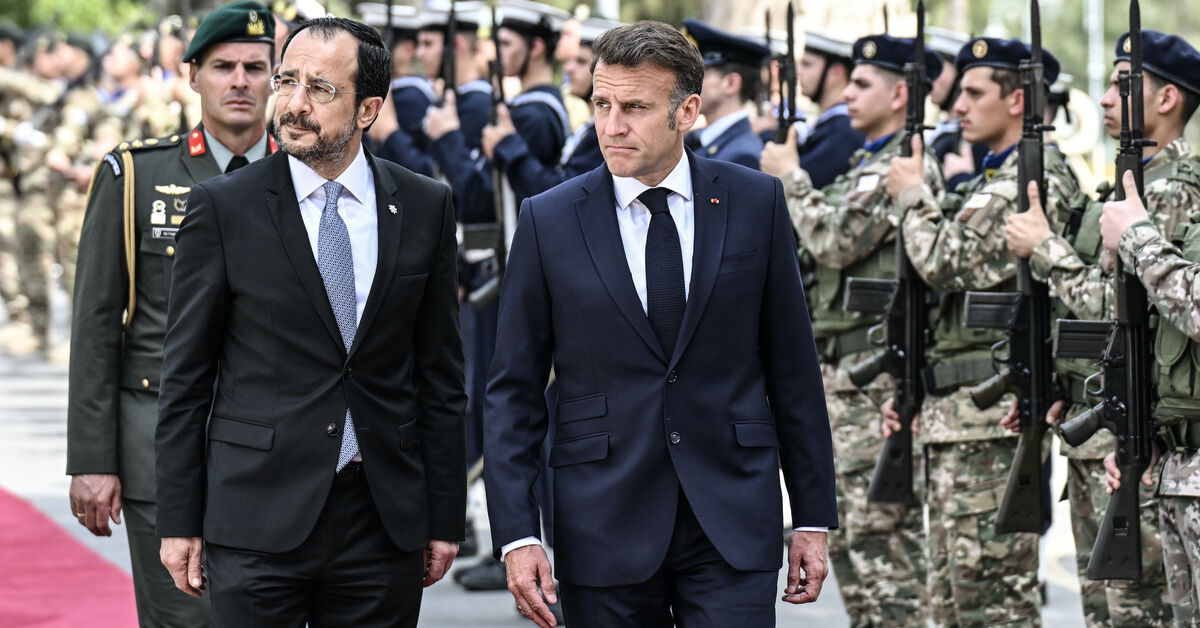
Turkey has formally condemned the strengthening of military and defense cooperation between France and the Republic of Cyprus, labeling the move a provocation that threatens to destabilize the Eastern Mediterranean. The Turkish Foreign Ministry stated that these bilateral security agreements ignore the legal status of the island and the roles of existing guarantor powers. This diplomatic friction arrives as France increases its strategic presence in the region, a development Ankara views as an infringement on its regional interests and its rights under international treaties.
The tension centers on the growing security partnership between Paris and Nicosia, which includes joint military exercises, intelligence sharing, and enhanced maritime surveillance. While the Republic of Cyprus maintains that these agreements are essential for its sovereign defense and maritime security, Turkey argues that such pacts bypass the necessary consensus of the island’s guarantor powers. The dispute underscores a long-standing geopolitical deadlock involving maritime boundaries, hydrocarbon rights, and the unresolved division of Cyprus.
Why the France-Cyprus Defense Pact has Triggered Ankara’s Response
Ankara’s criticism stems from the perception that France is unilaterally altering the security architecture of the Eastern Mediterranean. According to statements from the Turkish Foreign Ministry, the deployment of French military assets and the signing of defense protocols with the Republic of Cyprus constitute an attempt to “politicize” the Cyprus issue. Turkey contends that any significant change to the security status of the island must involve the tripartite consensus of the guarantor powers: Turkey, Greece, and the United Kingdom.

The defense relationship between France and Cyprus has transitioned from periodic cooperation to a structured strategic partnership. French officials have frequently emphasized the need to support the sovereignty of the Republic of Cyprus against perceived Turkish encroachment in the Mediterranean. This includes support for the Republic’s efforts to secure its Exclusive Economic Zone (EEZ) in waters where Turkey does not recognize Cypriot maritime jurisdiction. France has provided technical assistance and has participated in naval exercises intended to signal solidarity with Nicosia.
Turkey, however, views these actions through the lens of its “Blue Homeland” (Mavi Vatan) doctrine, which asserts extensive maritime rights in the Mediterranean. From Ankara’s perspective, French involvement provides a military shield for the Republic of Cyprus to pursue unilateral energy exploration, which Turkey claims violates the rights of the Turkish Cypriot community in the north. The Turkish government has warned that such “unilateral military steps” could lead to unintended escalations in an already volatile maritime environment.
The Role of Guarantor Powers in the Cyprus Dispute
To understand the legal core of this dispute, one must look to the 1960 Treaty of Guarantee. This treaty, which accompanied the independence of Cyprus, designated Turkey, Greece, and the United Kingdom as the official guarantor powers of the island. The primary mandate of these powers was to preserve the independence, territorial integrity, and security of the Republic of Cyprus.
The interpretation of this treaty is a central point of contention in international law. The Republic of Cyprus and its supporters, including France and the European Union, argue that the treaty’s purpose was to prevent external aggression and that it does not grant any guarantor power the right to interfere in the internal security arrangements or bilateral defense pacts of the sovereign state. They maintain that the Republic of Cyprus has the inherent right to form defense alliances with any nation it chooses.
Turkey utilizes a different legal interpretation. Ankara argues that the treaty grants it a right to intervene to protect the interests of the Turkish Cypriot community and to maintain the constitutional order of the island. Turkish officials frequently claim that the involvement of third-party military powers like France disrupts the delicate balance established by the treaty and undermines the possibility of a negotiated settlement between the two sides of the island. This legal disagreement remains one of the primary obstacles to any unified diplomatic approach in the region.
Comparison of Legal and Strategic Perspectives
| Issue | Republic of Cyprus & France Position | Turkish Position |
|---|---|---|
| Defense Alliances | A sovereign right of the Republic of Cyprus to ensure national security. | A violation of the status quo and an infringement on guarantor rights. |
| Treaty of Guarantee | Mandates the protection of independence; does not allow unilateral interference. | Provides rights to intervene to protect Turkish Cypriot interests. |
| Maritime Boundaries | Based on UNCLOS and the sovereign rights of the Republic of Cyprus. | Based on the continental shelf of Turkey and the rights of Turkish Cypriots. |
| Regional Stability | Achieved through strengthened alliances and adherence to international law. | Achieved through a two-state solution or a federation involving Turkey. |
Geopolitical Stakes: Hydrocarbons and Maritime Security
The military friction between France and Turkey is inextricably linked to the competition over natural gas reserves in the Eastern Mediterranean. The discovery of significant offshore gas fields, such as the Aphrodite field near Cyprus, has turned the region into a focal point for energy security. Control over these resources is not merely an economic issue but a matter of national strategic importance for all Mediterranean littoral states.
France has positioned itself as a key defender of the interests of the Republic of Cyprus and Greece in these energy disputes. By strengthening its military ties with Nicosia, Paris is effectively projecting power into a region where energy transit routes are critical to European energy diversification. This alignment supports the development of projects like the EastMed pipeline, which aims to connect Israeli and Cypriot gas fields to Europe via Greece.

Turkey remains excluded from many of these regional energy frameworks, leading to its aggressive stance on maritime boundaries. Ankara argues that the maritime zones claimed by the Republic of Cyprus and supported by France overlap with Turkey’s own continental shelf. The Turkish Navy has frequently conducted patrols in contested waters to challenge the drilling activities of companies operating under licenses issued by Nicosia. This overlap of military presence and energy exploration creates a high-risk environment where a minor naval encounter could escalate into a broader confrontation.
How France is Reshaping Mediterranean Security
Under the leadership of President Emmanuel Macron, France has pursued a policy of “strategic autonomy,” seeking to establish Europe as a significant independent actor in global security. The Mediterranean is a central theater for this ambition. By deepening defense ties with Cyprus, France is not only supporting a partner but is also securing its own influence in the Levant and North Africa.
The French approach involves a combination of high-level diplomatic engagement and tangible military support. This includes the provision of maritime surveillance technology and the integration of French naval assets into regional security discussions. For Paris, a stable and secure Cyprus is viewed as a prerequisite for a broader European stability in the Mediterranean. This strategy, however, places France in direct competition with Turkey, which seeks to assert itself as the dominant regional power in the Eastern Mediterranean.
This competition has implications for the North Atlantic Treaty Organization (NATO). Both France and Turkey are NATO members, yet their conflicting interests in the Mediterranean create significant friction within the alliance. The ability of NATO to manage these internal tensions is often tested when member states engage in competing military posturing and diplomatic disputes over territory and maritime rights.
What Happens Next for Regional Diplomacy?
The immediate future of the France-Cyprus defense relationship remains focused on operational integration and increased maritime patrols. Nicosia is expected to continue its efforts to modernize its defense capabilities through European partnerships. Meanwhile, Ankara is likely to maintain its stance of opposition to any unilateral military developments on the island, potentially through further naval exercises or diplomatic challenges in international forums.
Diplomatic observers are watching for several key developments:
- United Nations Mediated Talks: Any potential resumption of peace talks regarding the Cyprus dispute will require a de-escalation of current military tensions.
- EU-Turkey Relations: The tension in the Mediterranean continues to complicate the broader relationship between the European Union and Turkey, particularly regarding migration and trade.
- Maritime Boundary Delimitations: The resolution of overlapping EEZ claims remains the most significant legal hurdle to regional stability.
The next major checkpoint in this diplomatic cycle will be the upcoming regional security summits, where the presence of French and Turkish representatives will test the capacity for dialogue in the face of deep-seated strategic competition. There are currently no scheduled official negotiations between the Republic of Cyprus and Turkey, leaving the status quo of heightened tension to persist.
What are your thoughts on the escalating tensions in the Eastern Mediterranean? Do you believe military pacts enhance or hinder regional stability? Share your views in the comments below and share this article to join the conversation.
Worth a look