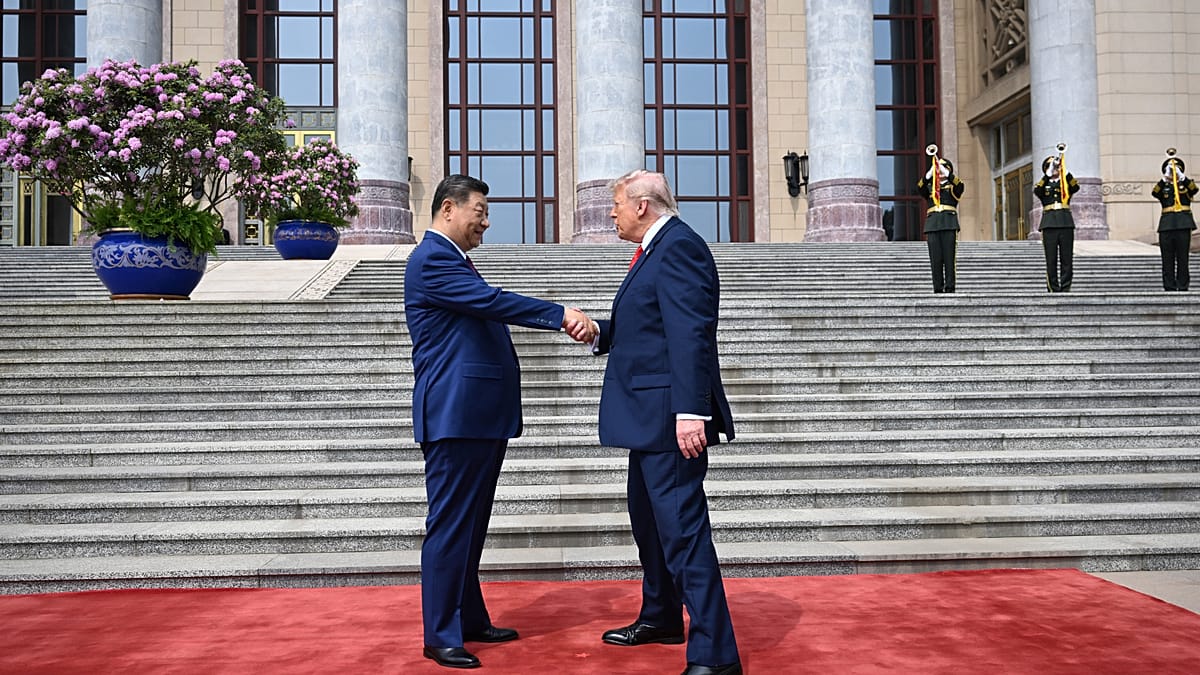
Trump-Xi Summit in Beijing: A Pivotal Moment for US-China Relations
BEIJING — In a high-stakes diplomatic maneuver, U.S. President Donald Trump arrived in Beijing on Thursday for a two-day summit with Chinese President Xi Jinping, marking the first face-to-face meeting between the two leaders since tensions escalated over trade policies, Taiwan’s sovereignty, and the regional fallout from Iran’s ongoing conflict. The summit, closely watched by global markets and geopolitical analysts, comes as both nations seek to stabilize relations that have deteriorated over the past year.
The meeting takes place against a backdrop of significant economic and strategic challenges. While Trump’s administration has pursued a hardline stance on trade imbalances and technology transfers, Beijing has responded with retaliatory tariffs and strengthened alliances in the Indo-Pacific region. Meanwhile, the situation in Taiwan—where Chinese military drills near the island have increased—remains a flashpoint, with the U.S. Maintaining its “One China” policy while supporting Taiwan’s defensive capabilities.
Analysts describe the summit as a critical test of whether both leaders can find common ground amid deep divisions. “What we have is not just about trade numbers or military posturing—it’s about whether the two largest economies in the world can avoid a full-blown crisis that would destabilize global supply chains and financial markets,” said Dr. Emily Chen, a senior fellow at the Asia-Pacific Policy Institute. “The stakes are higher than ever.”
Trade Talks: Progress or Standoff?
One of the primary focuses of the summit is the U.S.-China trade relationship, which has been marked by tariffs, sanctions, and a prolonged stalemate over market access and intellectual property disputes. During the opening remarks, Xi Jinping reportedly told Trump that “trade talks are making progress,” though no specific agreements were announced. Sources close to the negotiations indicate that both sides are exploring a phased approach to tariff reductions, particularly in sectors like agriculture and technology.
Economic data released this week shows that U.S. Exports to China have declined by 12% year-over-year, while Chinese imports of American goods have dropped by nearly 15% since the imposition of additional tariffs in 2025. The summit’s outcome could determine whether this downward trend reverses or accelerates.
“The goal is not to win a zero-sum game but to find a path forward that benefits both economies and the global community.”
Taiwan: The Elephant in the Room
While trade remains a key topic, the shadow of Taiwan looms large over the summit. Beijing has repeatedly warned against U.S. Support for Taiwan’s independence, and recent military exercises by the People’s Liberation Army (PLA) near the island have raised tensions. Trump, who has previously expressed skepticism about long-standing U.S. Commitments to Taiwan, is expected to reaffirm the “One China” policy but may also seek assurances from Xi regarding peaceful resolutions to cross-strait disputes.
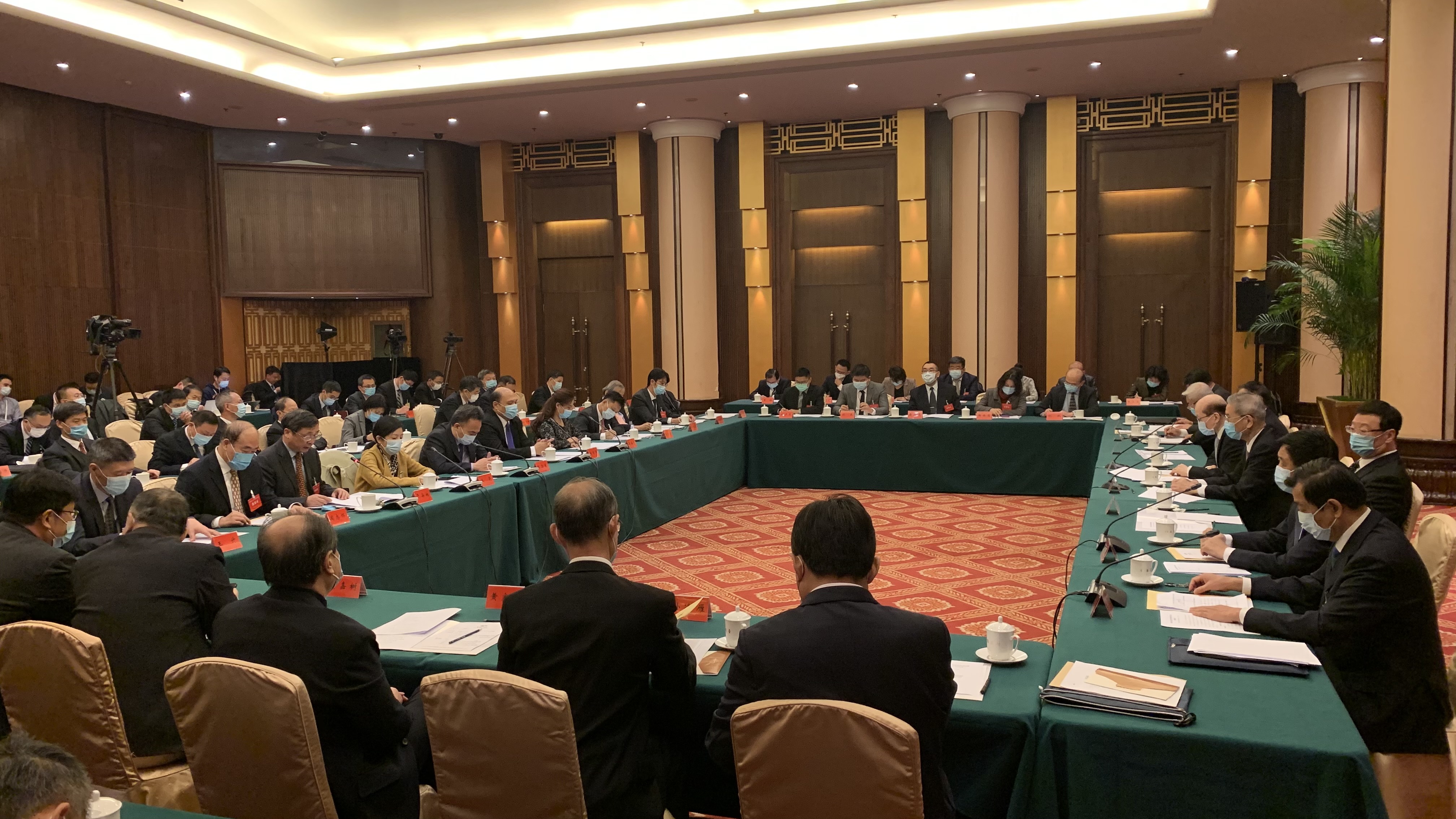
In a press briefing earlier this week, U.S. Secretary of State Antonin Scarborough stated, “The United States remains committed to the peaceful resolution of differences across the Taiwan Strait. However, any unilateral changes to the status quo would be met with firm opposition from the international community.” The summit’s ability to address Taiwan without escalating rhetoric will be a critical barometer of success.
Iran Conflict: A Regional Spillover
The ongoing conflict involving Iran has added another layer of complexity to the U.S.-China dynamic. While the U.S. And China have historically aligned on containing Iran’s nuclear ambitions, recent developments—including Iran’s expanded influence in the Middle East and its support for proxy groups—have created divergent interests. Trump is expected to press Xi on China’s role in mitigating regional instability, particularly as Iran’s actions have disrupted global oil markets and supply chains.
According to recent Energy Department reports, Iran’s export of oil to China has increased by 40% in the first quarter of 2026, raising concerns about sanctions evasion and the potential for further market volatility. The summit may include discussions on how both nations can coordinate to stabilize oil prices and reduce the risk of further escalation.
What Happens Next?
The next 48 hours will be critical as Trump and Xi engage in closed-door negotiations, followed by a joint press conference on Friday. While no concrete agreements are expected to be announced immediately, leaks suggest that both sides are exploring:
- A framework for gradual tariff reductions in key sectors, with benchmarks tied to market access and intellectual property protections.
- Joint statements on non-proliferation and regional stability, particularly regarding Iran and North Korea.
- A commitment to avoid further military posturing in the Taiwan Strait, including a pause in large-scale exercises.
Market reactions will be a key indicator of the summit’s success. Stocks in both countries have shown volatility in the lead-up to the meeting, with the S&P 500 and the Shanghai Composite closely watched for signals of investor confidence.
Key Takeaways
- Trade Talks: Progress reported but no immediate deals—focus on phased tariff reductions.
- Taiwan Tensions: Both sides expected to reaffirm “One China” policy but avoid escalation.
- Iran Conflict: Coordination on oil market stability and sanctions enforcement.
- Market Impact: Investors watching for signals on economic cooperation and stability.
- Next Steps: Joint press conference on Friday; follow-up negotiations in the coming weeks.
What This Means for Global Markets
The outcome of this summit will have ripple effects far beyond U.S.-China relations. As the world’s two largest economies, any shift in their dynamic can influence:
- Supply Chains: Over 80% of global manufacturing relies on U.S.-China trade routes. Stabilization could ease shortages in semiconductors, rare earth minerals, and consumer goods.
- Currency Markets: The yuan and dollar have fluctuated in response to trade tensions. A positive summit could reduce volatility.
- Tech Innovation: Both nations are leaders in AI, 5G, and green energy. Cooperation could accelerate breakthroughs or deepen competition.
- Geopolitical Alliances: Other nations, including those in the EU and ASEAN, will watch closely to assess whether a U.S.-China détente is possible.
For businesses operating in both markets, the summit’s success—or failure—will determine investment strategies for the next 12–18 months. Companies with exposure to China’s Belt and Road Initiative or U.S. Reshoring efforts may see shifts in policy priorities.
How to Follow Updates
For real-time updates on the summit and its aftermath, follow these official channels:
- White House Press Briefings – For U.S. Statements and policy announcements.
- Chinese Foreign Ministry – For Chinese government responses and position papers.
- U.S. Department of State – For diplomatic updates and travel advisories.
- World Today Journal Live Updates – For ongoing coverage and analysis.
The next official checkpoint will be the joint press conference scheduled for Friday, May 15, 2026, at 10:00 AM Beijing time (12:00 PM Washington D.C. Time). Further negotiations are expected to continue through the week, with follow-up meetings planned for June.
What do you think? Will this summit lead to lasting stability, or are we on the brink of deeper divisions? Share your thoughts in the comments below, and don’t forget to follow World Today Journal for continued coverage.
Worth a look
- Japan PM Takaichi Skips Yasukuni Shrine Visit on WWII Anniversary Amid China Protest
- Building Houses in 5 Days Using Recycled Plastic Lego-Like Bricks
- Canada Prepares US Trade Proposal Ahead of Tariff Deadline (archynewsy.com)
- Iga Swiatek Climbs to World No. 5 and Breaks Historic Clay-Court Record (time.news)