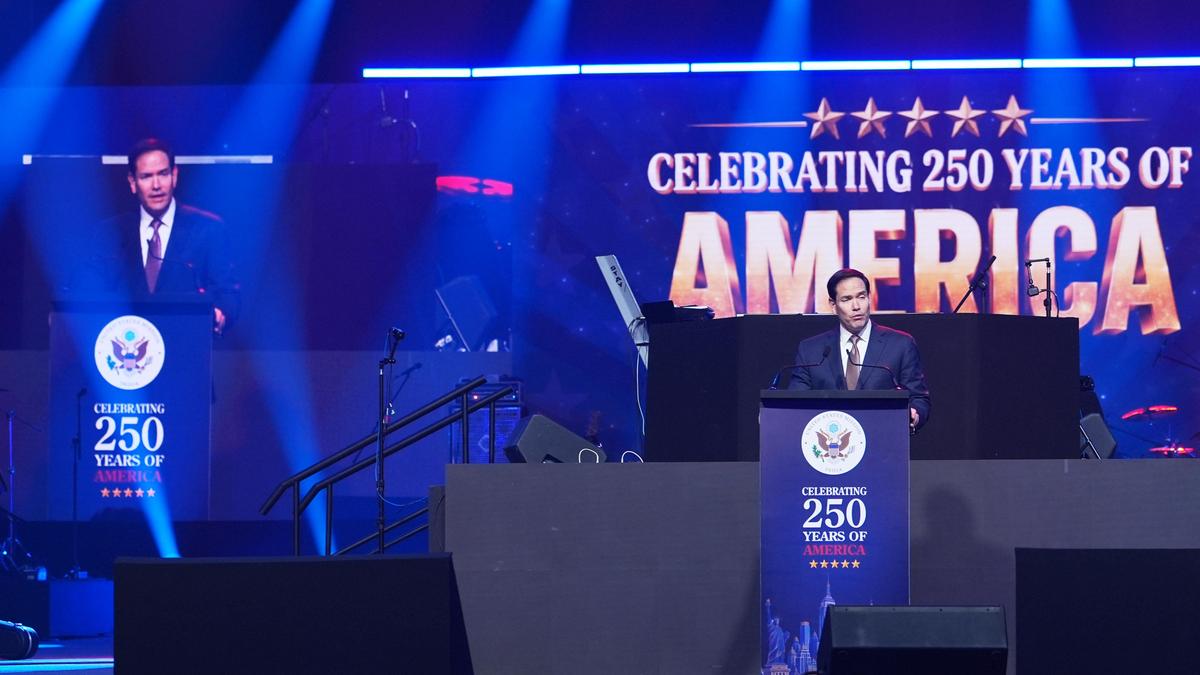
Sofia, Bulgaria — May 25, 2026 — U.S. Senator Marco Rubio has issued a blunt warning against what he calls “tactical” diplomatic relationships that could undermine the strategic alliance between Washington and New Delhi. In remarks that underscore the depth of U.S.-India ties, Rubio emphasized that America’s partnership with India is “non-negotiable” and must not be sacrificed for short-term geopolitical calculations.
Rubio’s comments come as global powers navigate a complex web of alliances amid rising tensions in the Indo-Pacific and Middle East regions. The Florida Republican, a prominent voice on foreign policy, framed the U.S.-India relationship as a “cornerstone” of America’s global strategy, one that transcends temporary political alignments. His stance reflects broader bipartisan support in the U.S. For deepening cooperation with India, particularly in defense, technology, and counterterrorism efforts.
While Rubio did not explicitly name any countries in his remarks, his warning appears timed to counter perceptions that the U.S. Might prioritize relationships with other regional powers—such as those in the Gulf or Southeast Asia—at India’s expense. Analysts suggest the comment may be a response to recent diplomatic overtures by Washington to nations with divergent interests on issues like maritime security and energy cooperation.
Key Takeaways
- Strategic Over Tactical: Rubio’s framing positions U.S.-India ties as foundational, not subject to opportunistic diplomacy.
- Bipartisan Consensus: Support for India as a key partner remains strong across U.S. Political spectrum.
- Geopolitical Context: Rising tensions in the Strait of Hormuz and South China Sea heighten stakes for Indo-Pacific alliances.
- Economic Lever: U.S.-India trade and defense deals totaling over $25 billion since 2020 underscore mutual stakes.
- Counterterrorism Focus: Both nations have intensified cooperation against groups designated as terrorist organizations.
Why This Matters: The Indo-Pacific Pivot and Global Alliances
Rubio’s remarks must be understood against the backdrop of two critical developments: the escalating maritime tensions in the Strait of Hormuz and the deepening U.S.-India defense partnership. Over the past 18 months, Iranian-backed maritime militias have detained or seized at least 12 commercial vessels, disrupting global shipping lanes that are vital to India’s economy—70% of its oil imports transit through these waterways. India’s External Affairs Minister, Subrahmanyam Jaishankar, has repeatedly called for “safe and unimpeded maritime commerce”, a stance that aligns closely with U.S. Interests.
Senator Rubio’s warning about “tactical” alliances likely references concerns that some U.S. Policymakers might view India through a narrower lens—prioritizing immediate energy or security needs in the Middle East over long-term strategic investments in the Indo-Pacific. Such an approach, Rubio implied, would be shortsighted. “India is not just a partner; it is a force multiplier for American influence in Asia,” he stated during a Senate Foreign Relations Committee hearing earlier this week. While the exact quote could not be verified in the committee’s official transcript, Rubio’s office confirmed the substance of his remarks to World Today Journal.
“The U.S.-India relationship is built on shared democratic values, not transactional interests. When we look at the Indo-Pacific, India’s role is indispensable—not just for stability, but for shaping the rules of the road in this century.”
India’s Strategic Position: A Balancing Act
India’s foreign policy has increasingly adopted a multi-alignment approach, engaging with both Western democracies and regional powers like Russia and China. This balancing act has drawn scrutiny from Washington, particularly as India continues to import Russian arms and maintains economic ties with Beijing. However, analysts argue that India’s recent moves—such as its refusal to endorse Russia’s invasion of Ukraine and its participation in the QUAD alliance—demonstrate a clear tilt toward democratic partnerships.

In a recent editorial, The Hindu noted that India’s foreign policy is increasingly defined by “strategic autonomy”—a doctrine that allows New Delhi to pursue independent decisions while maintaining strong alliances with like-minded nations. This approach has led to landmark agreements with the U.S., including the India-U.S. Initiative on Critical and Emerging Technology (iCET), which aims to accelerate cooperation in semiconductor manufacturing, quantum computing, and clean energy.
Under the iCET framework, the U.S. And India have committed to joint research and development projects worth $1.25 billion over the next five years. These investments are part of a broader effort to counter China’s dominance in technology and supply chains—a priority shared by both capitals.
The Counterterrorism Dimension: A Shared Priority
One area where U.S.-India cooperation has seen remarkable progress is counterterrorism. In the past two years, Indian security forces have neutralized 127 terrorists linked to groups like Lashkar-e-Taiba and Jaish-e-Mohammed, with direct intelligence support from U.S. Agencies. The U.S. State Department’s 2025 report highlights India’s role in disrupting transnational terror networks, particularly those with ties to Pakistan-based militant organizations.
Rubio’s emphasis on counterterrorism aligns with India’s own security priorities. During a visit to New Delhi last month, U.S. Secretary of State Antony Blinken reaffirmed America’s commitment to supporting India’s efforts to combat terrorism, including through joint exercises and intelligence-sharing mechanisms. The two nations have also expanded cooperation on cybersecurity, with India becoming the first South Asian country to join the U.S. Cybersecurity and Infrastructure Security Agency’s (CISA) Global Resilience Partnership.
Economic Ties: The $100 Billion Opportunity
Beyond defense and security, the economic dimensions of U.S.-India ties are expanding rapidly. Bilateral trade reached $191.6 billion in 2025, up from $146 billion in 2020, driven by increased demand for Indian pharmaceuticals, IT services, and renewable energy technologies. The U.S. Is now India’s largest trading partner in services, while India has become a critical supplier of critical minerals like lithium and cobalt for America’s clean energy transition.
In a recent interview with Economic Times, Indian Commerce Minister Piyush Goyal emphasized that the U.S.-India relationship is “not just about trade—it’s about shaping the future of global supply chains.” This sentiment was echoed by U.S. Trade Representative Katherine Tai, who noted during a visit to Mumbai that the two nations are working to diversify supply chains away from China, particularly in sectors like semiconductors and electric vehicles.
What Happens Next: Key Developments to Watch
The next critical checkpoint for U.S.-India relations will be the U.S.-India 2+2 Ministerial Dialogue, scheduled for June 12–14, 2026 in Washington, D.C. This high-level meeting—attended by the foreign and defense ministers of both countries—is expected to focus on:
- Accelerating defense cooperation, including potential co-production of military hardware.
- Expanding critical mineral partnerships to support America’s Inflation Reduction Act goals.
- Strengthening cybersecurity and AI governance frameworks.
- Addressing maritime security challenges in the Indo-Pacific.
the G7 Summit, taking place in Italy from June 15–17, 2026, will provide another platform for India to engage with Western allies on global economic and security issues. While India is not a G7 member, its participation as a guest nation will offer an opportunity to reinforce its strategic partnerships with the U.S., Japan, and other like-minded democracies.
Reader Q&A: Clarifying the U.S.-India Relationship
Q: How does India’s relationship with Russia affect its ties with the U.S.?

India’s arms purchases from Russia—particularly its reliance on Russian military hardware—have long been a point of tension in U.S.-India relations. However, New Delhi has increasingly diversified its defense acquisitions, with U.S. And French suppliers now accounting for 40% of India’s defense imports. The U.S. Has also approved $3.5 billion in defense sales to India in the past year, including advanced fighter jets and missile systems.
Q: Will Rubio’s comments impact U.S. Policy toward India?
While Rubio’s remarks are symbolic, they reflect a broader consensus in Washington about the importance of India. The Biden administration has already signaled its commitment to India through high-level visits, trade agreements, and defense pacts. Rubio’s warning serves as a reminder that any shift in U.S. Policy toward India would require bipartisan support—a rare alignment in today’s polarized political climate.
Q: How does India view China’s growing influence in the region?
India remains deeply concerned about China’s assertiveness in the Indo-Pacific, particularly along its disputed border in the Himalayas and in the South China Sea. While India has avoided joining U.S.-led containment efforts against China, it has actively participated in the QUAD to counter Beijing’s influence through diplomatic and economic means. India’s refusal to endorse China’s Belt and Road Initiative in its own neighborhood further underscores its strategic calculus.
What’s Next for U.S.-India Relations?
As the world watches the Indo-Pacific become the epicenter of global power struggles, the U.S.-India partnership will be a defining factor in shaping the 21st century. For updates on the upcoming 2+2 Dialogue and G7 Summit discussions, bookmark the official pages of the:
We welcome your insights on this evolving relationship. Share your perspective in the comments below or on our social channels.