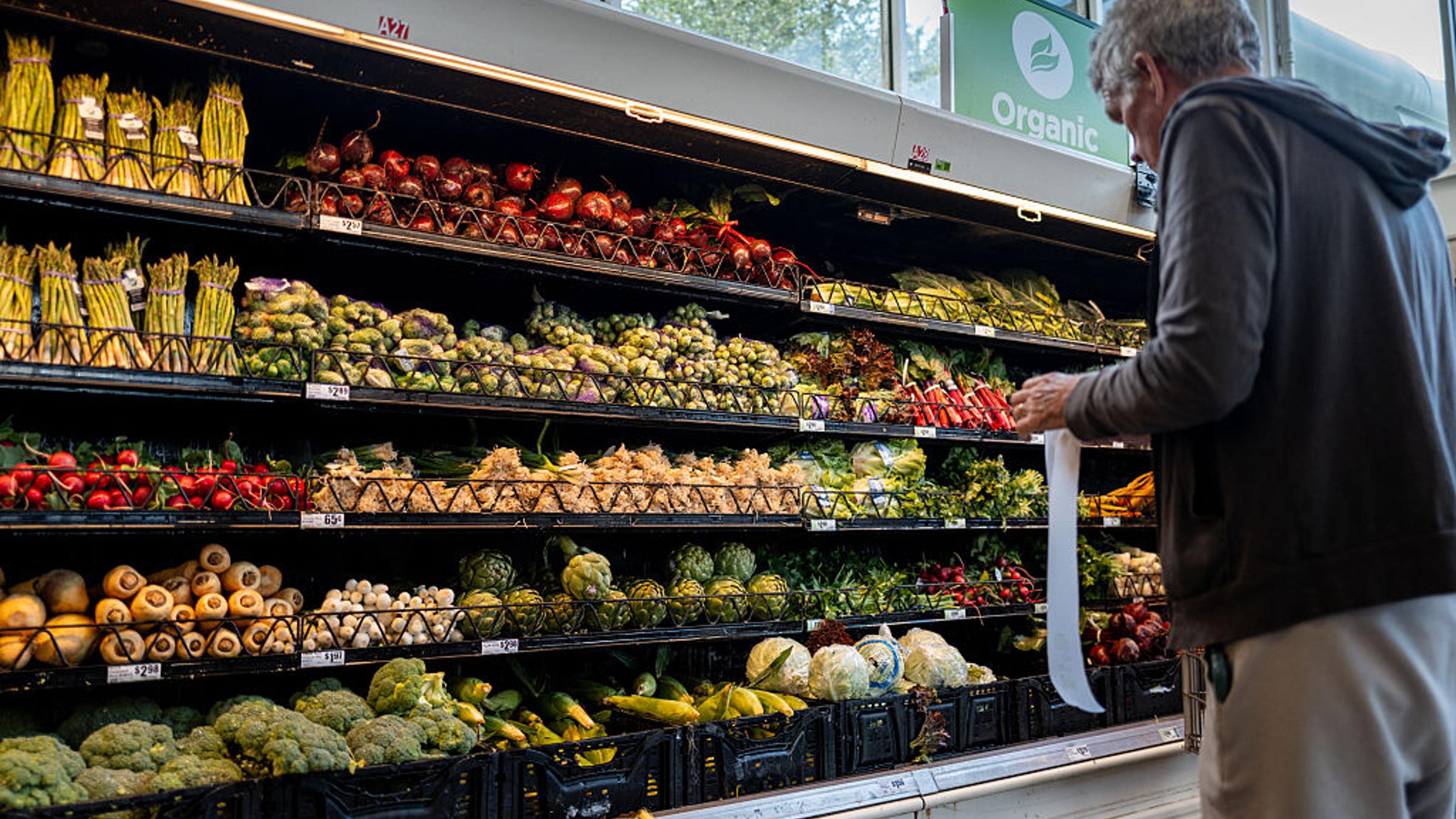
A customer shops for produce at an H-E-B grocery store in Austin, Texas, on May 11, 2026. The war in Iran, global energy rationing, and President Donald Trump’s sweeping tariff policies have created a perfect storm of rising costs for American families. With inflation now at a three-year high, the question isn’t whether prices are climbing—it’s where the pain is most acute.
New data from the U.S. Bureau of Labor Statistics reveals that inflation surged to 3.8% in April 2026—outpacing wage growth of 3.6%—while the Producer Price Index shows wholesale costs are rising at an even faster clip. The primary driver? A triple threat: skyrocketing energy prices from the Iran conflict, supply chain disruptions in the Strait of Hormuz, and the economic ripple effects of Trump’s trade policies. For millions of Americans, the impact is visible at the pump, in grocery aisles, and on clothing tags.
While President Trump has framed the conflict with Iran as a matter of national security—stating in a May 13 press briefing that “the only thing that matters is preventing Iran from acquiring a nuclear weapon”—economists warn that the war’s economic fallout will linger long after any ceasefire. “Even if tensions ease tomorrow, the damage to global supply chains will take months to repair,” said IMF Chief Economist Pierre-Olivier Gourinchas in a recent interview. “The question is how much higher prices will stay—and how long American families will feel the pinch.”
Gas Prices: The Most Visible Pain Point
Gasoline prices have become the most immediate and visible symptom of the inflation crisis. With the Strait of Hormuz partially closed since February 2026, oil prices have surged, pushing the national average for regular gasoline to $4.53 per gallon—the highest level in four years, according to AAA’s latest report. The gasoline index alone rose 28.4% year-over-year in April, while overall energy prices climbed 17.9% over the past 12 months.
But the pain at the pump may not be temporary. Analysts at the U.S. Energy Information Administration warn that if shipping lanes through the Strait remain constrained, crude oil could reach $150 per barrel—up nearly $50 from current levels. That would translate to gas prices potentially climbing to $5 or $6 per gallon, forcing drivers to cut back on discretionary spending or switch to more expensive alternatives like electric vehicles.
Key Energy Price Increases (April 2026 vs. April 2025)
- Gasoline: +28.4% year-over-year
- Energy Index: +17.9% over 12 months
- National Average Gas Price: $4.53/gallon (highest in 4 years)
- Projected Crude Oil Price: Up to $150/barrel (from ~$100)
Sources: BLS CPI Report, AAA Gas Prices, EIA Outlook

Groceries: Fresh Produce Takes the Biggest Hit
While energy costs dominate headlines, the grocery aisle has become a battleground for American budgets. The Consumer Price Index shows that grocery bills rose 0.7% in April—the largest one-month jump in nearly four years—and 2.9% over the past year. The biggest culprits? Fresh fruits and vegetables, which surged 6.1% year-over-year, according to the Bureau of Labor Statistics.
The spike in produce prices can be traced to two major factors: Trump Administration tariffs on Mexican imports and global supply chain disruptions. In July 2025, the U.S. Imposed 17% tariffs on fresh tomatoes from Mexico, a move that has pushed prices up 40% year-over-year. Nearly 90% of U.S.-imported tomatoes come from Mexico, making the country a critical supplier for American grocery shelves.
Other staples haven’t been spared. Coffee prices jumped 18.5% over the past year, partially due to drought conditions in Brazil, while beef prices have risen sharply due to feed costs tied to higher energy prices. “The war in Iran has created a domino effect,” said USDA economist Keith Collins. “Higher fuel costs mean higher transportation expenses, which get passed on to consumers at the checkout.”
—Keith Collins, USDA Economist
Clothing: A Fifth Straight Month of Rising Prices
For the fifth consecutive month, clothing prices have climbed, with a 4.2% increase over the past 12 months—the largest rise in three years. The fashion industry, already struggling with overproduction and fast-fashion pressures, now faces skyrocketing costs for shipping, dyes, and synthetic fabrics like polyester, and nylon.
Freight carriers have added fuel surcharges to offset higher diesel costs, while longer shipping routes—due to rerouted vessels avoiding the Strait of Hormuz—have driven up transportation expenses. Brands like H&M, Zara (owned by Inditex), and Target have already begun passing these costs to consumers, though some companies, including Levi’s, initially resisted price hikes by stockpiling inventory before tariffs took effect.
Analysts at McKinsey & Company warn that the fashion industry’s margins are shrinking. “With energy costs up and consumer demand softening, retailers have little choice but to raise prices,” said McKinsey’s global retail leader, Sarah McElroy. “The question is how long they can absorb these increases before passing them fully to shoppers.”
What’s Next? The Outlook for American Families
Economists remain divided on whether inflation will peak soon or continue climbing. While President Trump has suggested that prices will drop to 1.5% once the Iran conflict ends, others caution that the supply chain disruptions may persist. The Federal Reserve has indicated it will monitor inflation closely, with potential rate adjustments depending on economic data.

For now, American families are bracing for higher costs across the board. The Consumer Federation of America recommends budgeting for at least 10-15% higher expenses in key categories like gas, groceries, and clothing. “The best advice is to prioritize essentials, cut back on discretionary spending, and keep an eye on sales,” said CFA’s executive director, Suzanne Martindale.
Where to Find Updates
Key Takeaways
- Energy prices are driving inflation, with gasoline up 28.4% year-over-year and crude oil potentially reaching $150/barrel.
- Groceries saw the largest one-month jump in four years (0.7% in April), with fresh produce up 6.1%.
- Clothing prices have risen for a fifth straight month (4.2% over 12 months), driven by fuel surcharges and tariffs.
- Tariffs on Mexican imports (e.g., 17% on tomatoes) have pushed food prices higher, with tomato costs up 40%.
- Supply chain disruptions in the Strait of Hormuz are expected to linger, keeping prices elevated even after conflicts ease.
With the next Consumer Price Index report due June 12, 2026, economists will be watching closely to see if inflation shows signs of cooling—or if the squeeze on American wallets continues. In the meantime, families are advised to plan for higher expenses in the months ahead.
What’s your experience with rising prices? Share your thoughts in the comments below or on our social channels. For the latest updates on inflation and economic trends, subscribe to World Today Journal.
Related reading