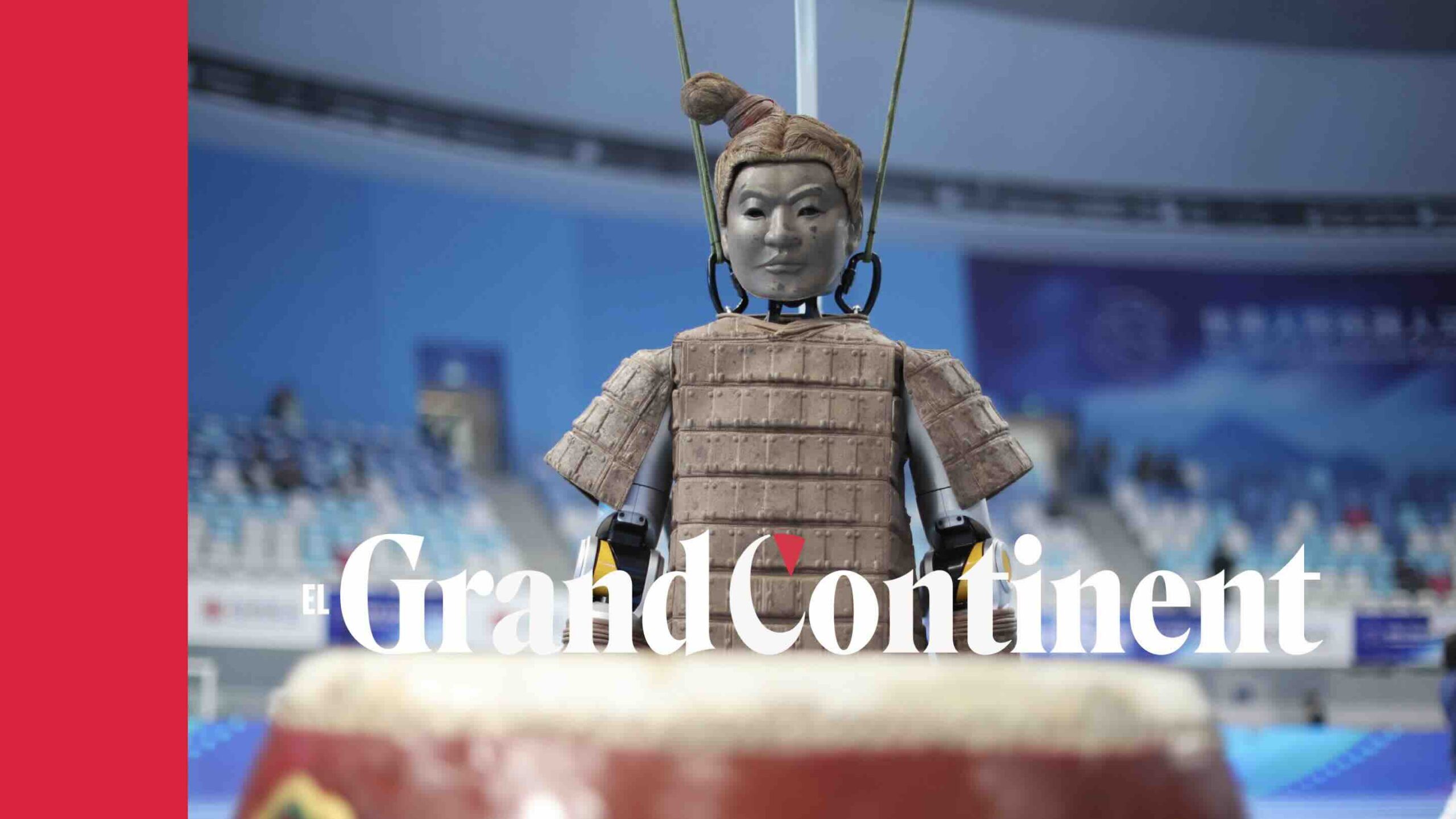
For years, the global narrative surrounding artificial intelligence has been dominated by the glittering corridors of Silicon Valley. In the United States, AI progress is largely a story of venture capital, private laboratories, and a handful of corporate titans racing toward a theoretical singularity. However, across the Pacific, a fundamentally different architecture of innovation is being constructed—one where the boundary between corporate ambition and state mandate is almost non-existent.
Under the leadership of President Xi Jinping, China is not merely participating in the AI race. We see attempting to redefine the track. Rather than relying solely on the “disruptive” model of the West, Beijing has implemented a systemic, state-directed strategy designed to integrate AI into every facet of the national economy, from heavy industry to social governance. This “whole-of-nation” approach seeks to transform China from a global manufacturing hub into a global AI superpower by the end of the decade.
The ambition is codified in the New Generation Artificial Intelligence Development Plan, a strategic roadmap released by the State Council that outlines a phased approach to AI supremacy. The goal is not just to create a better chatbot, but to establish a comprehensive ecosystem where AI drives productivity, national security, and political stability. For the international community, understanding who is actually executing this plan—and how—is critical to predicting the geopolitical balance of the next twenty years.
The Architecture of “National Teams”
While the U.S. Model relies on a competitive marketplace of private firms, China utilizes a system of “national teams.” These are a blend of state-owned enterprises (SOEs) and private “champion” companies—such as Baidu, Alibaba, and Tencent—that are expected to align their research and development goals with the priorities of the Communist Party of China (CPC).

This alignment is not always voluntary. The Chinese government frequently directs these companies to focus on “industrial AI”—the application of machine learning to optimize power grids, automate factories, and manage urban traffic—rather than focusing exclusively on consumer-facing generative AI. By prioritizing the “real economy” over the “platform economy,” Beijing aims to avoid the speculative bubbles often seen in Western tech hubs while ensuring that AI provides tangible gains in manufacturing efficiency.
the state has established specialized research institutes and consortia that bridge the gap between academia and industry. These entities are tasked with solving “bottleneck” problems—specific technical hurdles that prevent China from achieving full independence from foreign technology. This structured coordination allows the state to mobilize massive resources toward a single goal far more rapidly than a market-driven system could, provided the state’s direction is correct.
The Battle for Hardware Self-Reliance
The most significant vulnerability in China’s AI strategy is not software, but the silicon beneath it. The development of advanced Large Language Models (LLMs) requires immense computing power, specifically high-end GPUs (Graphics Processing Units). For years, China relied heavily on hardware from U.S.-based Nvidia to power its AI ambitions.
However, a series of escalating export controls from the U.S. Department of Commerce has severely limited China’s access to the most advanced AI chips, such as the H100 and A100 series. These restrictions are designed to slow China’s progress in military AI and high-end computing, creating a “chip wall” that Beijing is now desperately trying to scale.

In response, the Chinese government has poured billions of yuan into domestic semiconductor initiatives. Companies like Huawei have emerged as the vanguard of this effort, developing their own AI processors—such as the Ascend series—to provide a domestic alternative to Nvidia. The goal is “self-reliance,” a keyword that appears frequently in official state documents. This drive for autonomy is not just about economics; it is a matter of national security. Beijing views dependency on foreign hardware as a strategic liability that could be weaponized by Washington at any moment.
The Regulatory Tightrope: Innovation vs. Control
One of the most complex aspects of Xi Jinping’s AI plan is the tension between the need for creative innovation and the requirement for absolute political control. AI, by its nature, can be unpredictable. Generative AI can produce “hallucinations” or, more worryingly for the CPC, content that contradicts the official state narrative.

To manage this, the Cyberspace Administration of China (CAC) has implemented some of the world’s strictest AI regulations. Unlike the European Union’s AI Act, which focuses largely on ethics and privacy, China’s regulations focus heavily on content. AI developers must ensure that their models reflect “core socialist values” and do not undermine state power. This means that every LLM released in China must undergo a rigorous registration and security assessment process.
This regulatory environment creates a unique challenge for Chinese engineers. They must innovate within a “walled garden,” pushing the boundaries of what the technology can do while ensuring the output remains within the boundaries of what the state allows. While some argue this stifles creativity, the Chinese state views it as a necessary safeguard to prevent the social instability that could be triggered by uncontrolled information flows.
Strategic Comparison: Silicon Valley vs. Beijing
The divergence between the two leading AI ecosystems can be summarized by their primary drivers: Silicon Valley is driven by market capture, while Beijing is driven by national capacity.
| Feature | Silicon Valley Model | Beijing Model |
|---|---|---|
| Primary Driver | Venture Capital & Profit | State Strategy & National Security |
| Innovation Path | Disruptive/Consumer-led | Incremental/Industrial-led |
| Funding Source | Private Equity / Public Markets | State Subsidies / Guided Funds |
| Regulatory Focus | Privacy & Copyright | Content Control & Stability |
| Hardware Strategy | Global Supply Chain Integration | Aggressive Domestic Self-Reliance |
What This Means for the Global Order
The implications of China’s AI trajectory extend far beyond technology. If China succeeds in integrating AI into its industrial base more effectively than the West, it could maintain its position as the “world’s factory” while moving up the value chain. The export of “AI-powered governance”—the use of AI for surveillance and social management—could become a major diplomatic tool for Beijing, offering an alternative model of digital authoritarianism to other nations.

For the West, the challenge is not simply to build a better model, but to decide whether a fragmented, private-sector approach can compete with a centralized, state-funded machine. The “AI race” is often framed as a contest of intelligence, but it is increasingly a contest of organizational models: the agility of the entrepreneur versus the scale of the state.
The Path Forward
As China continues to refine its AI strategy, the focus is shifting toward “Vertical AI”—models trained on specific industry data (like healthcare or metallurgy) rather than general-purpose knowledge. This allows China to bypass some of the advantages the U.S. Holds in general-purpose LLMs by dominating the niche, high-value applications of AI in the physical world.
The next critical checkpoint for this strategy will be the continued rollout of domestic chip architectures and the performance of Chinese AI in the 2026-2027 industrial cycle. Whether the “national team” approach can produce a genuine breakthrough—or whether the constraints of state control will eventually cap its potential—remains the central question of the global tech war.
World Today Journal will continue to monitor the development of international AI regulations and the impact of semiconductor trade restrictions. We invite our readers to share their perspectives on the balance between state-led and market-led innovation in the comments below.