
Iran’s diplomatic offensive in Switzerland has exposed a stark divide between Western optimism and Tehran’s calculated reticence. While U.S. Vice President JD Vance described the latest talks as a “very, very good day,” Iranian officials have flatly denied reaching any new agreements, reinforcing a pattern of deliberate ambiguity that has defined negotiations since the U.S. and Israel launched strikes targeting Iran’s nuclear program three months ago. The conflict’s escalation—marked by the death of Iran’s supreme leader, the shutdown of the Strait of Hormuz, and record oil disruptions—has left global markets and regional stability hanging in the balance. Now, with a 14-point memorandum of understanding (MOU) signed on June 17 as the sole framework for a 60-day ceasefire, the question remains: What does Iran stand to gain from the current talks, and how might it still fight if diplomacy fails?
According to former National Intelligence Manager for Iran Norman Roule, who maintains regular contact with high-level officials in the region, Tehran’s priorities are clear: survival of the regime, preservation of its regional proxies, and financial relief to sustain its asymmetric warfare capabilities. “The new government in Iran needs to prove it’s strong and capable of standing up to adversaries,” Roule told The Cipher Brief. “That means no document can make the supreme leader look weak—even if it means leaking a version that appears to show Iran achieved concessions.”
For the Islamic Republic, the stakes are existential. Roule emphasizes that while Iran itself will not “evaporate,” the regime’s survival depends on maintaining control over its network of militias, suppressing domestic unrest, and countering Western military presence in the region. “They’re negotiating on life-and-death issues,” he notes. “Sanctions relief is not optional—it’s necessary to sustain the government.” Yet Iran’s demands go beyond mere financial breathing room. Tehran insists on retaining its regional proxies—including Lebanese Hezbollah, Iraqi militias, and the Houthis—as a buffer against Israeli and U.S. pressure. “If we give up the nuclear program, we’re giving up our leverage forever,” Roule paraphrases Iranian officials as arguing. “They’re not going to abandon their proxies and let Israel claim victory.”
Why Iran’s Asymmetric Arsenal Remains Its Strongest Weapon
The U.S. and Israel’s strikes have decimated Iran’s conventional military, leaving Tehran with only asymmetric tools to project power: missiles, drones, cyber warfare, and its vast network of proxies. Roule describes Iran as the “archetypal gray zone actor,” a designation that distinguishes it from Russia and China, which still possess conventional military capabilities. “The Quds Force hasn’t gone away,” he warns. “It’s all they have left.”
Iran’s strategy hinges on exploiting vulnerabilities in the U.S.-Israel alliance. By framing any ceasefire as contingent on Israeli restraint in Lebanon, Tehran forces Washington to choose between supporting its ally and pressuring it to curb its military actions. “The Iranians can control the process by saying, ‘We won’t cooperate unless Lebanon is part of this,’” Roule explains. This tactic has already created friction: U.S. criticism of Israel’s response to Hezbollah rocket attacks has intensified, echoing past tensions under Presidents Reagan and Bush. “Iran has manipulated this dynamic before, and it’s working again,” Roule says.

Recent clashes in northern Israel—where Hezbollah rockets have struck cities like Tiberias—illustrate the strategy in action. Israel’s retaliatory strikes on Hezbollah positions risk escalating the conflict, while Iran portrays itself as the defender of its proxies. “A Hezbollah captain can fire a rocket into Tiberias, Israel responds, and Iran says, ‘What are you going to do?’” Roule describes. “It’s a deliberate tactic to push the U.S. and Israel into conflict.”
This dynamic extends beyond Lebanon. Iraqi militias, many trained and funded by Iran’s Islamic Revolutionary Guard Corps (IRGC), have launched repeated attacks on Gulf Cooperation Council (GCC) states, including Saudi Arabia and the UAE. Roule highlights the underreported threat: “The GCC cannot tolerate instability in its north, south, and east. The Houthis in Yemen, Iranian-backed militias in Iraq, and now the data risks in the Strait of Hormuz—it’s all interconnected.”
Iran’s control over critical infrastructure in the region adds another layer to its leverage. The Strait of Hormuz, a chokepoint for global oil supplies, remains mined, and only Iranian companies are authorized to repair the undersea fiber cables that carry vast amounts of financial and artificial intelligence data between Europe and Asia. “The GCC sees AI as its future, but Iran has already staked a claim to control it,” Roule warns.
What Happens Next: The 60-Day Ceasefire and Oil Market Volatility
The June 17 MOU commits both sides to a 60-day ceasefire, but Roule cautions that the agreement’s success hinges on measurable progress—not just symbolic gestures. “Sanctions relief must be tied to verifiable reductions in Iran’s asymmetric capabilities,” he argues. “Otherwise, critics will say we’re just giving Iran liquidity without real concessions.”
In the short term, oil markets may see relief as shipping through the Strait of Hormuz resumes, but Roule predicts volatility. Global stockpiles have been depleted, and countries like China have reduced purchases, creating artificial demand. “Prices will drop initially, but as stockpiles rebuild, we could see a bump up in the medium term,” he forecasts. By late June or July, a $10 premium may persist due to security concerns and pipeline construction delays. A potential oil glut in 2027 remains uncertain, Roule adds, dependent on China’s demand, geopolitical stability, and U.S. production levels.
Yet the bigger risk lies in the failure to address Iran’s proxy networks. Roule points to the U.S. sanctions on Iraq’s deputy energy minister as a step, but warns that Washington must apply more pressure on Baghdad to sever ties with Iranian-backed militias. “Billions in GCC energy projects are at risk if pipelines through Iraq remain threatened,” he says. “The Gulf cannot afford this level of instability.”
How Iran Might Still Fight: The Quds Force and the ‘New Normal’
Even if the ceasefire holds, Iran’s Quds Force will continue its operations, Roule asserts. “They’ve never gone away—they’re just more covert now.” The force, along with Iran’s Ministry of Intelligence, manages the logistics of supplying drones, missiles, and cyber tools to proxies across the Middle East. “Any sanctions relief will trickle down to them,” Roule notes. “The question is: What are we doing to cut those logistics lines?”
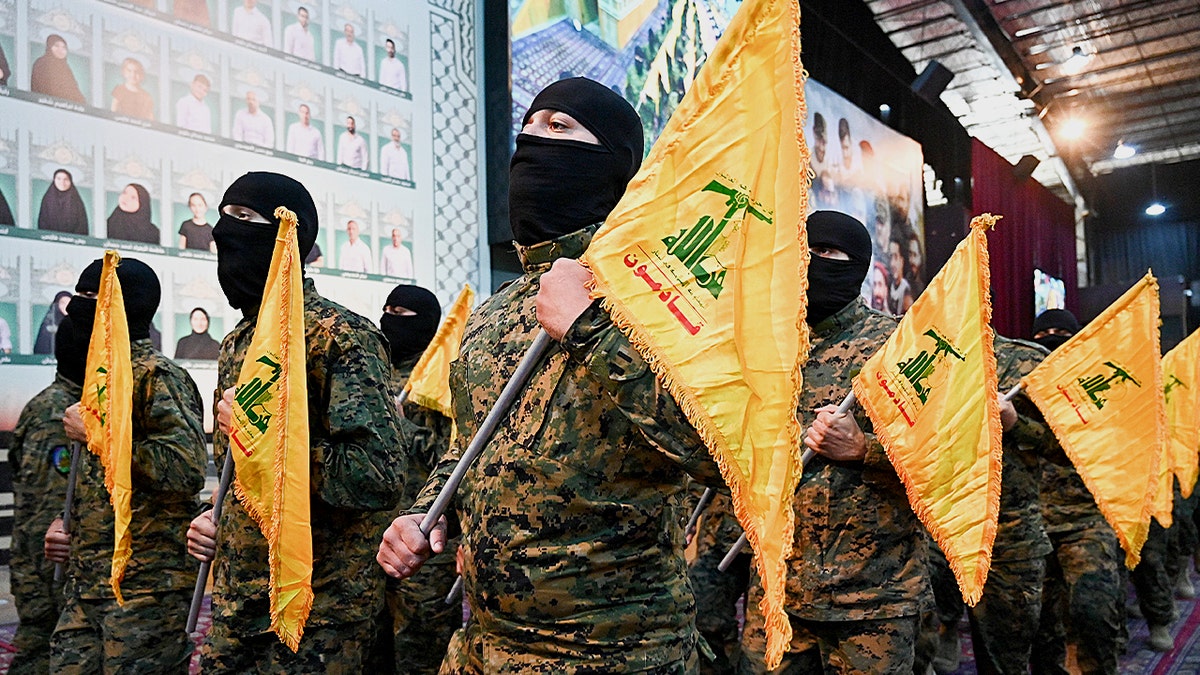
Roule dismisses the notion that Iran’s recent conflicts represent a “tactical success.” “You don’t destroy this much of a regime and call it a tactical win,” he argues. “The Iranian government is recovering, but the rot within the regime is accelerating. The people may rise up in the coming months.”
For now, the “new normal” may be a prolonged stalemate. Roule acknowledges that catastrophic events—a Hezbollah missile strike causing heavy Israeli casualties, or an Israeli attack triggering a broader regional war—could derail diplomacy. But without such a trigger, the status quo may persist through July, August, and beyond. “We’ve been here for decades,” he concludes. “The only variable is whether Iran’s internal pressures will force its hand sooner rather than later.”
Key Takeaways
- Iran’s priorities: Regime survival, proxy protection, and sanctions relief—all non-negotiable for Tehran.
- Asymmetric warfare: Missiles, drones, cyber tools, and proxies remain Iran’s only viable military options.
- Lebanon as leverage: Iran ties ceasefire compliance to Israeli restraint, exploiting U.S.-Israel tensions.
- Oil market risks: Short-term relief likely, but medium-term price volatility expected as stockpiles rebuild.
- Quds Force endurance: Sanctions relief will fund asymmetric operations, making logistics cuts critical.
- Regional instability: GCC energy projects face threats from Iranian-backed militias in Iraq and Yemen.
The next critical checkpoint is the July 17 deadline for the 60-day ceasefire. If no progress is made, the U.S. and Iran may face a choice: extend negotiations or risk a return to conflict. For now, Roule’s assessment remains sobering: “The trend line is clear—unless something catastrophic happens, we’re in for a prolonged period of tension.”
Readers with further questions or insights on Iran’s negotiation strategy are encouraged to share their perspectives in the comments below or via [email protected]. For official updates on the ceasefire and oil market developments, monitor statements from the U.S. State Department (state.gov) and the International Energy Agency (iea.org).
Related reading
- Jose Altuve Shares a Laugh with Teammates Ahead of Astros-Giants Game in San Francisco
- Hindu Swastika vs. Nazi Hakenkreuz: Indian-Origin Student Sparks US School Debate
- US and Iran Nearing Hormuz Understandings Amid Regional Tensions (newsdirectory3.com)
- How Oman Became the Broker Behind the Latest Hormuz Deal (daybreakwire.com)