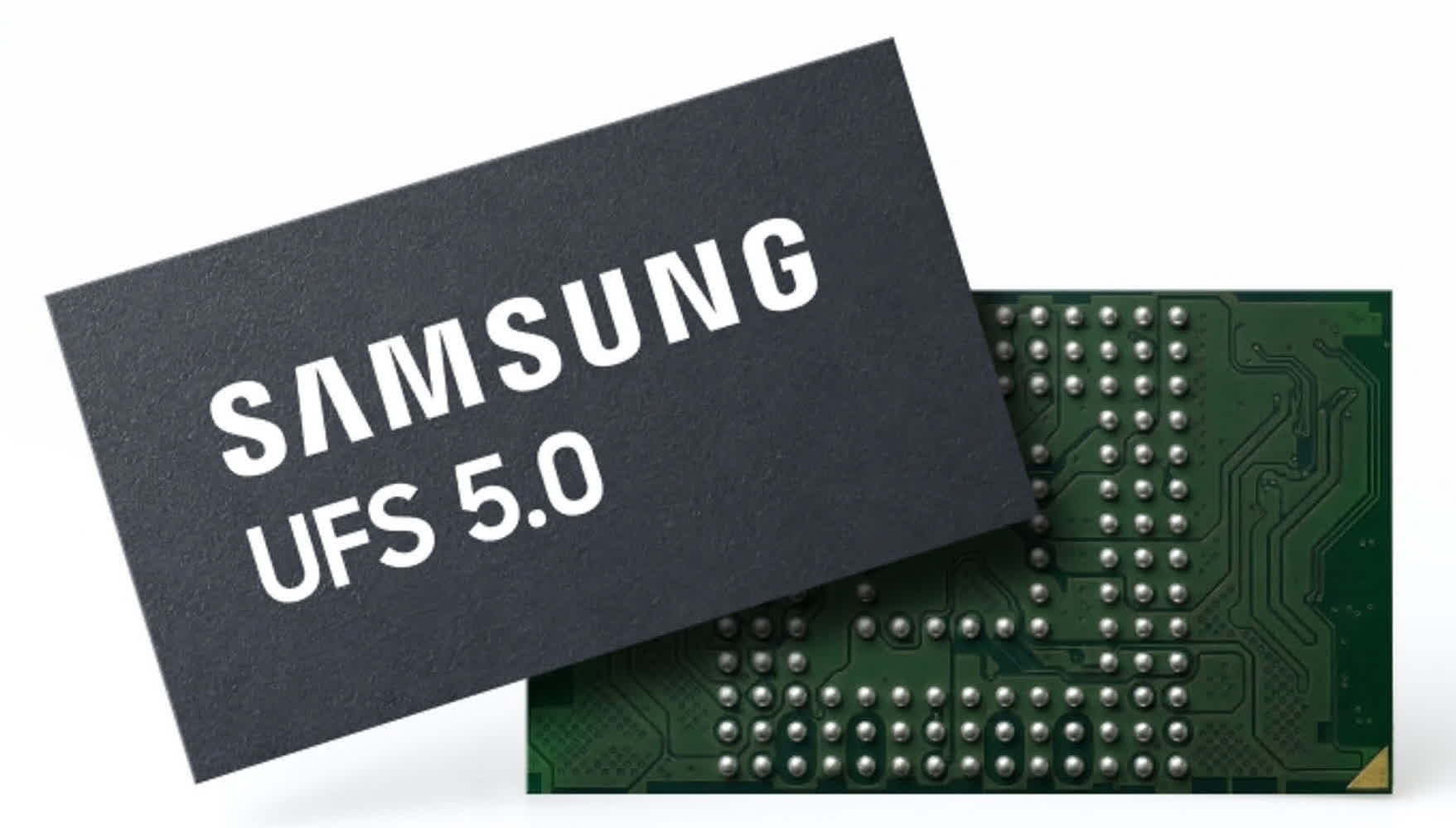
Samsung has officially introduced its UFS 5.0 storage technology, a high-performance flash memory standard engineered to support the next generation of mobile devices and on-device artificial intelligence. The new storage solution is designed to deliver a maximum bandwidth of 10.8 GB/s, significantly outpacing the speeds available in current flagship smartphones. This development marks a critical step for hardware manufacturers looking to eliminate data bottlenecks as AI models require increasingly rapid access to large datasets.
The transition to Universal Flash Storage (UFS) 5.0 represents a substantial leap from the current industry standard, UFS 4.0, which typically offers sequential read speeds peaking around 4.2 GB/s. By pushing bandwidth to 10.8 GB/s, Samsung aims to provide the throughput necessary for seamless multitasking and the heavy data processing demands of localized AI, according to technical specifications disclosed by the company. This advancement follows the JEDEC Solid State Technology Association’s previous work in formalizing mobile storage standards, which remain the foundation for global hardware compatibility.
How UFS 5.0 Enhances On-Device AI Performance
The primary driver behind the adoption of UFS 5.0 is the growing complexity of on-device AI. Modern mobile processors are increasingly tasked with running Large Language Models (LLMs) and generative AI features locally rather than relying on cloud servers. These tasks require the device to move massive amounts of data between the storage chip and the processor almost instantaneously. According to Samsung Semiconductor, higher bandwidth directly reduces latency, allowing for faster response times in AI-driven applications such as real-time language translation, generative photography, and advanced digital assistants.
When storage speeds are slow, the processor often sits idle waiting for data, a phenomenon known as an I/O bottleneck. By increasing the ceiling to 10.8 GB/s, Samsung’s new architecture ensures that the storage subsystem can keep pace with the high-speed memory and processing cores found in modern system-on-a-chip (SoC) designs. This ensures that the user experience remains fluid, even when the device is performing complex background computations that would otherwise cause stuttering or delays in the interface.
Comparing Mobile Storage Standards
To understand the magnitude of this upgrade, it is helpful to contrast the performance metrics of recent storage generations. While UFS 4.0 brought significant improvements in power efficiency and speed over UFS 3.1, UFS 5.0 focuses heavily on the requirements of high-bandwidth AI workloads. The following table outlines the progression of these standards based on industry reporting and JEDEC standards documentation.
| Standard | Max Bandwidth | Primary Focus |
|---|---|---|
| UFS 3.1 | ~2.9 GB/s | General mobile performance |
| UFS 4.0 | ~4.2 GB/s | Efficiency and high-speed data transfer |
| UFS 5.0 | 10.8 GB/s | On-device AI and extreme multitasking |
The leap to 10.8 GB/s is not merely a quantitative increase; it represents a shift in how mobile storage is integrated into the broader computing architecture. As noted by analysts at Gartner, the integration of high-speed storage is vital for the viability of edge computing, where devices must process information locally to maintain privacy and reduce reliance on internet connectivity.
What This Means for Future Flagship Devices
Consumers can expect the first wave of devices utilizing UFS 5.0 technology to hit the market in the coming years as manufacturers integrate these chips into their premium flagship lineups. The adoption of this technology will likely be limited to top-tier smartphones and tablets initially, as the production costs for such high-density, high-speed flash memory are typically higher than those of previous generations. This mirrors the rollout strategy seen with previous UFS iterations, which debuted in flagship models before trickling down to mid-range hardware.
For the average user, the benefits will manifest as faster app loading times, near-instantaneous file transfers, and a noticeable improvement in the performance of AI-powered features. As mobile applications continue to incorporate more resource-intensive AI models, the underlying storage hardware becomes just as important as the CPU and GPU in determining the longevity and usability of a smartphone. Samsung’s commitment to this standard positions the company to remain a dominant supplier in the global flash memory market, which remains highly competitive with players like Kioxia and Micron.

The next major checkpoint for this technology involves the integration process for device manufacturers, who must optimize their motherboards and firmware to support the increased thermal and power requirements of UFS 5.0. No specific release date for the first commercial smartphone featuring this storage has been confirmed, though industry observers expect further announcements from handset manufacturers during upcoming major trade shows. Readers are encouraged to share their thoughts on the evolution of mobile storage or join the discussion in the comments section below regarding how these hardware advancements might impact their next device purchase.
Related reading