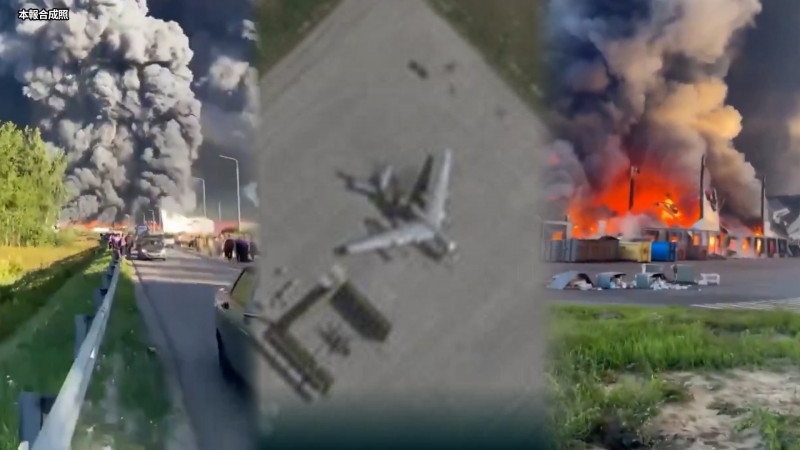
Ukrainian drone forces have targeted and damaged Russian strategic aviation assets, including Tu-95 strategic bombers, at bases deep within Russian territory. These operations, involving long-range unmanned aerial vehicles (UAVs) traveling over 800 kilometers, aim to degrade Russia’s long-range strike capabilities and force the relocation of high-value aircraft further from the front lines.
The targeting of the Tu-95 “Bear” bomber is particularly significant because these aircraft serve as the primary platforms for launching cruise missiles into Ukrainian cities. According to satellite imagery and open-source intelligence reports, Ukrainian drones have successfully penetrated Russian airspace to strike airfields, including the Engels airbase, which is a critical hub for the Russian Aerospace Forces (VKS). This shift toward deep-strike operations marks a strategic effort by Kyiv to neutralize the source of aerial bombardments rather than relying solely on air defenses.
The impact of these strikes extends beyond the physical destruction of aircraft. By forcing the Russian military to move its strategic bombers further east or to more secure airfields, Ukraine increases the flight time and fuel requirements for Russian missile launches. This creates a “buffer zone” that reduces the frequency of strikes and complicates the logistics of the Russian long-range aviation command.
Deep-Strike Drone Operations at Engels Airbase
Ukrainian intelligence and military bloggers have highlighted the use of specialized, long-range drones to strike the Engels airbase in the Saratov region. These UAVs have reportedly traveled distances exceeding 800 kilometers to reach their targets. The primary objective is the destruction of the Tu-95MS and Tu-160 bombers, which are essential for Russia’s strategic deterrence and its current campaign of cruise missile strikes against Ukrainian infrastructure.
Satellite imagery analyzed by independent monitors shows evidence of damage to aircraft and supporting infrastructure at these bases. While the Russian Ministry of Defense often characterizes these incidents as “interceptions of UAVs” by air defense systems, the physical evidence of charred airframes and runway damage suggests successful penetrations. The Tu-95, a propeller-driven strategic bomber, is a massive target that is difficult to hide and expensive to replace, making it a high-priority target for Ukrainian planners.
Military analysts note that the ability of Ukraine to hit targets so deep within Russia indicates a sophisticated evolution in their drone warfare. These are not the small, commercial drones used in trench warfare, but purpose-built, long-range strike UAVs capable of navigating electronic warfare (EW) environments and maintaining flight stability over several hours.
Degrading Russia’s Long-Range Strike Capacity
The loss or damage of Tu-95 bombers directly impacts Russia’s ability to conduct massed missile attacks. Because these aircraft launch missiles from a distance, they are generally safe from most conventional Ukrainian weapons. However, the introduction of long-range drones has stripped away this sanctuary. According to reports on Russian military losses, the degradation of the strategic bomber fleet forces the Kremlin to rely more heavily on land-based Iskander missiles, which have a more limited number of launchers and different targeting profiles.
The strategic value of the Tu-95 lies in its payload capacity. A single bomber can carry multiple cruise missiles, allowing Russia to overwhelm Ukrainian air defenses through saturation. By damaging these planes on the ground, Ukraine reduces the number of missiles that can be launched in a single wave. This provides Ukrainian air defense crews a better chance of intercepting the remaining projectiles.
Furthermore, the psychological impact on Russian pilots and ground crews is substantial. The realization that the “safe” rear areas are now within reach of Ukrainian precision drones has led to increased tension within the Russian Aerospace Forces. Reports indicate that Russia has attempted to implement more stringent security measures and relocated some aircraft to bases further from the Ukrainian border to mitigate this risk.
The Role of Intelligence and Precision Targeting
The success of these missions relies on a combination of high-resolution satellite imagery and signals intelligence. To hit a specific aircraft at a massive base like Engels, Ukrainian forces require real-time or near-real-time data on aircraft movements. This involves monitoring flight patterns, runway activity, and communication logs to identify when bombers are most vulnerable—typically during refueling, loading, or while parked in open bays.
The coordination of these strikes often coincides with broader Ukrainian operational goals. For example, attacking bombers just before a planned Russian offensive or during a period of intense energy infrastructure attacks serves as a deterrent. It signals to the Russian command that their strategic assets are not immune to retaliation, regardless of the distance from the border.
The technical specifications of the drones used in these raids remain classified, but evidence suggests a move toward “swarm” tactics, where multiple drones are launched simultaneously to saturate Russian air defenses. This ensures that even if several drones are shot down, a small percentage will likely reach the target. The use of propeller-driven, long-endurance UAVs allows for a slower, more stealthy approach that can sometimes evade radar detection better than high-speed jets.
Strategic Implications for the Conflict
The ability to strike the Tu-95 fleet represents a shift in the “geometry” of the war. For the first half of the conflict, the air war was largely asymmetric, with Russia dominating the skies and Ukraine focusing on ground-based air defense. By taking the fight to the airbases in Russia, Ukraine is attempting to establish a form of “strategic parity,” where Russia must worry about its own assets as much as Ukraine worries about the missiles falling from the sky.
This development also puts pressure on the Russian military to divert air defense assets from the front lines to protect their own airbases. Every S-300 or S-400 battery moved to protect Engels is one fewer battery available to protect Russian ground troops or logistics hubs in the Donbas or Crimea. This “resource drain” is a key component of Ukraine’s attrition strategy.
As Ukraine continues to refine its long-range strike capabilities, the focus is expected to expand beyond bombers to include other high-value assets such as early-warning aircraft and command-and-control centers. The goal is to blind and deafen the Russian military’s ability to coordinate large-scale aerial operations.
The next critical checkpoint for observers will be the official Russian response to the loss of these assets and whether the Kremlin is forced to officially relocate its strategic aviation wing to more remote eastern airfields, which would confirm the effectiveness of the Ukrainian drone campaign.
We welcome your analysis and comments on these developments in the section below. Please share this report to keep the global community informed on the evolving dynamics of the conflict.
Related reading