
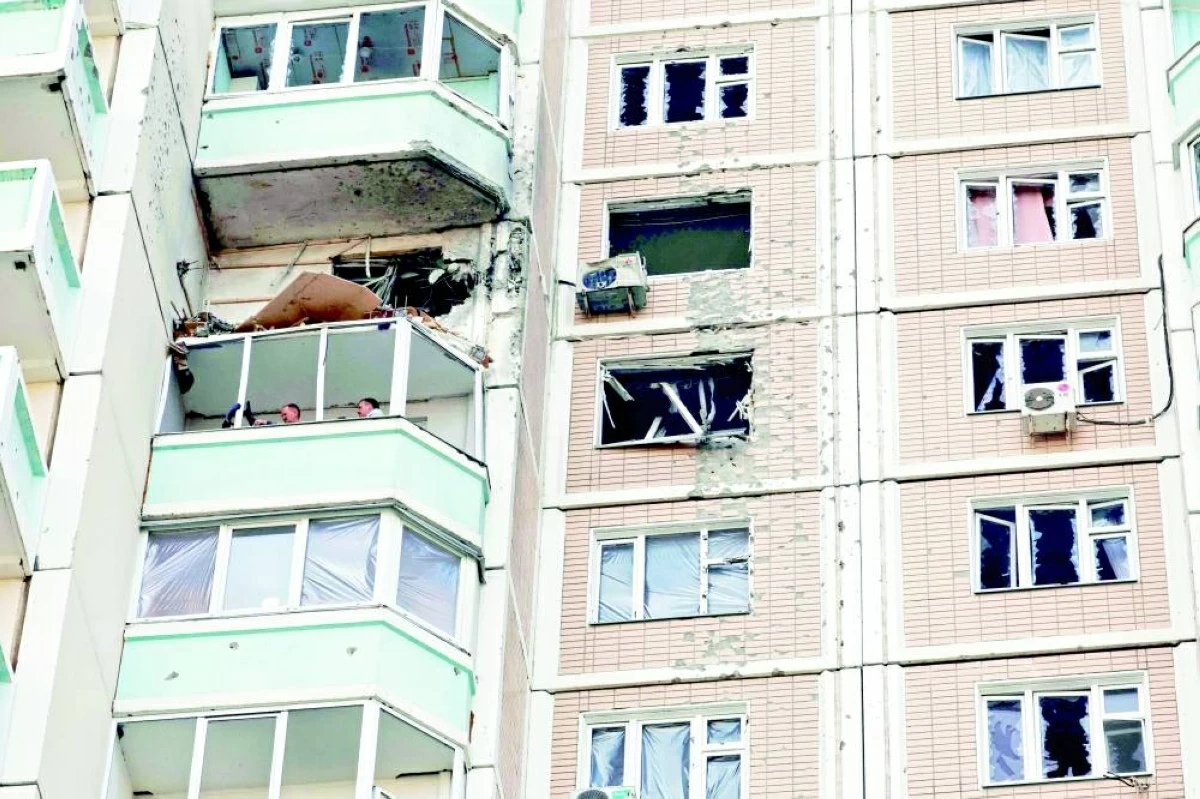
Russia has faced one of its most significant aerial challenges in over a year following a massive Ukrainian drone attack on Moscow and its surrounding provinces. The overnight operation, characterized by its sheer scale and proximity to the Russian capital, has resulted in at least three deaths and significant disruptions to the region’s security perimeter.
According to reports from the Russian news agency TASS, which cited local and military officials, the strike is the largest of its kind to target the capital region in more than twelve months. The operation underscores a shifting dynamic in the conflict, as Ukraine increasingly utilizes long-range unmanned aerial vehicles (UAVs) to bring the realities of the war directly to the Russian heartland.
The Russian Ministry of Defense reported that its air defense systems intercepted a total of 556 Ukrainian drones throughout the night. While the majority were neutralized, the volume of the attack tested the saturation limits of the defense networks guarding the Moscow metropolitan area.
The Scale of the Incursion and Defense Response
The intensity of the strike was particularly evident in the capital. Sergey Sobyanin, the Mayor of Moscow, stated that air defenses shot down more than 120 drones specifically within the city’s vicinity. The coordinated nature of the swarm suggests a strategic effort to overwhelm radar systems and penetrate the layers of security surrounding the Kremlin and other administrative hubs.
The Russian Ministry of Defense has maintained that the vast majority of the drones were intercepted, but the sheer number of launches—over 500 in a single night—marks a notable escalation in the frequency and volume of Ukrainian aerial incursions into Russian airspace. This surge reflects an evolving strategy to stretch Russian air defense resources thin across multiple fronts.
Casualties and Impact in the Moscow Region
Despite the claims of successful interceptions, the attack resulted in human casualties in the suburbs. Mayor Sergey Sobyanin confirmed that a woman was killed after a drone struck a private residence in Khimki, a town located to the northwest of Moscow. In addition to the fatality, officials reported that at least one other person remains trapped under the rubble of the damaged structure.

In total, at least three people were killed near Moscow as a result of the overnight strikes, according to CNN, citing TASS. The strikes on residential areas in the Moscow province highlight the increasing risk to civilians as the conflict expands its geographic scope.
A Cycle of Reciprocal Escalation
The Ukrainian drone offensive does not exist in a vacuum but appears to be part of a broader, intensifying cycle of reciprocal strikes. Concurrent with the attacks on Moscow, Russia has launched its own massive aerial campaigns. Reports indicate that Russia launched one of its largest attacks on Ukraine within a 24-hour window, deploying more than 600 drones against Ukrainian targets.
This “tit-for-tat” escalation has seen both nations targeting critical infrastructure and strategic sites. Recent footage has shown the impact of this volatility, including a Russian drone striking a historic church in Ukraine, further complicating the humanitarian and cultural toll of the war.
The strategic intent behind these large-scale drone swarms is twofold: to degrade the enemy’s military capabilities and to exert psychological pressure on the domestic population. By successfully striking the Moscow region, Ukraine demonstrates its ability to bypass sophisticated defense systems, while Russia’s high-volume strikes on Ukraine aim to disrupt energy and logistics networks.
What This Means for the Conflict
The use of hundreds of drones in a single night indicates a transition toward “saturation warfare,” where the goal is to launch more targets than the defending side has missiles to intercept. For Moscow, the fact that this is the largest attack in over a year suggests that Ukraine has either expanded its drone production capacity or developed new tactics to evade detection.

the timing of these events coincides with ongoing international discussions regarding the conflict’s end. While some political figures, including Donald Trump, have suggested that the wars involving Ukraine and Iran could potentially end on similar timelines, the current intensity of aerial combat suggests that both belligerents remain committed to improving their leverage on the battlefield before any potential negotiations.
As the conflict evolves, the focus for global observers remains on whether these deep-strike capabilities will lead to a stalemate or provoke a further expansion of the war’s theater. For now, the residents of the Moscow region and Ukrainian cities alike face a new reality of constant aerial vigilance.
The next official update from the Russian Ministry of Defense regarding the full extent of the damage and the number of drones recovered is expected in the coming days.
We invite our readers to share their perspectives on the escalation of drone warfare in the comments below. Please share this report to keep others informed on the latest developments in global security.