Ukraine Security Guarantees: A New European Deterrence Architecture?
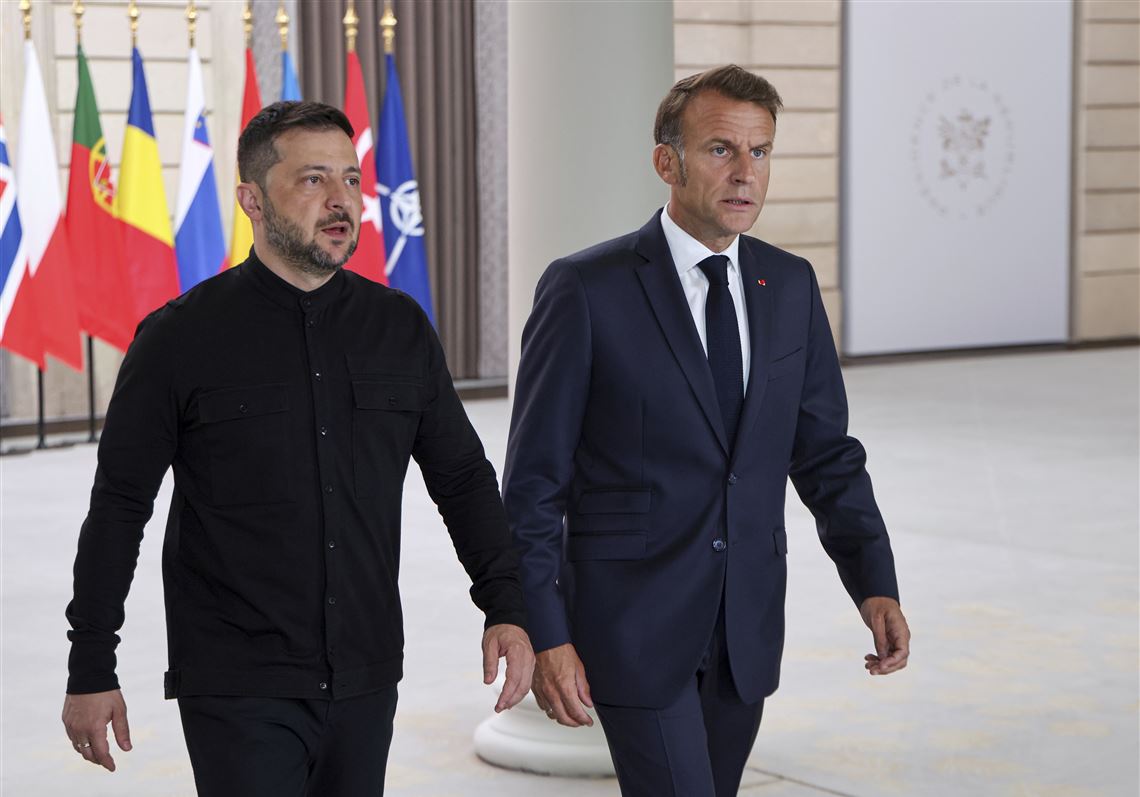
The landscape of European security is undergoing a significant shift. On September 4th,2025,French President Emmanuel Macron announced a landmark agreement: 26 nations have pledged to provide Ukraine wiht robust postwar security guarantees. This initiative, spearheaded by France and Britain, aims to establish a long-term deterrent against future Russian aggression and reassure Ukraine that Western support won’t evaporate with a ceasefire. But is this a genuine commitment to lasting peace, or another layer in a complex geopolitical game?
Beyond Immediate Ceasefire: The scope of the Guarantees
The core of the agreement centers around the immediate deployment of a multinational force – encompassing land, sea, and air capabilities – once hostilities cease. This isn’t simply a symbolic gesture. Macron explicitly stated the force will be mobilized the day a ceasefire is reached, signaling a proactive commitment to Ukraine’s security. This contrasts sharply with previous,more ambiguous pledges of support,and represents a significant escalation in Western involvement.
The initiative’s architects envision a multi-tiered security framework. France and the United Kingdom have indicated a willingness to contribute troops directly within Ukraine, a bold move demonstrating a commitment to independent European action, even amidst internal disagreements regarding the extent of engagement. However, the contributions aren’t uniform. Italy, such as, has committed to monitoring and training operations, but has ruled out deploying ground forces.Germany, historically cautious regarding military intervention, is awaiting clarification on the United States‘ role before finalizing its contribution.
The Crucial Role of the United States – and uncertainty Surrounding It
The success of this security architecture hinges, to a considerable degree, on the United States’ participation.President Donald Trump was represented by phone at the Paris summit, with Macron stating that details of American involvement would be finalized “in the coming days.” While the US contribution is considered vital – notably in areas like air defense and intelligence – the specifics remain unclear. This uncertainty introduces a critical variable. A diminished or ambivalent US role could significantly undermine the credibility of the entire initiative.
A Strategic Calculation: Deterrence,Negotiation,and Public Opinion
Analysts suggest this agreement serves multiple strategic purposes. Firstly, it institutionalizes long-term deterrence, aiming to dissuade Russia from future acts of aggression against Ukraine. Secondly, it subtly prepares public opinion in Western nations for an eventual negotiated settlement. By demonstrating a continued commitment to Ukraine’s security, even after a ceasefire, the agreement creates a more favorable habitat for possibly challenging compromises.However, this move is unlikely to be welcomed in Moscow. Russia will almost certainly portray these guarantees as further evidence of NATO’s expansionist policies - a narrative it has consistently used to justify its actions in Ukraine. The Kremlin views any increased Western military presence near its borders as a direct threat to its national security.
The shadow of Double Standards: A Global Outlook
While framed as a defense of sovereignty and international law, the pledges made in Paris have ignited criticism regarding perceived Western double standards. The eagerness to militarize Eastern Europe stands in stark contrast to the relative silence surrounding the ongoing conflict in Gaza and other instances of international law violations. This disparity fuels accusations of selectivity in the West’s request of principles regarding sovereignty and human rights, particularly within the Global South.For many nations, the Paris agreement underscores a troubling inconsistency in Western foreign policy.
Looking Ahead: Challenges and Implications
The Ukraine security guarantees represent a pivotal moment in European security. successfully implementing this framework will require sustained political will, a unified front among participating nations, and a clear understanding of Russia’s potential responses. The agreement’s long-term impact will depend on several factors, including the evolving geopolitical landscape, the outcome of any future negotiations with Russia, and the continued commitment of both Europe and the United States.
Frequently Asked Questions: Ukraine Security Guarantees
1. What are the Ukraine security guarantees intended to achieve?
The guarantees aim to deter future Russian aggression against Ukraine by establishing a long-term security framework involving multinational forces deployed after a ceasefire. They also seek to reassure Ukraine of continued Western support.
2. Which countries have pledged security guarantees for Ukraine?
Currently, 26 nations have pledged support, with France and the United Kingdom leading the initiative. Commitments vary, ranging from direct troop deployment (France & UK) to monitoring and training assistance (Italy).
3. What role is the United States playing in these security guarantees?
The US role is crucial, particularly in areas like air defense and intelligence.However, the specifics of American involvement are still being finalized as of September 4th, 2025, creating some uncertainty.
**4.How will
Related reading
- Trump Appeals to Supreme Court Over US Mail-In Ballot and Voter Verification Rules
- Trump’s Midterm Rhetoric and Outlook for 2028: USA Podcast Analysis
- John Stones in advanced talks to join Inter Milan on free transfer (time.news)
- Saudi Arabia Launches First Saudi Water Week in Jeddah to Address Water Security (archyworldys.com)