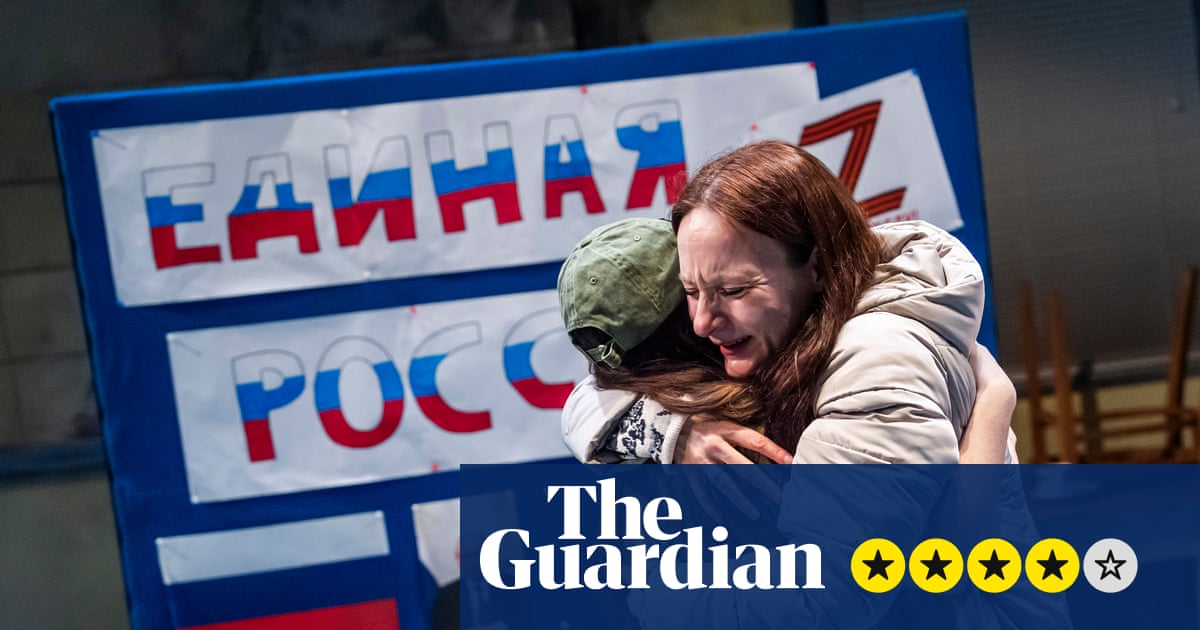
The stage is a powerful space for reckoning with trauma, and few conflicts demand such reckoning right now as the war in Ukraine. A new theatrical production, “Ukraine Unbroken,” currently playing in London, takes on this immense task, presenting a series of five short plays designed to illuminate the history and horror of Russia’s ongoing invasion. The production, conceived by Nicolas Kent, echoes a similar project he undertook in 2009 focusing on the colonial history of Afghanistan, a parallel drawn to underscore the complexities and long shadows of geopolitical conflict. “Ukraine Unbroken” doesn’t shy away from demanding truths, offering a multifaceted portrait of a nation under siege and a people grappling with unimaginable loss.
Kent’s approach is to weave together historical context with intensely personal stories, creating a tapestry of experiences that resonate far beyond the immediate headlines. The plays, although varying in style and focus, collectively build a compelling argument about the roots of the current conflict and the devastating human cost. The production arrives at a critical moment, as the war enters its fifth year – marked on February 24, 2024, with events across Ukraine commemorating the full-scale invasion launched by Russia in 2022 – and as international attention, while still significant, faces the challenge of sustained engagement. According to the BBC, as of March 3, 2026, Russia and Ukraine have recently exchanged the bodies of over 1,000 soldiers, a grim reminder of the ongoing casualties.
Unpacking the Past, Confronting the Present
The initial plays in “Ukraine Unbroken” serve as crucial groundwork, establishing the historical context often lost in simplified narratives. Jonathan Myerson’s “Always” depicts a tense scene within a Kyiv hotel room during the early days of the 2022 invasion, capturing the fear and uncertainty experienced by civilians caught in the crossfire. The play too subtly references the Maidan Uprising of 2013-14, a pivotal moment in Ukraine’s recent history, where protests against then-President Viktor Yanukovych ultimately led to his ouster. The Maidan Revolution, as it’s also known, was a response to Yanukovych’s decision to abandon a trade agreement with the European Union in favor of closer ties with Russia. The Guardian reported on the 10-year anniversary of the protests in February 2024, highlighting the enduring significance of the event.
David Edgar’s “Five Day War” takes a more direct approach to examining Russia’s long-standing ambitions in Ukraine, dramatizing preparations for a perceived victory and even imagining a scenario involving the death of President Volodymyr Zelenskyy. While perhaps less emotionally resonant than the later plays, it provides a valuable, if unsettling, glimpse into the mindset driving Russian aggression. The play underscores the historical narrative of Russian colonial ambition, a theme that resonates with the broader context of the conflict. The Institute for the Study of War (ISW) consistently analyzes Russian military campaigns and strategic objectives, providing detailed assessments of the conflict’s evolution. Their website offers a wealth of information on the Russian offensive campaign.
The Human Cost of War
It is in the latter three plays that “Ukraine Unbroken” truly finds its emotional core. Natalka Vorozhbyt’s “Three Mates” is a searing monologue delivered by Ian Bonar, portraying a Ukrainian man desperately trying to evade conscription. His character, a former musician, grapples with guilt, fear, and the agonizing realization that his life is irrevocably altered by the war. The play’s power lies in its raw honesty and its ability to convey the psychological toll of conflict. The play’s depiction of a conscription-aged man hiding from the draft speaks to the immense pressure faced by Ukrainian citizens, as the country continues to mobilize its forces.
David Greig’s “Wretched Things” presents a particularly harrowing ethical dilemma. Three Ukrainian soldiers, stationed in an abandoned school, encounter an injured North Korean fighter fighting alongside Russian forces. The play forces them to confront a brutal choice: prioritize their own survival or risk their lives to aid an enemy combatant. This scenario, while fictionalized, highlights the increasingly complex and internationalized nature of the conflict. The involvement of foreign fighters on both sides of the conflict has been a recurring theme throughout the war.
The final play, “Taken,” by Cat Goscovitch, is perhaps the most emotionally devastating. It centers on a Ukrainian mother’s desperate search for her 12-year-traditional daughter, abducted by Russian forces during the siege of Mariupol. The play underscores the horrific reality of forced deportations, a practice that has been widely condemned by international organizations. Reports indicate that an estimated 20,000 Ukrainian children have been abducted by Russia since 2022, a figure that underscores the scale of this tragedy. The lack of closure in the play mirrors the ongoing trauma experienced by countless Ukrainian families.
A Haunting Score and a Unified Vision
Throughout the evening, the performances are unified by the presence of Mariia Petrovska, who provides a haunting musical score and storytelling interludes using the bandura, Ukraine’s national instrument. Her contributions serve as a powerful framing device, grounding the individual plays within a broader cultural and historical context. Four of the dramas are directed by Nicolas Kent, with Victoria Gartner directing “Three Mates,” demonstrating a cohesive directorial vision. The cast admirably handles multiple roles, further enhancing the production’s sense of unity.
“Ukraine Unbroken” is more than just a theatrical production. it’s a vital intervention, a reminder of the power of art to make sense of the world and to bear witness to suffering. The production’s exploration of historical context, coupled with its unflinching portrayal of the human cost of war, offers a profound and moving experience. The timing of this production is particularly poignant, as the conflict continues to unfold and as global attention shifts to other crises, such as the ongoing tensions in the Middle East. The ISW is also currently providing detailed analysis of the situation in the Middle East, including updates on Iran and its proxies. Their Middle East coverage offers valuable insights into the region’s complex dynamics.
The Broader Implications and Future Projects
The success of “Ukraine Unbroken” raises an significant question: could a similar project be undertaken to explore the colonial histories and ongoing conflicts in other regions, particularly the Middle East? As the production itself suggests, understanding the present requires a deep engagement with the past. Tracing the historical roots of conflict is essential for fostering empathy, promoting accountability, and building a more just and peaceful world. The war in Ukraine has demonstrated the devastating consequences of unchecked aggression and the importance of international solidarity.
The ongoing conflict has also had a significant impact on the global economy and geopolitical landscape. According to the BBC, Ukrainian President Zelenskyy has expressed concerns that a potential escalation of conflict involving Iran, potentially spurred by actions taken by former U.S. President Donald Trump, could negatively impact Ukraine by driving up oil prices and exacerbating shortages in air defenses. The BBC’s coverage of the Ukraine war provides comprehensive updates on these developments.
Key Takeaways:
- “Ukraine Unbroken” is a series of five short plays examining the history and impact of Russia’s invasion of Ukraine.
- The production blends historical context with intensely personal stories, highlighting the human cost of the conflict.
- The plays address themes of historical trauma, ethical dilemmas, and the devastating consequences of war for civilians.
- The production utilizes music and storytelling to create a unified and emotionally resonant experience.
- “Ukraine Unbroken” serves as a powerful reminder of the importance of art in making sense of the world and bearing witness to suffering.
As the war in Ukraine continues, and as new challenges emerge on the global stage, the demand for informed analysis and compassionate storytelling remains paramount. “Ukraine Unbroken” is a testament to the power of theatre to fulfill that need. Stay informed about the latest developments in Ukraine through reliable sources like the BBC and the Institute for the Study of War. What are your thoughts on the role of art in responding to global conflicts? Share your perspectives in the comments below.
Related reading