Ukraine War: Civilian Impact Escalates as Attacks target Infrastructure and Aid Workers – A Deep Dive (October 26, 2023)
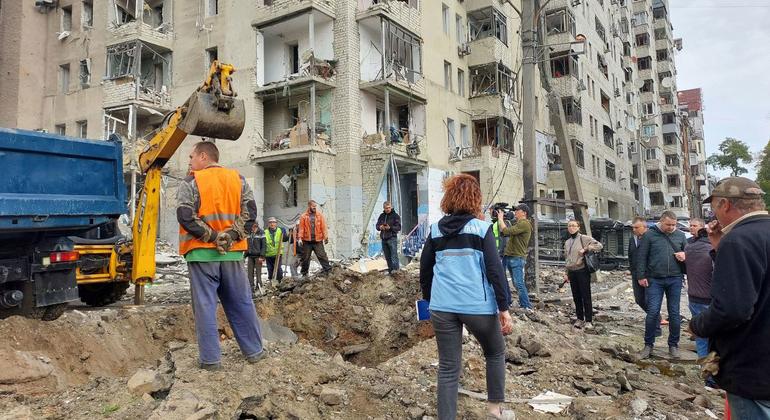
The conflict in Ukraine continues to inflict a devastating toll on civilians, with recent escalations in missile and drone attacks targeting critical infrastructure and even humanitarian aid convoys. As of October 22, 2023, the UN Human Rights Monitoring Mission in Ukraine (HRMM) reported at least six civilian deaths, including two children, and over 30 injuries resulting from these attacks. This isn’t simply collateral damage; it’s a pattern of strikes raising serious concerns about the purposeful targeting of civilian areas. But what’s driving this intensification, what’s being done to protect those on the ground, and what does the future hold for humanitarian access?
Recent Attacks: A Pattern of targeting Civilians
The latest wave of attacks has focused heavily on eastern Ukraine, especially the city of Kharkiv, located near the Russian border. A harrowing example is the recent drone strike on a kindergarten in kharkiv, which, thankfully, saw all 50 children safely evacuated. However, the extensive damage serves as a stark reminder of the vulnerability of educational institutions and the constant threat faced by the civilian population.
The HRMM’s assessment is clear: these attacks,utilizing long-range weaponry,are intentionally targeting residential areas. This isn’t just about physical destruction; it’s about creating an habitat of fear and disrupting essential services. Ukraine’s Ministry of Energy confirmed widespread infrastructure damage, leading to emergency blackouts, disrupted power and water supplies, and delays in national railway services. These disruptions exacerbate the already dire humanitarian situation,particularly as winter approaches.
Humanitarian Aid Under Fire: Risks on the Frontlines
Despite the escalating dangers, humanitarian organizations are working tirelessly to deliver aid to communities in need. The UN Office for the Coordination of Humanitarian Affairs (OCHA) https://www.unocha.org/ continues to reiterate a fundamental principle: civilians must never be targets.
Recent successes include an inter-agency convoy reaching Urozhaine, a frontline community routinely subjected to shelling and drone attacks. This 24th convoy to the Kherson region this year delivered 11 metric tonnes of essential supplies – food, hygiene kits, blankets, solar lamps, and medical provisions – to approximately 1,000 residents.
However, these operations are becoming increasingly perilous.A deeply concerning incident last week saw a UN convoy of four aid trucks come under direct attack by Russian forces. This marks the first instance of a direct attack on a UN humanitarian convoy in the conflict, a shocking progress that underscores the immense risks faced by aid workers.
Andrea de Domenico, the top UN aid coordinator in Ukraine, acknowledged the danger, stating, “It takes a lot of determination, courage and motivation to keep on doing it, but that’s what it is indeed, to be involved in humanitarian operations in a war zone.” The incident highlights the critical need for enhanced security measures and unwavering commitment to protecting humanitarian personnel.
The Broader Context: Why the escalation?
Several factors likely contribute to the recent escalation in attacks. Ukraine’s ongoing counteroffensive, while making incremental gains, is facing stiff resistance. Russia may be attempting to disrupt Ukrainian logistics and morale by targeting infrastructure and civilian areas.Moreover, the approaching winter months will likely exacerbate the humanitarian crisis, potentially prompting increased attacks aimed at weakening Ukraine’s resilience.
Recent Statistics & Research (October 2023):
* Civilian Casualties: The Office of the UN High Commissioner for Human Rights (OHCHR) verified 9,806 civilian deaths and 17,966 injuries as of October 2023, though the actual figures are believed to be considerably higher. https://www.ohchr.org/en/countries/ukraine/pages/hrreports.aspx
* Displacement: UNHCR reports over 6.2 million refugees remain displaced across Europe, with millions more internally displaced within Ukraine. https://www.unhcr.org/ukraine-emergency.html
* Infrastructure Damage: A recent World Bank assessment estimates the cost of reconstruction and recovery for Ukraine at over $411 billion as of March 2023, with meaningful damage to energy, housing, and transportation infrastructure.[https://wwwworldbankorg/en/country/ukraine/publication/rapid-damage-assessment-[https://wwwworldbankorg/en/country/ukraine/publication/rapid-damage-assessment-[https://wwwworldbankorg/en/country/ukraine/publication/rapid-damage-assessment-[https://wwwworldbankorg/en/country/ukraine/publication/rapid-damage-assessment-
Related reading