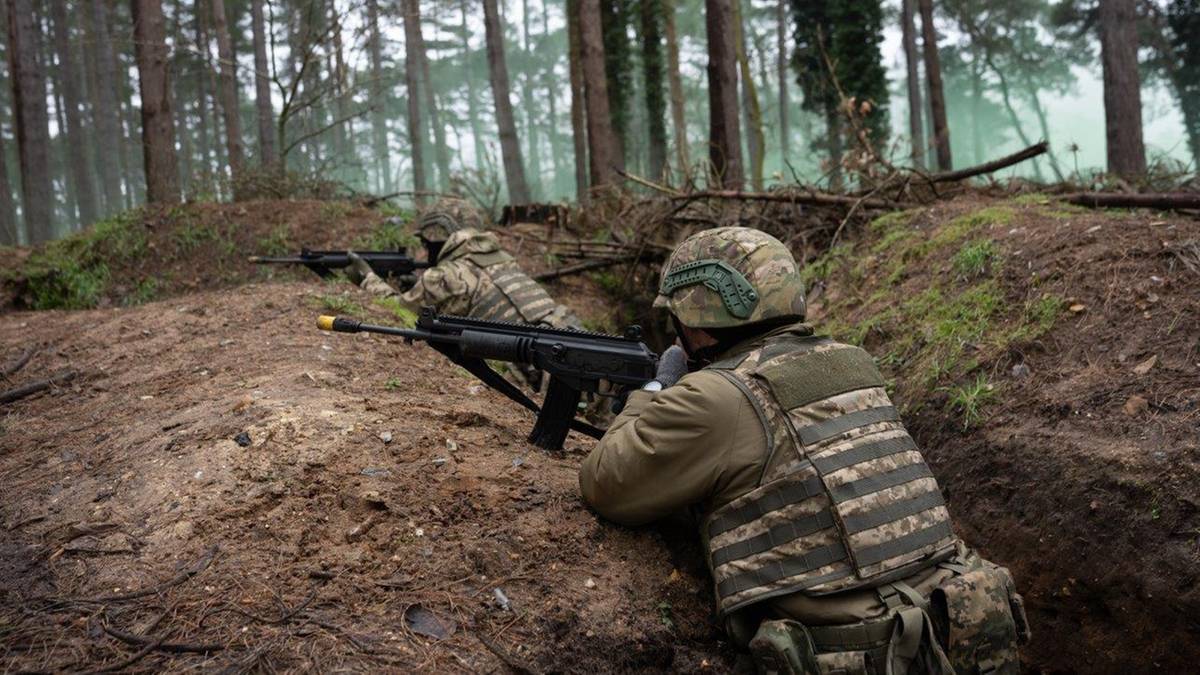
In the ongoing conflict in eastern Ukraine, the strategic city of Lyman has become a focal point of intense fighting, with Ukrainian forces maintaining a resilient defense against repeated Russian assaults for nearly a year. Located in Donetsk Oblast, Lyman sits north of Kramatorsk and has been contested since the early stages of Russia’s invasion, changing hands multiple times as both sides vie for control of this key transportation hub.
Recent reports from Ukrainian military sources indicate that Russian offensive operations in the Lyman direction have been completely halted, with commanders stating that enemy forces no longer possess offensive potential in the area. This assessment comes amid conflicting intelligence about the current state of the front, highlighting the fluid and contested nature of the fighting in this sector of the Donbas region.
The situation around Lyman remains volatile, with Russian forces continuing to launch attacks despite Ukrainian claims of having stopped their advance. Military analysts note that whereas Ukrainian defenses have held firm in certain sectors, Russian troops have made tactical gains in nearby villages, creating a complex battlefield where control shifts frequently based on artillery barrages, drone reconnaissance and infantry assaults.
Lyman’s strategic importance stems from its position as a railway junction and its proximity to larger urban centers like Kramatorsk and Sloviansk, which remain under Ukrainian control. Control of Lyman would provide Russian forces with a stronger foothold for potential operations toward these cities, while its retention by Ukraine helps maintain a defensive buffer in northern Donetsk Oblast.
Conflicting Reports on Frontline Dynamics
Assessments of the military situation in and around Lyman vary significantly between sources. Ukrainian military representatives, including a commander using the call sign “Makar” cited by Ukrainian media outlet Espreso, have stated that Russian offensive capabilities in the Lyman direction have been entirely neutralized. According to these reports, Ukrainian forces have successfully repelled all Russian attempts to advance toward the city for approximately one year, maintaining consistent defensive positions despite persistent pressure.
Conversely, independent military analysis projects such as DeepState have reported ongoing Russian advances in the Lyman sector, indicating that Russian troops continue to press forward along specific axes of attack. These conflicting assessments underscore the challenges of obtaining accurate, real-time information from active combat zones, where fog of war and operational security often limit transparency from both sides.
The Institute for the Study of War (ISW) has also weighed in on the situation, noting that Russian forces appear to be expanding their bridgehead northeast of Lyman as part of broader efforts to create conditions for future operations toward Bakhmut and Lyman itself. This suggests that while immediate offensive capabilities may be degraded, Russian military planning continues to focus on this axis as part of their overall strategy in the Donbas.
Historical Context: Liberation and Recapture Efforts
Lyman first came under international attention in late 2022 when Ukrainian forces successfully liberated the city from Russian occupation during a rapid counteroffensive in the Kharkiv and Donetsk regions. Russian Ministry of Defense officials confirmed the withdrawal of their troops from Lyman in October 2022, citing the risk of encirclement by advancing Ukrainian units. This marked a significant setback for Russian forces in their attempt to consolidate control over Donetsk Oblast.
Since that liberation, Russian forces have repeatedly attempted to retake Lyman, recognizing its value as a gateway to the larger urban agglomeration of Kramatorsk and Sloviansk. The city has changed hands multiple times throughout the conflict, with each side launching counteroffensives to regain or maintain control based on shifting frontline dynamics and resource availability.
The prolonged fighting around Lyman has resulted in significant damage to civilian infrastructure, with residential areas, utilities, and public buildings suffering from repeated artillery strikes and combat-related destruction. Humanitarian organizations have reported ongoing challenges in delivering aid to affected populations due to security concerns and access restrictions imposed by the fighting.
Strategic Implications for the Donbas Front
The outcome of the fighting around Lyman carries broader implications for the trajectory of the conflict in eastern Ukraine. A sustained Ukrainian hold on the city would help preserve defensive lines protecting Kramatorsk and Sloviansk, two of the last major urban centers in Donetsk Oblast still under Ukrainian government control. Conversely, a Russian capture of Lyman could facilitate further advances toward these cities and potentially complicate Ukrainian defensive planning in the northern Donbas.
Military analysts emphasize that control of transportation nodes like Lyman’s railway junction remains critical for logistics and troop movements on both sides. The ability to maintain supply lines through contested areas often determines the sustainability of frontline positions, making such infrastructure points high-value targets in prolonged engagements.
The human toll of the fighting has been substantial, with both military personnel and civilians bearing the brunt of the conflict. While exact casualty figures remain difficult to verify due to the fog of war and limited access for independent monitors, international organizations have documented widespread displacement, infrastructure damage, and humanitarian needs arising from the prolonged fighting in Donetsk Oblast.
Current Status and Future Outlook
As of mid-April 2026, the situation around Lyman remains fluid, with neither side able to declare definitive control over the entire contested area. Ukrainian forces continue to defend key positions within and around the city, while Russian units persist in probing for weaknesses and attempting to regain momentum through localized attacks.
The conflicting reports about offensive capabilities in the Lyman direction reflect the complexity of assessing military effectiveness in active combat zones, where units may experience simultaneous setbacks and advances across different sectors of the front. What remains clear is that Lyman continues to be a heavily contested locality, symbolizing the broader struggle for control of eastern Ukraine that has defined the conflict since its inception.
For readers seeking to understand the evolving situation, monitoring official military communications from both sides, along with reports from independent conflict monitoring organizations, provides the most comprehensive picture of developments in this critical sector of the Donbas front. The fighting around Lyman serves as a reminder of the high stakes involved in the battle for territorial control and the resilience demonstrated by forces on both sides of the conflict.
Stay informed about developments in Ukraine by following trusted news sources and official updates. Share your thoughts on the situation in Lyman and the broader conflict in the comments below, and help spread awareness by sharing this article with others interested in understanding the ongoing developments in eastern Europe.
Related reading