
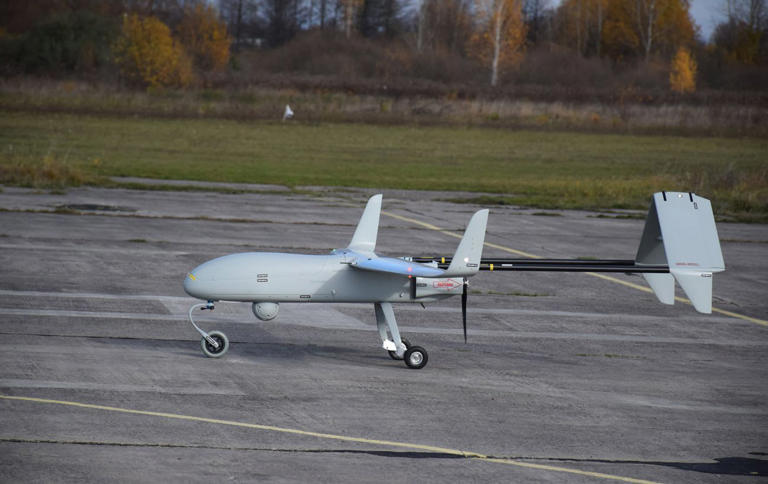
Reports have emerged of new Ukrainian drone strikes targeting industrial infrastructure in Russia’s Perm region, signaling a continued effort by Kyiv to extend the reach of its aerial campaign deep into Russian territory. While official confirmations from regional authorities are often delayed, the targeting of industrial hubs far from the front lines suggests a strategic shift toward disrupting the economic foundations of the Russian war effort.
The reported attacks specifically focused on industrial facilities, with accounts indicating that energy-related infrastructure may have been the primary target. This development follows a pattern of increasing precision and range in Ukrainian drone operations, which have increasingly pivoted from tactical battlefield support to strategic economic sabotage.
As the conflict evolves, the targeting of the Perm region—a critical center for Russian machinery and energy processing—highlights a growing vulnerability in Russia’s internal security perimeter. For the global community, these strikes underscore the escalating nature of the conflict and the potential for significant disruptions to Russian industrial output.
The Strategic Significance of the Perm Industrial Hub
Perm is not merely a regional center but a cornerstone of Russia’s industrial complex. Located in the Ural Mountains, the region is heavily integrated into the national defense and energy sectors. It is widely recognized as a major hub for the production of chemicals, oil refining, and heavy machinery, making it a high-value target for any campaign aimed at degrading Russia’s logistical and financial capabilities.

By targeting infrastructure in the Urals, Ukraine is attempting to force Russia to redistribute its air defense assets away from the front lines in eastern and southern Ukraine. When industrial sites deep in the interior are threatened, the Kremlin must decide between protecting critical economic assets or maintaining the density of its defensive umbrella over military concentrations near the border.
The focus on energy infrastructure, specifically pumping and distribution facilities, is designed to create a “bottleneck” effect. Disrupting the flow of petroleum products does not only impact the immediate local economy but can hinder the transport of fuel required for military operations and the export of energy products, which remain a primary source of funding for the Russian state.
The Evolution of Long-Range Drone Warfare
The ability to strike targets far from the border represents a significant leap in Ukrainian capabilities. Over the past year, the transition from short-range reconnaissance drones to long-range, one-way attack drones has allowed Kyiv to bring the costs of the war home to the Russian population and industrial elite.

These operations typically employ a combination of “loitering munitions” and modified drones capable of navigating via satellite and inertial guidance. This allows them to bypass traditional radar installations by flying at low altitudes, making them demanding to detect until they are nearly upon their target.
The broader strategy of targeting the Russian energy sector is intended to degrade the Kremlin’s ability to sustain a long-term war of attrition. By repeatedly striking refineries and pumping stations, Ukraine aims to create a cumulative effect of equipment failure and decreased production capacity that cannot be easily repaired due to international sanctions on high-tech industrial components.
Economic and Logistical Implications
While a single strike on a pumping station may not collapse a regional economy, the psychological and logistical impact is substantial. Each successful strike proves that no part of the Russian interior is entirely safe, potentially leading to decreased efficiency in industrial operations and increased costs for security and insurance.
these strikes complicate Russia’s internal logistics. The Russian railway and pipeline networks are the arteries of its economy; any disruption to the pumping mechanisms that move oil and gas can lead to cascading delays in delivery and processing. This puts additional pressure on a logistics system already strained by the demands of a large-scale military mobilization.
From a geopolitical perspective, these attacks serve as a signal to Western allies that Ukraine possesses the agency and technical capability to conduct independent strategic operations. It demonstrates a level of resilience and innovation in the face of limited long-range missile supplies, utilizing low-cost drone technology to achieve high-impact strategic goals.
Key Takeaways of the Perm Strikes
- Deep Penetration: The attacks demonstrate the ability of Ukrainian drones to reach industrial targets deep within the Russian interior.
- Economic Sabotage: The focus on energy and industrial infrastructure aims to degrade the financial and logistical capacity of the Russian state.
- Air Defense Pressure: Such strikes force Russia to stretch its air defense networks, potentially creating gaps in coverage elsewhere.
- Strategic Signaling: The operations highlight Ukraine’s evolving capability to conduct long-range strategic warfare.
As the situation in the Perm region develops, the international community will be watching for official responses from the Kremlin and further evidence of the damage sustained. The shift toward industrial targeting suggests that the conflict is entering a phase where the economic endurance of the Russian state is being tested as directly as its military strength on the battlefield.

The next confirmed checkpoint for this story will be the release of official damage assessments from Russian regional authorities or further claims of responsibility from Ukrainian military intelligence. We will continue to monitor these developments as they unfold.
Do you believe that targeting industrial hubs deep inside Russia will accelerate a diplomatic resolution, or will it lead to further escalation? Share your thoughts in the comments below.