
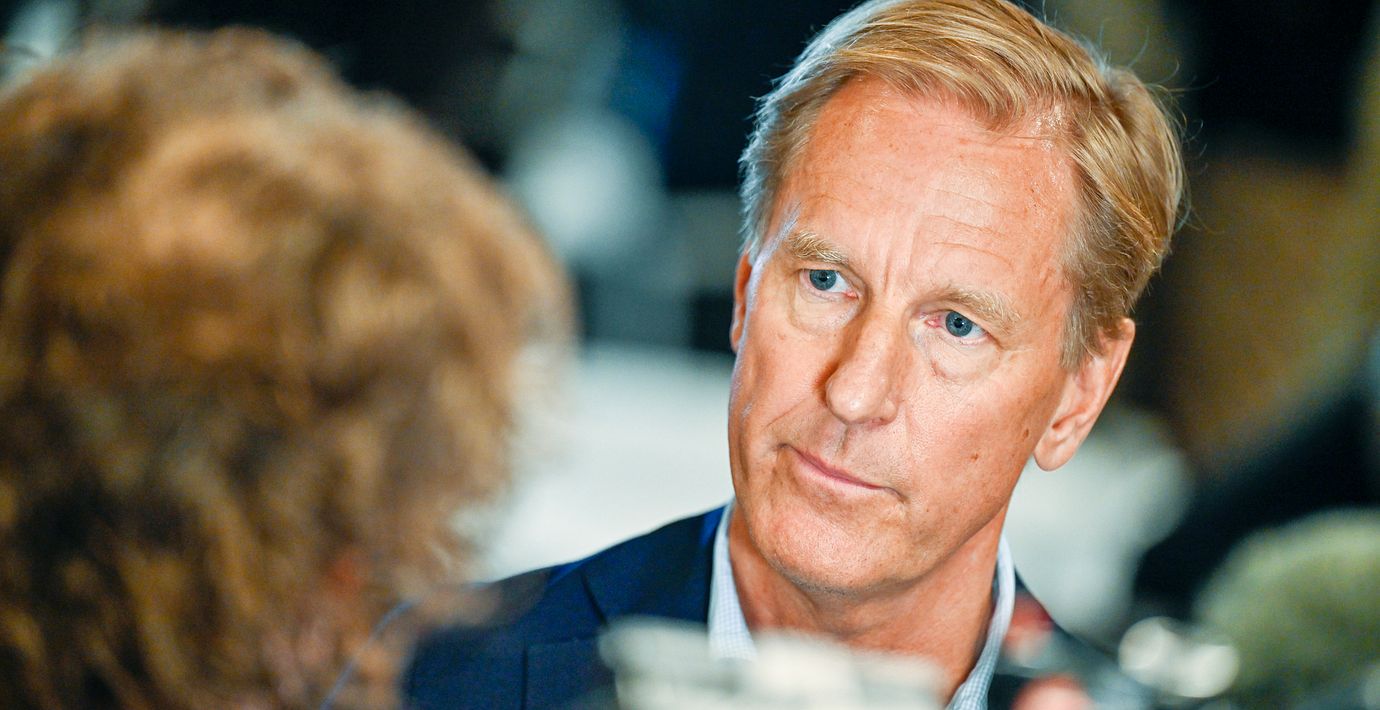
Ulf Rosberg has been elected as the new chairman of the Swedish Tennis Federation following a controversial sponsorship proposal from financier Christer Gardell. The decision was made at the federation’s annual meeting on Sunday, April 26, 2026, where Rosberg secured 42 votes in favor and 8 against, receiving applause from attendees upon his acceptance.
The election marks a significant shift in leadership for Swedish tennis, coming after Gardell pledged to invest 100 million kronor in the sport on the condition that his preferred candidate, Rosberg, be appointed chairman and that the entire existing board step down. This condition was met as all current board members declined re-election, resulting in a complete turnover of the federation’s leadership.
Rosberg, a long-time friend and business associate of Gardell from the 1990s, expressed gratitude for the trust placed in him, stating it felt “fantastiskt och inspirerande” to receive the mandate. He acknowledged the controversy surrounding the process, noting that while he would have preferred some continuity by retaining one or two former board members for stability, he now sees the opportunity to build a fresh agenda from a “blank slate.”
The sponsorship offer, first presented by Gardell in October 2025, includes strict conditions beyond board replacement. Although Gardell later withdrew his demand for a full board overhaul following criticism earlier in 2026, the outcome at the annual meeting still resulted in a complete renewal of the federation’s governing body. Rosberg confirmed there had been no pressure from Gardell or his associates regarding the vote.
Reactions to the development have been mixed within the Swedish tennis community. Some view the investment as a necessary boost to revive a sport that has struggled to produce world-class players in recent years, while others criticize the move as a potential “kupp” — or coup — that risks undermining democratic processes in sports governance by tying financial influence to leadership control.
Despite the debate, Rosberg emphasized his intention to maintain dialogue with former board members and stressed that the federation’s future direction would be shaped collectively. The 100 million kronor investment, if fulfilled, would represent one of the largest private contributions ever made to Swedish tennis and is expected to fund youth development, coaching programs, and international competitiveness initiatives.
Background on the Leadership Change
The Swedish Tennis Federation, which oversees all aspects of tennis in Sweden including player development, tournament organization, and national team representation, has faced challenges in maintaining consistent international success. Prior to Rosberg’s election, the federation had been led by Åsa Hedin, whose tenure ended as part of the board-wide resignation triggered by the Gardell-Rosberg initiative.

Gardell, a prominent Swedish financier and hedge fund manager known for his activism in corporate governance, has been an avid tennis player for decades. His partnership with Rosberg extends beyond business, as the two have competed together in doubles tournaments, including a noted victory in Austria referenced in financial media coverage of their collaboration.
The federation’s annual meeting, held under standard procedural rules, allowed members to vote on both the new chairman and the re-election of sitting board members. The unanimous decision by incumbent board members not to seek re-election cleared the way for the new leadership slate to take effect immediately following the vote.
Implications for Swedish Tennis
The proposed 100 million kronor investment aims to address long-standing concerns about funding gaps in Swedish tennis, particularly in grassroots participation and elite athlete support. If realized, the funds could support expanded access to training facilities, improved coaching education, and increased opportunities for young players to compete internationally.
Sports governance experts have noted that while private investment can accelerate development in underfunded sports, conditional donations that mandate leadership changes raise questions about institutional independence. The Swedish Tennis Federation has not yet released detailed plans for how the funds would be allocated or overseen, though Rosberg indicated that transparency and collaboration would be central to the process.

As of the date of the election, no formal agreement detailing the disbursement of the 100 million kronor had been made public. The federation is expected to outline next steps regarding funding governance and strategic planning in the coming weeks, with further updates anticipated before the end of the second quarter of 2026.
The development reflects broader trends in sports financing, where high-net-worth individuals increasingly play decisive roles in shaping national sporting bodies. Similar cases in other countries have sparked debate over the balance between philanthropic support and democratic accountability in sports administration.
Next Steps and Accountability
The newly elected board, led by Rosberg, is expected to convene its first official meeting to establish internal procedures, review the federation’s statutes, and start discussions on the potential sponsorship agreement with Gardell. No date for this meeting has been publicly confirmed as of the latest available information.

Moving forward, the federation will need to demonstrate clear separation between the sponsorship offer and governance decisions to maintain credibility with stakeholders, including clubs, players, coaches, and the Swedish Sports Confederation. Any official confirmation of the investment is likely to be accompanied by a public framework outlining its use, oversight mechanisms, and performance benchmarks.
For now, the focus remains on stabilizing leadership and defining a shared vision for the future of tennis in Sweden. Rosberg has called for unity and patience, emphasizing that meaningful change requires time and collective effort, even with significant financial backing.
Readers are encouraged to follow official communications from the Swedish Tennis Federation for verified updates on leadership actions, funding developments, and program initiatives. Share your thoughts on this development in the comments below and help foster a constructive conversation about the future of sports governance.