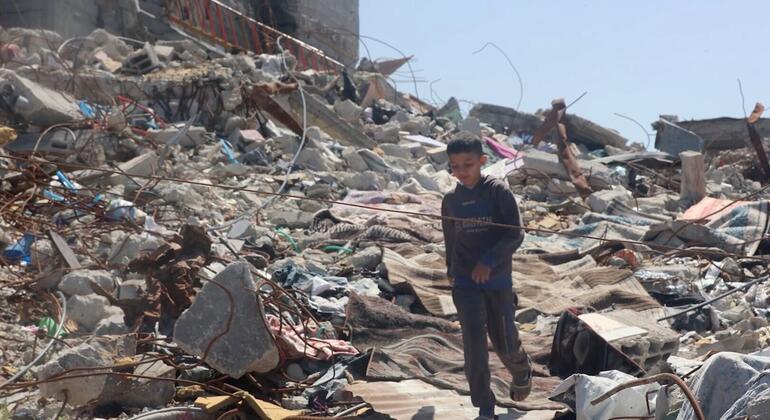
The humanitarian situation in the Gaza Strip continues to deteriorate as conflict persists, with the United Nations Office of the High Commissioner for Human Rights (OHCHR) reporting that at least 26 Palestinians were killed in the territory between Tuesday, and Friday. This period coincided with the lead-up to Eid al-Adha, one of the most significant observances in the Islamic calendar, which was marked this year by ongoing military operations and profound civilian hardship across the enclave.
As the conflict enters its ninth month, the toll on civilian life and infrastructure remains a central focus for international observers and humanitarian agencies. The reported casualties underscore the persistent instability in the region, where the UN human rights office has repeatedly called for adherence to international humanitarian law, emphasizing the obligation to protect non-combatants during active hostilities.
For those following the economic and geopolitical shifts in the Middle East, understanding the human cost is as vital as analyzing the broader regional impact. The loss of life during a period intended for communal reflection and religious observance highlights the deep disruption to the social and economic fabric of Gaza, where basic services and the movement of essential goods remain severely constrained.
The Humanitarian Context and Ongoing Risks
The situation in Gaza remains fluid, with international aid organizations struggling to deliver food, medical supplies, and fuel to a population facing acute food insecurity and a collapsed healthcare system. According to the Integrated Food Security Phase Classification (IPC), the risk of famine persists across the Gaza Strip, driven by the destruction of local markets and the limitation of humanitarian aid corridors. The economic implications are stark: entrepreneurship and local commerce have been effectively halted, and the long-term recovery of the territory’s infrastructure will require significant international intervention and sustained stability.
The UN’s reports on civilian casualties serve as a sobering reminder of the challenges inherent in protecting human rights in active conflict zones. These reports, often compiled through a network of field monitors and verified data from local health authorities, are essential for maintaining a transparent record of the conflict’s impact. However, the UN has consistently faced difficulties in accessing all areas of the Gaza Strip, which can lead to delays in the verification of casualty figures and incident details.
Why the Escalation Matters for Global Markets
While the immediate focus is on the human tragedy, the protracted nature of the conflict has broader implications for global markets and regional economic policy. The disruption of trade routes in the Red Sea and the potential for wider regional instability continue to influence shipping costs and energy prices. As an economist, I have observed that market volatility often reflects the uncertainty surrounding these geopolitical hotspots. Investors and policymakers remain cautious, monitoring the situation for any signs of de-escalation that might stabilize regional trade flows.
the conflict has prompted a re-evaluation of international aid structures. The reliance on external humanitarian assistance, while necessary in the current climate, is not a substitute for a functioning local economy. Sustainable development in the region remains contingent upon a durable ceasefire and the restoration of diplomatic channels that allow for the free movement of people and capital.
Key Factors Influencing the Current Landscape
- Logistical Constraints: The ongoing closure of major border crossings continues to impede the flow of aid, exacerbating the humanitarian crisis.
- Healthcare Collapse: With a significant portion of Gaza’s medical facilities out of commission, the ability to treat the injured is severely limited.
- Regional Stability: The spillover effects of the conflict continue to pose risks to international shipping and regional energy security.
- Diplomatic Efforts: International mediators, including the US, Egypt, and Qatar, continue to work toward a framework for a ceasefire and the release of hostages, though progress remains slow and complex.
Looking Ahead: The Path to Accountability
The international community, through bodies such as the International Court of Justice (ICJ), continues to deliberate on the legal frameworks governing the conflict. The ICJ has issued various provisional measures intended to prevent further harm to civilians and ensure the provision of basic services. Compliance with these legal mandates remains a point of intense international scrutiny and debate.

As we move forward, the role of independent journalism remains critical in cutting through the noise of partisan rhetoric. Providing a clear, evidence-based account of events is not merely a professional duty but a necessity for a global audience seeking to understand the complexities of modern conflict. The next major checkpoint for international observers will be the ongoing proceedings at the ICJ and the periodic updates from humanitarian agencies regarding the delivery of aid into the Gaza Strip.
We invite our readers to stay informed through official updates from the UN Relief and Works Agency (UNRWA), which provides regular situational reports on the ground. Please join the conversation by sharing your thoughts or questions in the comments section below, as we continue to track these developments with the rigor and impartiality they demand.
Related reading