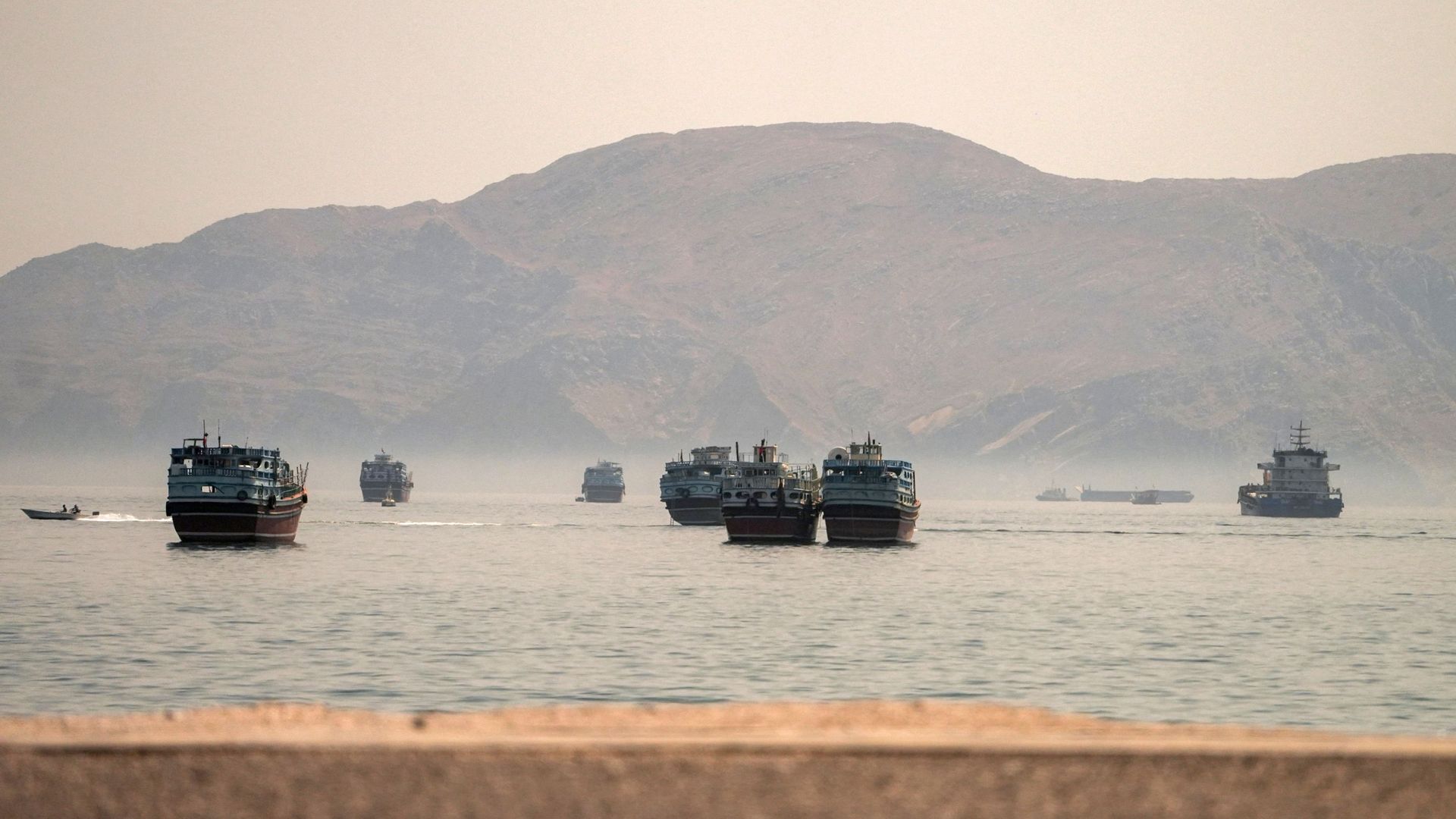
Maritime security in the Strait of Hormuz has reached a critical threshold following unconfirmed reports of vessel strikes involving projectiles, prompting heightened alerts for the thousands of seafarers operating in the region. While official United Nations channels have not confirmed a large-scale suspension of crew evacuations, international maritime authorities are closely monitoring the situation as regional tensions escalate and the threat of drone and missile-based attacks on commercial shipping persists.
The Strait of Hormuz remains one of the world’s most sensitive maritime chokepoints, facilitating the passage of approximately 21 million barrels of oil per day through the Persian Gulf to global markets, according to data from the U.S. Energy Information Administration. Any disruption to the safety of this corridor carries immediate implications for global energy prices and the stability of international supply chains.
What are the current security threats in the Strait of Hormuz?
The primary threat to commercial vessels in the region has shifted from traditional piracy to sophisticated, state-level or proxy-led projectile attacks. These incidents often involve Unmanned Aerial Vehicles (UAVs), commonly known as drones, or anti-ship cruise missiles. These technologies allow actors to strike much larger vessels from significant distances, complicating the defensive capabilities of commercial ships which are not equipped with military-grade missile defense systems.
Recent maritime security assessments indicate that the use of “one-way attack” drones has become a frequent tactic in Middle Eastern maritime corridors. These devices are relatively inexpensive to deploy but can cause catastrophic damage to a ship’s superstructure, propulsion systems, or cargo holds. Naval analysts, as reported by Reuters, have noted that such attacks often target specific vessels to send political messages or to exert pressure on regional adversaries.
The risk is compounded by the geographical narrowness of the Strait. At its tightest point, the shipping lanes are only about two miles wide in each direction, leaving vessels with minimal room to maneuver when responding to incoming threats or sudden tactical changes in the environment. This lack of maneuverability increases the vulnerability of merchant ships to both projectile strikes and sudden boarding attempts by naval forces.
How are international organizations responding to maritime insecurity?
The International Maritime Organization (IMO), a specialized agency of the United Nations, serves as the primary body for setting global standards for the safety, security, and environmental performance of international shipping. In response to increasing volatility in the Middle East, the IMO has consistently urged all member states to adhere to the United Nations Convention on the Law of the Sea (UNCLOS), which guarantees the right of innocent passage through international straits.
While reports of a UN-led evacuation suspension remain unverified by official UN press releases, the agency and various maritime security coalitions have increased the frequency of “Security Advisories.” These advisories provide commercial operators with real-time data on threat levels, recommended routing, and emergency protocols. The goal is to mitigate risk without necessitating the massive logistical undertaking of evacuating thousands of crew members, which can itself create secondary security risks.
Furthermore, international naval task forces, such as the Combined Maritime Forces (CMF), maintain a continuous presence in the region to provide overwatch for commercial traffic. These coalitions work to identify and intercept suspicious craft and to provide a deterrent against projectile-based attacks. However, the sheer volume of commercial traffic and the speed of modern drone technology present a persistent challenge to even the most advanced naval surveillance networks.
The human cost: Risks to seafarers and crew safety
Beyond the economic and geopolitical implications, the escalation of maritime tension places an immense burden on the global seafaring workforce. Seafarers are often caught in the middle of geopolitical conflicts that they have no part in, working on vessels that become targets due to their nationality, flag state, or cargo.

The psychological impact of operating in a “high-risk area” (HRA) is significant. Crew members must contend with the constant possibility of sudden attacks, which can lead to long-term trauma and increased turnover in the maritime industry. The International Transport Workers’ Federation (ITF) has frequently highlighted the need for better protections and mental health support for crews operating in conflict zones, noting that the isolation of life at sea exacerbates the stress of security threats.
Safety protocols for crews in the Strait of Hormuz typically include:
- Hardening of Vessels: Installing razor wire, water cannons, and increased lighting to deter boarding.
- Citadel Protocols: Establishing secure, reinforced “safe rooms” where the crew can retreat during an attack.
- Enhanced Monitoring: Utilizing radar and thermal imaging to detect small, fast-moving objects like drones.
- Emergency Drills: Frequent training for fire suppression, damage control, and emergency evacuation procedures.
If an evacuation were to be officially ordered, the logistical complexity would be unprecedented. Coordinating the transport of thousands of crew members from various international vessels requires seamless cooperation between ship owners, flag states, coastal authorities, and international aviation and maritime agencies.
What are the implications for global energy markets?
The Strait of Hormuz is the world’s most important oil transit chokepoint. Because a significant portion of the world’s liquefied natural gas (LNG) and crude oil passes through this narrow passage, any perceived threat to security triggers immediate volatility in energy markets. Even the rumor of a disruption can cause a spike in Brent crude futures as traders price in the “risk premium” associated with potential supply interruptions.
This volatility extends to the shipping industry itself through the mechanism of War Risk insurance. When a region is designated as a high-risk zone, insurance premiums for vessels entering that area can increase exponentially. For many shipping companies, these rising costs can make certain routes economically unviable, forcing them to reroute vessels around the Cape of Good Hope. While rerouting avoids the immediate threat, it adds significant time and fuel costs to global trade, contributing to broader inflationary pressures.
The relationship between maritime security and energy stability is cyclical: increased conflict leads to higher insurance and security costs, which in turn raises the price of the commodities being transported, impacting everything from industrial manufacturing to consumer fuel prices worldwide.
Maritime Security Comparison: Red Sea vs. Strait of Hormuz
| Feature | Red Sea / Bab el-Mandeb | Strait of Hormuz |
|---|---|---|
| Primary Threat Actor | Houthi Rebels (Yemen) | Regional State Actors / Proxies |
| Primary Weaponry | Anti-ship missiles, UAVs, Waterborne IEDs | UAVs, Missiles, Naval Boarding |
| Economic Impact | Disruption of Asia-Europe trade | Global Oil and LNG supply volatility |
| Primary Regulatory Body | IMO / UN Security Council | IMO / Regional Naval Coalitions |
Frequently Asked Questions
Is it safe for commercial ships to enter the Strait of Hormuz?
Safety is determined by current intelligence and the specific security advisories issued by maritime authorities like the IMO. While many ships continue to transit, they do so under heightened security protocols and increased insurance oversight.
What happens if a vessel is hit by a projectile?
Vessels are required to follow established emergency procedures, which include damage control, notifying the nearest maritime rescue coordination center, and, if necessary, preparing for crew evacuation. The severity of the response depends on the damage to the ship’s integrity and the stability of the vessel.
Who is responsible for protecting ships in international waters?
While ship owners are responsible for the immediate safety and security of their vessels, international naval coalitions and maritime task forces provide protection and monitoring in international waters to ensure the freedom of navigation.
How do these attacks affect the price of gas?
Attacks in critical chokepoints create uncertainty in the global oil supply. This uncertainty leads to increased demand for “safe” supply and higher insurance costs, both of which contribute to higher energy prices for consumers.
The next scheduled update regarding maritime security protocols in the Persian Gulf is expected following the next meeting of the regional maritime security coordination center. We will continue to monitor official statements from the United Nations and the International Maritime Organization for any confirmed changes to evacuation procedures or security advisories.
Have thoughts on the impact of maritime security on global trade? Share your perspective in the comments below and share this article with your network.
- Colombia Earthquake Death Toll Rises as Rescue Operations Continue
- Australia Bowled Out for 198 as Bangladesh Dominate Day 1 of First Test in Darwin
- Deadly Houthi Red Sea Attack: 3 Crew Members Killed on Cargo Ship (archyworldys.com)
- Iran Disputes Trump Claims as Strait of Hormuz Traffic Plummets (newsdirectory3.com)