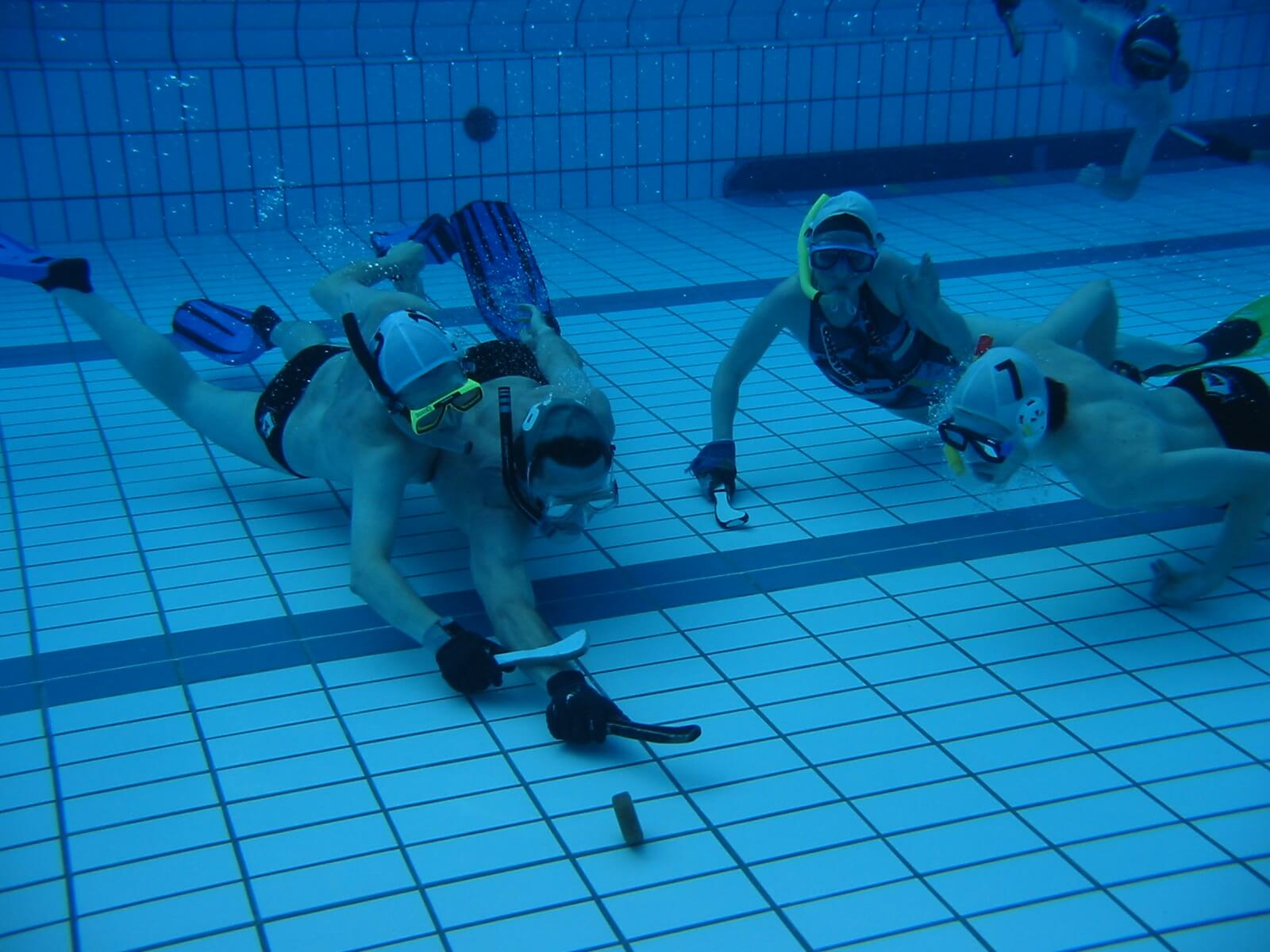
Underwater hockey, globally recognized by participants as octopush, remains one of the most demanding yet underappreciated disciplines in competitive aquatic sports. Played on the bottom of a swimming pool where athletes use short sticks to maneuver a heavy lead puck into an opponent’s goal, the game tests lung capacity, spatial awareness, and physical endurance in a three-dimensional playing environment. According to the Confédération Mondiale des Activités Subaquatiques (CMAS), the global governing body for underwater sports, the discipline requires competitors to hold their breath for extended periods while executing complex passing and defensive strategies without the aid of breathing apparatus during active play.
Invented in the United Kingdom in 1954 by sub-aqua club members looking for a way to keep members active during the cold winter months when open-water diving slowed down, the sport has grown quietly across six continents. Alan Blake, founder of the Southsea Sub-Aqua Club, originally conceptualized the game—initially called Octopush—using a short wooden stick, a lead-weighted puck, and basic diving mask, fins, and snorkel equipment. Over the decades, the sport evolved from a localized club pastime into an international competition managed under strict rules, featuring world championships hosted biennially by CMAS with dozens of participating nations.
The structure of an underwater hockey match challenges traditional athletic conditioning. Two teams of six players—with four substitutes resting on the pool deck—compete in two 15-minute halves at the bottom of a pool typically two to four meters deep. Players wear a distinctive water polo-style cap, a protective mouthguard, a glove to protect the hand holding the stick, and a mask, snorkel, and fins. Because players cannot use scuba tanks, cardiovascular recovery and breath control dictate the pace of the game. Athletes constantly submerge to contest the puck, sprint along the pool floor, and surface briefly for air before diving back down to rejoin the rotation.
Global Governance and Competition Structure
International competition in underwater hockey operates under the umbrella of CMAS, which sanctions continental tournaments and the CMAS Underwater Hockey World Championships. National federations, such as the British Octopush Association and USA Underwater Hockey, regulate domestic leagues, club structures, and team selections for international events. According to tournament records maintained by CMAS, powerhouse nations in the sport traditionally include New Zealand, Australia, South Africa, France, and Great Britain, where domestic participation numbers remain highest.
Despite its international footprint, the sport receives minimal mainstream media coverage, largely due to the unique viewing challenges it presents. Spectators on the pool deck see only ripples and surfacing players, while underwater cameras or glass-walled pools are required to capture the action below the surface. Organizations have increasingly adopted underwater drone cameras and live-streaming setups during world championships to broadcast games online, allowing fans to follow tactical plays, zone defenses, and fluid passing sequences in real time.
Equipment, Safety, and Tactical Evolution
Equipment design has evolved significantly since the 1950s. Modern sticks measure approximately 300 to 350 millimeters in length and are crafted from wood or high-density plastics, color-coded to distinguish teams (typically black or white). The puck, weighing between 1.2 and 1.5 kilograms (roughly 2.6 to 3.3 pounds), stays on the bottom of the pool due to its negative buoyancy, though skilled players can flick it through the water column for aerial passes.
Safety protocols enforced by CMAS referees govern physical contact, stick handling, and equipment integrity. Referees monitor the game from the surface using snorkeling gear or from the deck, communicating underwater infractions via acoustic underwater signals or surface hand gestures. Common penalties include dangerous use of the stick, obstruction, or illegal body contact, resulting in temporary time penalties in a penalty box.
Tactically, teams employ sophisticated formations comparable to ice hockey or soccer, utilizing specialized positions such as forwards, backs, and total-mobility sweepers. Because players must manage anaerobic fatigue, rapid substitution rotations are essential to maintain high-intensity pressure throughout the match. As national federations expand youth development programs and university clubs, the sport continues to attract athletes seeking an intense, multidisciplinary team challenge away from mainstream arenas.
Keep reading