The Universe’s Expansion rate: A New Challenge to Cosmic Theories
Cosmologists are grappling with a notable puzzle: the Hubble tension.This discrepancy arises from differing measurements of the universe’s expansion rate, and it’s pushing the boundaries of our understanding of the cosmos. Recent observations from the Atacama Cosmology Telescope (ACT) are now helping to narrow down potential explanations – and rule out quite a few.
The Hubble Tension Explained
Essentially, scientists measure the Hubble constant – the rate at which the universe expands – in two primary ways. One method relies on observing the cosmic microwave background (CMB), the afterglow of the Big Bang. The other uses “nearby” objects like supernovae and Cepheid variable stars.
Unfortunately,these two methods yield different results. This difference isn’t a minor fluctuation; it’s a statistically significant tension that suggests something fundamental is missing from our current cosmological model.
ACT’s Precise View of the CMB
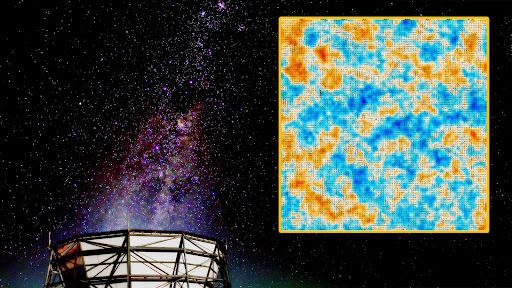
The ACT provides an exceptionally detailed map of the CMB. This allows researchers to scrutinize the early universe with unprecedented precision. Studying the CMB is crucial because the conditions present when it was emitted influence the expansion rate we observe today.
Specifically, the ACT team analyzed the intensity and polarization of microwaves from the CMB. This data offers a unique window into the universe’s infancy and provides a powerful test for various cosmological theories.
Testing 30 Cosmic models – And Finding None That Fit
Many theoretical solutions to the Hubble tension have emerged, often referred to as “extended” cosmological models. These models build upon the standard cosmological picture by introducing new components or forces into the universe.
However, these additions wouldn’t just appear today. Thay would have left their imprint on the CMB. Therefore, the ACT’s high-resolution data allowed the team to rigorously test around 30 of these extended models.
Surprisingly,all of them failed to align with the observed CMB data. This doesn’t represent a setback, though.In science, eliminating incorrect possibilities is just as valuable as finding the right answer.
What Does This Mean for the Future?
While the ACT results haven’t provided a definitive solution to the Hubble tension, they’ve significantly narrowed the field of possibilities. You can think of it as systematically crossing off incorrect answers.
This process is essential for refining our understanding of the universe. it guides future research and encourages the advancement of more accurate and comprehensive cosmological models.
ultimately, resolving the Hubble tension will require a combination of more precise observations and innovative theoretical frameworks. The ACT’s contribution is a crucial step forward in this ongoing quest to unravel the mysteries of the cosmos.