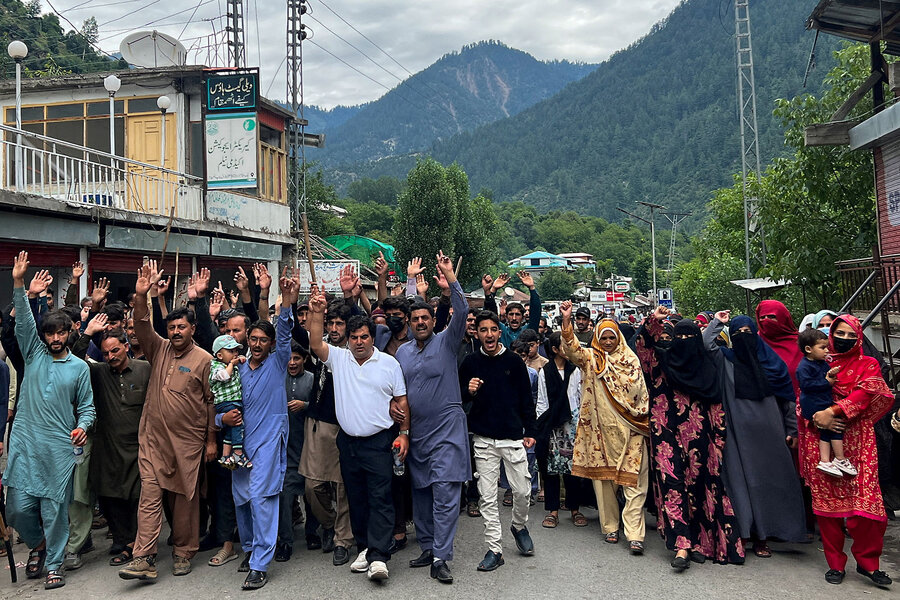
Protests over political representation and economic grievances in Pakistan-administered Kashmir have exposed a deep and persistent divide between local residents and federal authorities in Islamabad. The demonstrations, which gained significant momentum following widespread dissatisfaction over high utility prices and taxation policies, highlight long-standing structural anxieties regarding regional autonomy and governance in the disputed Himalayan territory.
According to reports from international news organizations and regional monitors, the friction stems from grievances over economic subsidies, electricity tariffs, and the extent of administrative control exercised by the central government in Pakistan. Activists and local trade bodies argue that despite generating substantial hydroelectric power, residents face disproportionately high electricity costs and lack adequate political agency within Pakistan’s federal legislative framework.
The unrest reflects a complex historical backdrop characterized by unique administrative arrangements. While Pakistan administers the region—referred to locally as Azad Jammu and Kashmir (AJK)—it maintains a distinct constitutional status separate from Pakistan’s four main provinces, fueling ongoing debates over local self-determination, representation in national institutions, and the management of local resources.
Economic Grievances and the Roots of Public Dissent
The catalyst for much of the recent mobilization centers on the cost of living and essential services. Public frustration escalated when local communities organized demonstrations against soaring electricity bills and heavy commodity taxes, according to coverage by the BBC. Residents contend that the region’s vast hydroelectric generation capacity should translate into subsidized or affordable power for local households, a core demand that has united disparate political factions.
Trade unions, civil society groups, and merchant associations have coordinated strikes and rallies to press federal and regional authorities for structural reforms. These economic pressures have quickly broadened into broader political demands concerning constitutional rights. Protesters have questioned the limits of regional legislative power, asserting that decisions made in Islamabad frequently overlook local economic realities and social needs.
Observers note that the demonstrations also touch upon sensitive questions regarding governance transparency and freedom of assembly. Local organizers have repeatedly called for reductions in administrative expenditures by regional officialdom, arguing that state resources should be redirected toward public welfare rather than bureaucratic overhead.
The Institutional Relationship Between Islamabad and Muzaffarabad
The governance structure of Pakistan-administered Kashmir operates under the Azad Jammu and Kashmir Interim Constitution Act of 1974, which establishes a parliamentary form of government with its own prime minister, president, and legislative assembly. However, ultimate executive and financial authority remains closely supervised by Islamabad through institutions such as the Kashmir Council.
Federal officials have historically defended this oversight as necessary for administrative stability and national security, given the region’s geopolitical sensitivity. Yet critics and regional politicians argue that this framework reduces the local assembly to a consultative body with limited autonomy over taxation, resource allocation, and development planning.
Relations between local political actors and federal ministries have often been strained by disputes over financial transfers and revenue-sharing from hydroelectric projects. Federal authorities have periodically engaged in negotiations with protest leaders and regional representatives to address specific economic demands, though comprehensive structural adjustments to the territory’s constitutional status remain elusive.
Regional Implications and Outlook
The persistence of political friction in Pakistan-administered Kashmir carries significant implications for regional stability, particularly given the territory’s proximity to the Line of Control dividing the wider region of Kashmir between Pakistan and India. International analysts emphasize that unresolved domestic grievances can complicate broader diplomatic postures and heighten local security concerns.
Human rights monitors and regional journalists continue to track the government’s response to public assemblies, noting instances where security measures and internet restrictions have been deployed to manage large-scale gatherings. Civil society organizations have urged restraint from law enforcement agencies and called for open dialogue between federal authorities and grassroots leaders to prevent further escalation.
As discussions between regional stakeholders and Islamabad continue, attention remains focused on whether upcoming administrative measures will satisfy demands for economic relief and greater political inclusion. Further developments will depend on formal policy announcements from federal ministries and the response of local representative bodies to proposed reforms.
Worth a look