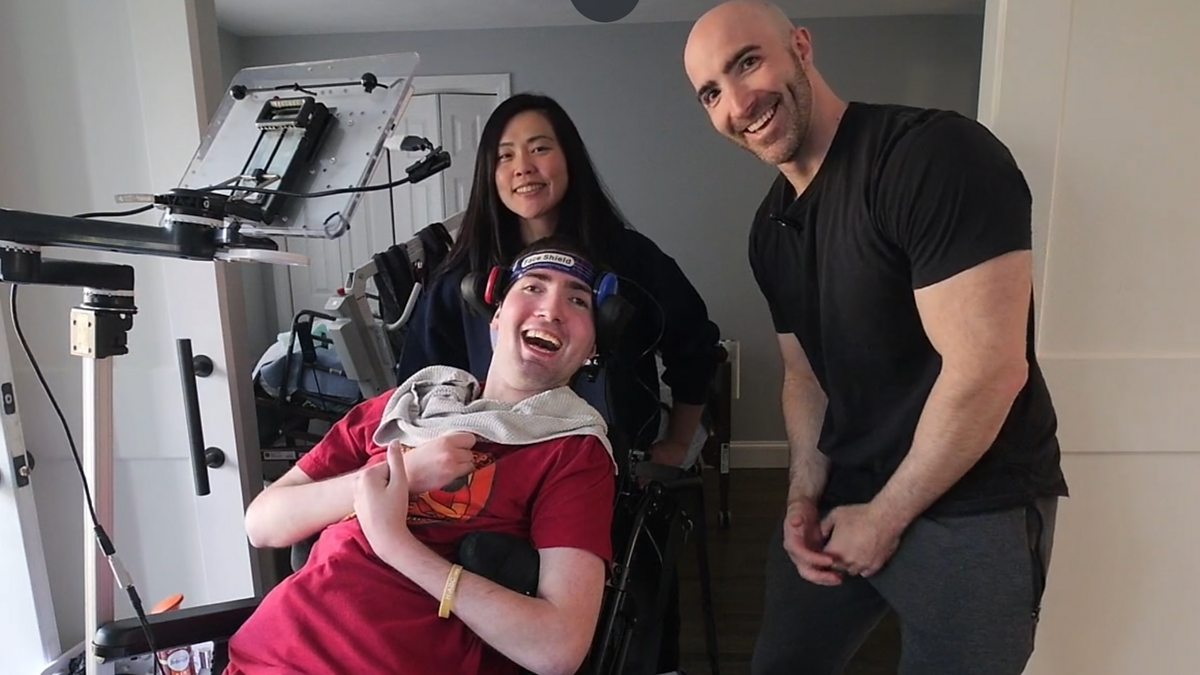
In a heartwarming example of sibling ingenuity, a brother designed a custom communication system to help his sibling reconnect with the world after losing the ability to walk, talk, or move his hands. The device, built using just two buttons, allows the user to chat, browse the internet, watch television and play video games, restoring a meaningful level of independence and engagement. This inspiring story was featured on The Happy Pod, a global news roundup highlighting uplifting human-interest stories from around the world.
The podcast episode, released on April 25, 2026, also highlighted several other remarkable stories, including the discovery of an endangered axolotl in a river in the United Kingdom, efforts by breast cancer survivors in Uganda to challenge cultural stigmas, and an elite female athlete’s decision to run the Boston Marathon while 22 weeks pregnant. Additional segments honored a landmine-detecting rat in Cambodia with a statue and addressed public confusion about appropriate attire at a nature festival.
The central narrative focuses on Ari, who created a bespoke assistive technology solution for his brother Ben following a debilitating illness or injury that left Ben unable to employ his limbs or speak. While the specific medical condition was not disclosed in the podcast, the system Ari developed enables Ben to navigate digital environments through simple binary inputs—effectively transforming two physical buttons into a gateway for communication, entertainment, and online interaction.
Such adaptive technologies fall under the broader category of augmentative and alternative communication (AAC) devices, which are designed to support individuals with speech or motor impairments. These tools range from basic switch-controlled interfaces to sophisticated eye-tracking systems, often customized to the user’s specific abilities and needs. In Ben’s case, the two-button interface represents a minimalist yet effective approach, likely utilizing scanning software that highlights options on a screen, allowing selection via button press when the desired choice is highlighted.
The story resonates beyond its technical achievement, touching on themes of familial dedication, innovation born from personal necessity, and the quiet power of accessibility engineering. Assistive devices like Ari’s creation can significantly improve quality of life by reducing isolation, enabling self-expression, and supporting participation in education, employment, and leisure activities—domains that many take for granted but remain out of reach for millions living with disabilities worldwide.
According to the World Health Organization, over 1 billion people globally experience some form of disability, with nearly 240 million facing significant functional difficulties. Despite growing awareness, access to appropriate assistive technology remains uneven, particularly in low- and middle-income countries where cost, infrastructure, and training barriers limit availability. Initiatives driven by personal motivation, such as Ari’s project, often serve as vital prototypes or inspirations for broader innovation in inclusive design.
The Happy Pod episode also drew attention to conservation efforts after a young girl in the UK rescued a juvenile axolotl—a critically endangered species native to the freshwater canals of Xochimilco, Mexico—found in a British river. Axolotls (Ambystoma mexicanum) are renowned for their remarkable regenerative abilities, capable of regrowing limbs, spinal cord tissue, and even parts of their brain and heart. However, wild populations have declined drastically due to habitat loss, pollution, and invasive species, leading the International Union for Conservation of Nature (IUCN) to classify them as critically endangered.
Experts cited in the podcast noted that the girl’s quick action likely saved the animal’s life, as axolotls cannot survive prolonged exposure to unsuitable environments. While it remains unclear how the individual arrived in UK waters—possibly through the exotic pet trade—authorities typically advise against releasing non-native species into local ecosystems due to ecological risks. In this case, the focus shifted to rescue and rehabilitation, underscoring the importance of public awareness in wildlife protection.
Another segment highlighted the work of Ugandan women who have survived breast cancer and are now leading community-based advocacy campaigns to dismantle deep-rooted cultural taboos surrounding the disease. In many parts of Africa, breast cancer is often detected late due to stigma, fear, and lack of education, resulting in poorer outcomes. By sharing their personal journeys, these women aim to normalize conversations about screening, early detection, and treatment, encouraging others to seek medical help without shame or delay.
The podcast further featured an elite female athlete who competed in the Boston Marathon while 22 weeks pregnant, aiming to inspire others by demonstrating that pregnancy require not preclude athletic participation. Her story sparked conversations about maternal health, exercise during pregnancy, and the evolving understanding of what is safe and beneficial for expectant mothers. Medical guidelines from organizations such as the American College of Obstetricians and Gynecologists (ACOG) support physical activity during pregnancy for most women, noting benefits like reduced risk of gestational diabetes, improved mood, and better postpartum recovery—provided there are no contraindications and activities are modified appropriately.
Additional uplifting moments included the recognition of a giant African pouched rat in Cambodia that had been trained to detect landmines, contributing to humanitarian demining efforts. A statue was erected in its honor, celebrating the role of animals in post-conflict recovery. Meanwhile, organizers of a nature festival issued a clarification urging attendees to wear full clothing, responding to previous misunderstandings about dress code that had led to unintended incidents.
Taken together, these stories reflect a broader journalistic effort to spotlight resilience, compassion, and ingenuity across diverse contexts—from technological innovation and environmental stewardship to health advocacy and athletic perseverance. They serve as reminders that positive change often begins with individual action, whether it’s a brother building a device for his sibling, a young girl protecting a rare creature, or a community turning personal pain into public empowerment.
As of the episode’s release on April 25, 2026, no further updates were provided regarding Ben’s ongoing use of the communication system, the axolotl’s rehabilitation status, or specific developments in the Ugandan breast cancer advocacy movement. Listeners interested in learning more about assistive technologies can explore resources from organizations such as the Assistive Technology Industry Association (ATIA) or the World Health Organization’s Global Cooperation on Assistive Technology (GATE) initiative. For updates on conservation efforts involving axolotls, the IUCN Red List and partner organizations like Chester Zoo—which runs a conservation breeding program—offer authoritative information.
We invite our readers to reflect on these stories and consider how little acts of kindness, creativity, and courage can ripple outward to create meaningful change. Share your thoughts in the comments below, and help spread these uplifting narratives by sharing this article with others who might benefit from a dose of hope.
Related reading