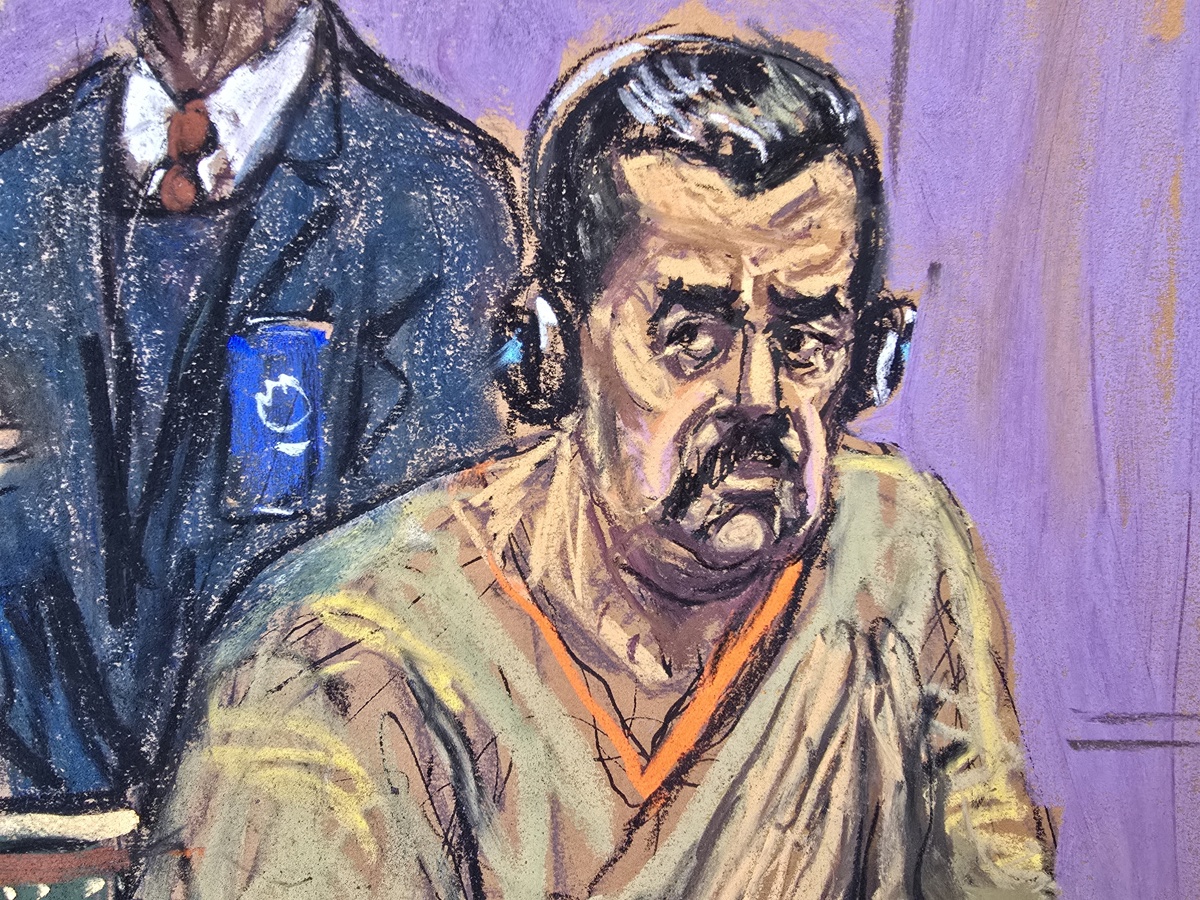
U.S. Court Allows Venezuela to Fund Maduro’s Legal Defense, Clearing Path for Narcotrafficking Trial
In a significant shift in its legal strategy, the U.S. Government has authorized Venezuela to use state funds to pay for the legal defense of former President Nicolás Maduro and his wife, Cilia Flores, in their ongoing narcotrafficking case in New York. The decision, formalized in a court document filed on April 25, 2026, resolves a months-long dispute over whether sanctions prevented Maduro’s legal team from accessing funds—a conflict that had threatened to derail the high-profile trial.
The ruling, issued by U.S. District Judge Alvin Hellerstein, comes after the Office of Foreign Assets Control (OFAC), a branch of the U.S. Treasury Department, amended its sanctions to permit payments under strict conditions. The move marks a rare concession in a case that has strained diplomatic relations between Washington and Caracas, while also raising questions about the balance between legal rights and geopolitical pressures.
Maduro and Flores, who were extradited to the U.S. In late 2025 after a dramatic capture at sea, face charges of conspiring to flood the U.S. With cocaine through a scheme allegedly involving the Venezuelan military and Colombian rebel groups. The case, filed in the Southern District of New York, has been closely watched as a test of U.S. Efforts to hold foreign leaders accountable for drug trafficking—even as it navigates the complexities of international law and diplomatic immunity.
Conditions on Funds: A Narrow Path for Legal Payments
The U.S. Government’s authorization is far from a blanket approval. According to the court filing signed by federal prosecutor Jay Clayton, payments to Maduro’s defense team—led by prominent Washington attorney Barry Pollack—must comply with two critical restrictions:
- Post-March 5, 2026, Funds Only: Payments can only be made using Venezuelan government resources that became available after March 5, 2026, the date when the U.S. And Venezuela formally restored certain financial channels as part of a broader, albeit fragile, diplomatic thaw.
- No Restricted or Blocked Assets: Funds cannot originate from accounts frozen by U.S. Sanctions or from revenue streams tied to Venezuela’s oil sector, which remains under heavy restrictions. The filing explicitly bars payments from so-called “Foreign Government Deposit Funds,” a category defined in a recent executive order targeting state assets linked to human rights abuses.
These conditions reflect the Biden administration’s cautious approach to the case, balancing the need to uphold Maduro’s constitutional right to a defense under the Sixth Amendment with its broader policy of maintaining pressure on the Venezuelan regime. The restrictions also aim to prevent the diversion of funds that could otherwise be used to prop up Maduro’s government or evade sanctions.
Legal Battle Over Fair Trial Rights Intensifies
The dispute over funding had become a central issue in the case, with Maduro’s legal team arguing that the U.S. Government’s refusal to allow payments violated his right to a fair trial. In a motion filed in March 2026, Pollack contended that the sanctions effectively stripped Maduro of his ability to mount an adequate defense, a claim that resonated with Judge Hellerstein, who had previously expressed skepticism about the government’s position.
.png "Trial Judge Hellerstein Payments")
“The Sixth Amendment guarantees the right to counsel of choice, and that right is meaningless if the defendant cannot pay for that counsel,” Pollack wrote in the motion. The judge, a 92-year-old veteran of the federal bench, had questioned whether the U.S. Government’s stance was justified, noting in a hearing that Maduro and Flores, now in U.S. Custody, no longer posed an immediate “threat to national security.”
The U.S. Government initially resisted lifting the restrictions, citing concerns that allowing Venezuela to pay Maduro’s legal fees could undermine the broader sanctions regime. However, the stalemate threatened to delay the trial indefinitely, prompting the Justice Department to seek a compromise. The resolution, while narrow, removes a major hurdle for the prosecution, which had warned that further delays could jeopardize the case.
Diplomatic and Legal Implications
The decision to allow funding has been interpreted as a sign of the Biden administration’s willingness to engage with Venezuela on select issues, even as it maintains a hardline stance on other fronts. The U.S. Has long accused Maduro of overseeing a corrupt and authoritarian regime, and his extradition in 2025 was hailed as a major victory for U.S. Law enforcement. However, the case has also exposed the challenges of prosecuting a former head of state, particularly one whose government remains in power.
For Venezuela, the ruling offers a rare diplomatic win. The Maduro government has consistently denied the charges, framing the case as a politically motivated attack on Venezuelan sovereignty. In a statement released after the court’s decision, Venezuela’s Foreign Ministry called the ruling “a step toward justice,” while reiterating its demand for Maduro’s release. The statement did not address the broader sanctions regime, which remains a point of contention between the two countries.
The case has also drawn attention to the role of Hugo Carvajal, a former Venezuelan intelligence chief and key witness in the trial. Carvajal, who was extradited to the U.S. In 2023, has been cooperating with prosecutors and is expected to testify against Maduro. His potential testimony could prove pivotal in the case, particularly given his alleged firsthand knowledge of Venezuela’s ties to drug trafficking networks.
What Happens Next?
With the funding dispute resolved, the trial is expected to proceed without further delays. The next major milestone is a pretrial hearing scheduled for May 15, 2026, where Judge Hellerstein will address outstanding motions, including potential challenges to the admissibility of evidence. Prosecutors have indicated they are prepared to present a robust case, including testimony from cooperating witnesses, intercepted communications, and financial records linking Maduro and Flores to the alleged drug trafficking scheme.
For Maduro’s defense team, the focus will now shift to preparing for trial, though the restrictions on funding could still pose logistical challenges. Pollack has not commented publicly on the ruling, but legal observers expect the defense to continue arguing that the case is politically motivated—a claim that could resonate with some international observers, even if it is unlikely to sway the U.S. Court.
The trial is expected to last several months, with a verdict potentially shaping the future of U.S.-Venezuela relations. If convicted, Maduro could face decades in prison, though the U.S. Government has not ruled out the possibility of a plea deal. For now, however, the focus remains on the courtroom, where the stakes could not be higher—for Maduro, for Venezuela, and for the broader fight against international drug trafficking.
Key Takeaways
- U.S. Authorizes Limited Funding: The U.S. Treasury’s OFAC amended sanctions to allow Venezuela to pay Maduro’s legal fees, but only under strict conditions, including the use of post-March 5, 2026, funds and the exclusion of blocked assets.
- Sixth Amendment at the Center: The dispute over funding hinged on Maduro’s constitutional right to a fair trial, with his legal team arguing that sanctions had effectively denied him the ability to mount a defense.
- Diplomatic Balancing Act: The decision reflects the Biden administration’s effort to balance legal fairness with its broader policy of maintaining pressure on the Maduro regime.
- Trial to Proceed: With the funding issue resolved, the narcotrafficking trial is expected to move forward, with a pretrial hearing set for May 15, 2026.
- High Stakes for Venezuela: The outcome of the trial could have significant implications for U.S.-Venezuela relations, as well as for Maduro’s political future.
As the case unfolds, it will continue to test the limits of U.S. Jurisdiction over foreign leaders and the complexities of prosecuting transnational crimes. For now, the focus remains on the courtroom, where the next chapter in this high-stakes legal drama is set to begin.
What do you think about the U.S. Government’s decision to allow Venezuela to fund Maduro’s defense? Should sanctions be adjusted to accommodate legal rights, or does this set a dangerous precedent? Share your thoughts in the comments below, and don’t forget to share this article with others following the case.
Related reading