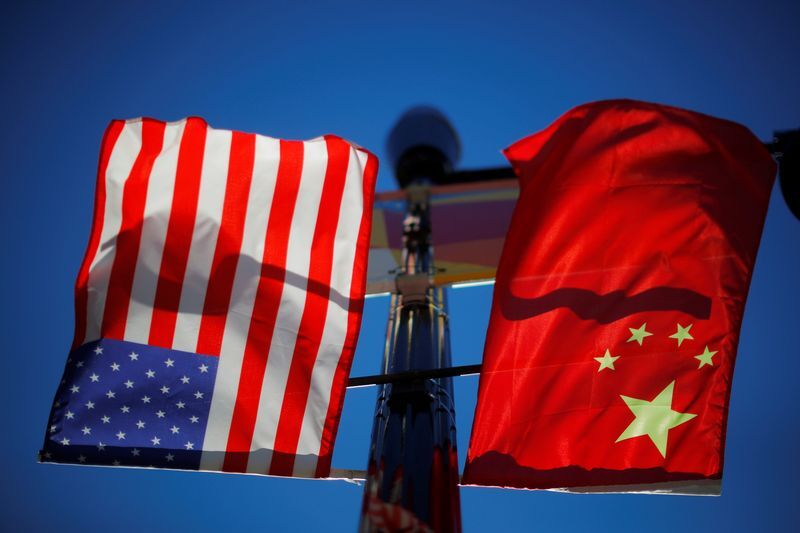
The United States government has criticized the Chinese military for providing insufficient notice and limited detail regarding a ballistic missile test conducted on July 6. According to a U.S. State Department official, the lack of transparency surrounding the launch created an unnecessary risk of miscalculation between the two global powers.
While the U.S. maintains established channels for military-to-military communication, officials indicated that the notification provided by Beijing ahead of this specific test fell short of the expectations required to ensure regional stability. This incident highlights the ongoing friction in communication protocols between Washington and Beijing, particularly concerning nuclear-capable delivery systems and strategic military exercises.
Communication Protocols and Transparency Expectations
The core of the dispute lies in the expectations for “deconfliction,” a military term used to describe the process of notifying an adversary about testing activities to prevent accidental conflict. According to a report by the U.S. Department of State, while China did provide some level of notification, it failed to meet the threshold of detail and lead time that American officials believe is necessary for responsible state behavior.

The test in question involved a ballistic missile launch, a category of hardware that carries significant weight in geopolitical signaling. Analysts often point to the nuclear policies and delivery systems of both nations as areas where even minor lapses in communication can lead to heightened tensions. For the U.S., the primary concern is not necessarily the existence of the missile test itself, but the lack of clarity regarding the trajectory and intent, which forces military planners to operate with incomplete information.
Strategic Impact on U.S.-China Relations
Relations between the U.S. and China have been marked by a series of high-level diplomatic attempts to stabilize ties, including meetings between defense officials and civilian leaders. However, military-to-military communication remains a fragile component of this relationship. The July 6 event serves as a case study for why Washington continues to press for more robust “hotlines” and pre-notification agreements.

According to updates from the U.S. Department of Defense, the Pentagon consistently monitors developments in China’s nuclear arsenal, which has been undergoing a period of modernization. The reticence to share details about testing is often framed by Beijing as a matter of national security and sovereignty, while Washington views it through the lens of international security norms and the prevention of unintended escalation.
Context of Military Signaling
Ballistic missile tests are frequently used by nations as a form of non-verbal communication to signal capability and resolve. Because these tests often occur in contested or sensitive geographic zones, the lack of advance notice can trigger defensive postures from neighbors and the United States.
The U.S. government maintains that transparency is the most effective tool for preventing a misunderstanding from spiraling into a broader confrontation. By withholding specific details, the Chinese military effectively limits the ability of the U.S. to verify the nature of the test, forcing the American intelligence community to rely on its own sensor arrays and satellite surveillance to determine the threat level. This reliance on independent verification rather than shared data is a primary source of friction in the current U.S.-China strategic dialogue.
What Happens Next
The U.S. State Department has indicated that it will continue to raise these transparency concerns through diplomatic and military channels. The next confirmed checkpoint for these discussions will likely occur during upcoming high-level bilateral summits or scheduled meetings between the U.S. Secretary of Defense and their Chinese counterpart, where the codification of pre-notification standards remains a standing item on the agenda.

As the international community watches these developments, the focus remains on whether both nations can agree on a more predictable framework for military testing. Readers interested in the latest official statements regarding these protocols can monitor the State Department’s official press releases for future updates on strategic stability dialogues.
What are your thoughts on the importance of military transparency in avoiding global conflict? Please share your views in the comments section below.