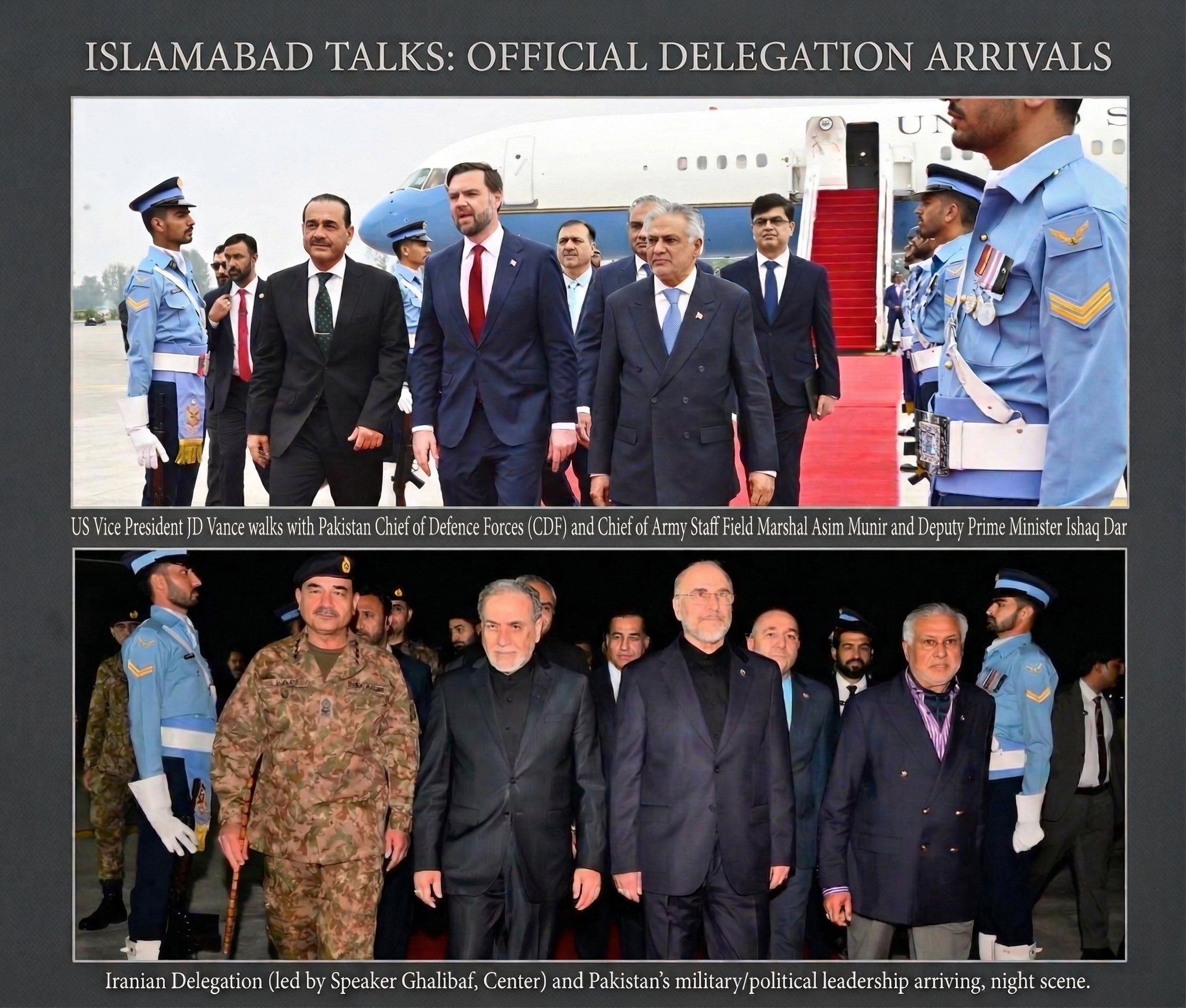
High-stakes diplomatic efforts to end the conflict between the United States and Iran have collapsed, as marathon peace talks in Islamabad ended without an agreement. U.S. Vice President JD Vance departed Pakistan on Sunday after negotiations failed to produce a permanent deal, leaving the future of a fragile ceasefire in doubt and global energy markets on edge.
The failure of the Islamabad peace talks comes after a series of intensive discussions that began Saturday and ran through the night into Sunday morning. According to U.S. Officials, the primary sticking point was Iran’s refusal to commit to forgoing the development of a nuclear weapon. Vice President Vance stated that U.S. Negotiators presented their “final and best offer,” but Tehran refused to accept the terms reported by CNN.
The diplomatic breakdown creates immediate uncertainty regarding a two-week ceasefire previously announced by Pakistani Prime Minister Shehbaz Sharif. Without a formal agreement, concerns are mounting that the ceasefire may not hold, and the lack of a commitment from Iran to reopen the Strait of Hormuz means global energy supplies will likely continue to be throttled per CNN reports.
The Anatomy of the Islamabad Negotiations
The talks were designed as a trilateral effort involving the United States, Iran, and Pakistan. The U.S. Delegation was led by Vice President JD Vance, accompanied by Special Envoy Steve Witkoff and Jared Kushner. The Iranian delegation was led by Parliament Speaker Mohammad Bagher Ghalibaf and Foreign Minister Abbas Araghchi.
Upon their arrival in the Pakistani capital on Saturday, the delegations were received by high-ranking Pakistani officials, including Deputy Prime Minister and Foreign Minister Senator Mohammad Ishaq Dar, Chief of Defence Forces and Chief of Army Staff Field Marshal Syed Asim Munir, and Minister for Interior Syed Mohsin Raza Naqvi. The Iranian delegation was as well met by National Assembly Speaker Ayaz Sadiq.
The meeting followed a public declaration by Prime Minister Shehbaz Sharif on Wednesday, who used the social media platform X to announce the two-week ceasefire and the subsequent discussions in Islamabad. Senator Mohammad Ishaq Dar had expressed hope that the parties would engage constructively to reach a “lasting and durable solution to the conflict.”
Critical Sticking Points and Nuclear Deadlock
Despite the flexibility claimed by U.S. Negotiators, the gap between the two nations remained insurmountable. Vice President Vance indicated that the U.S. Administration had maintained consistent communication with President Donald Trump throughout the process, but Iran’s refusal to abandon its nuclear ambitions served as the ultimate barrier to a deal as detailed by CNN.
Conversely, Iranian state media outlet Tasnim reported that the demands placed by the United States were the primary obstacle, stating that U.S. Demands “prevented a common framework and agreement” during the negotiations according to CNN.
The lack of a breakthrough is particularly concerning given the rhetoric leading up to the talks. President Donald Trump had previously stated that Iran’s “whole civilization will die,” though he later remarked that it “makes no difference” to him whether the two sides reached a deal per reports from CNN.
Broader Regional Impact and the Lebanon Conflict
The failure in Islamabad occurs against a backdrop of ongoing violence in the Middle East. While the U.S. And Iran struggled to discover common ground, war continues to rage in Lebanon. Reports indicate that while Israel has spared the capital of Beirut following widespread condemnation of a deadly bombing, southern Lebanon remains under heavy attack as reported by the BBC.
The humanitarian situation in Lebanon remains dire, with a fifth of the population displaced. The Lebanese health ministry has alleged a systematic Israeli approach of targeting health workers, claiming that paramedics have been killed in recent attacks. Israel has countered these claims by asserting that ambulances are being used for military purposes, though the BBC notes that evidence for these claims has not been provided via BBC News.
Israeli troops continue to operate within Lebanese territory to establish what Israeli officials describe as a security buffer zone according to the BBC.
Key Takeaways from the Failed Talks
- No Agreement: Vice President JD Vance confirmed that no deal was reached to permanently end the war after marathon sessions in Islamabad per the BBC.
- Nuclear Deadlock: Iran refused to commit to forgoing a nuclear weapon, which the U.S. Viewed as a non-negotiable term per CNN.
- Energy Risk: The failure to reach a deal leaves the Strait of Hormuz closed or throttled, threatening global energy supplies per CNN.
- Ceasefire Uncertainty: The two-week ceasefire announced by Pakistan is now in doubt following the collapse of the diplomatic framework.
What Happens Next?
With the U.S. Delegation having departed Pakistan, the immediate focus shifts to whether the current ceasefire will hold or if hostilities will resume. The international community remains watchful of the Strait of Hormuz, as any further escalation could lead to a significant spike in global oil prices.
There are currently no further scheduled rounds of talks between the U.S. And Iran. The world now awaits official statements from Tehran and the White House regarding the next steps in the conflict.
We invite our readers to share their perspectives on these developments in the comments section below. Please share this report to keep others informed on this evolving global crisis.
Keep reading