
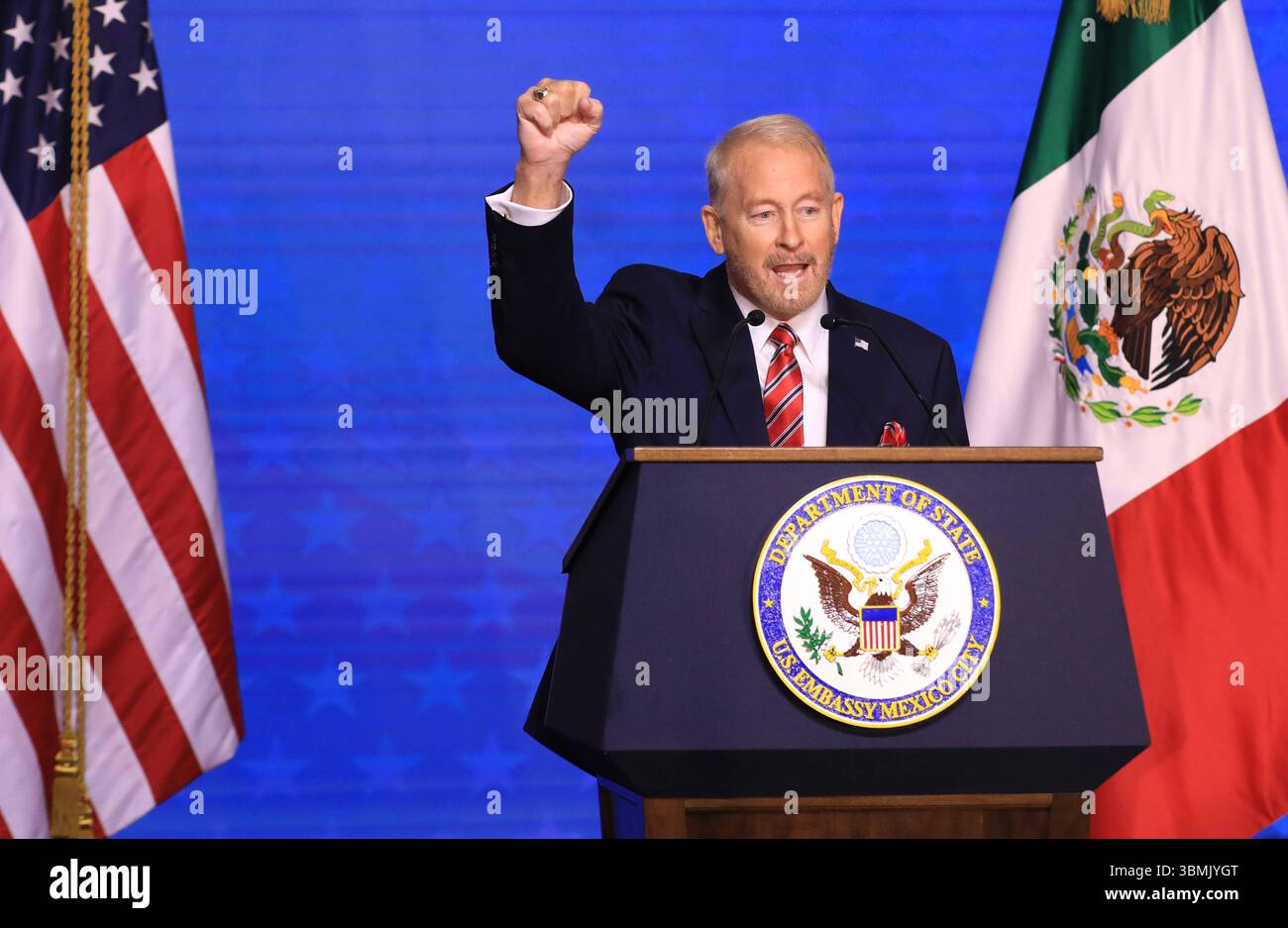
Wisconsin Senator Ron Johnson has quietly positioned himself as one of Mexico’s most influential interlocutors in Washington, according to Mexican officials and U.S. diplomatic sources. In a series of high-level meetings this week—including a closed-door discussion at the U.S. Embassy in Mexico City—Johnson has become a key figure in shaping U.S.-Mexico relations, particularly on migration, trade, and security. His growing prominence contrasts with traditional diplomatic channels, where State Department officials and the White House typically lead negotiations. Experts say Johnson’s access stems from his seniority on the Senate Foreign Relations Committee and his close ties to the Trump administration, but his role has drawn both praise and skepticism from Capitol Hill.
Mexico’s foreign ministry confirmed that officials met with Johnson’s team on May 17 to discuss bilateral cooperation, though details remain scarce. Meanwhile, Johnson’s office declined to comment on the substance of the talks, citing ongoing diplomatic sensitivities. The meetings come as tensions over migration policies and trade disputes—including the renegotiation of the U.S.-Mexico-Canada Agreement (USMCA)—have tested relations between the two nations.
Johnson’s involvement is not unprecedented. As a vocal critic of the Biden administration’s immigration policies, he has repeatedly pushed for stricter border controls, aligning with Mexico’s own concerns about irregular migration flows. But his direct engagement with Mexican officials marks a shift from his previous role as an opposition figure to a de facto negotiator. Analysts warn that his influence could complicate U.S. diplomacy if his hardline stance on issues like asylum policies clashes with Mexico’s need for cooperation on economic and security matters.
–>
Why Ron Johnson? Understanding His Role in U.S.-Mexico Relations
Johnson’s rise as a key interlocutor stems from three factors: his seniority in Congress, his alignment with Mexico’s priorities on migration, and his ability to bypass traditional diplomatic channels. According to a Brookings Institution analysis, senators like Johnson often serve as “backchannel” negotiators when official talks stall, particularly on contentious issues like asylum policies.

Mexico’s foreign ministry has historically relied on the State Department for high-level discussions, but recent shifts suggest a willingness to engage with congressional figures. A Mexican official, speaking on condition of anonymity, told Reuters that Johnson’s team raised concerns about asylum backlogs at the U.S.-Mexico border, an issue Mexico has framed as a shared challenge. Johnson’s office has not publicly acknowledged these discussions, but his past statements—such as his call for ending “catch-and-release” policies—align with Mexico’s stated goals of reducing irregular migration.
However, Johnson’s approach has drawn criticism. Democratic senators, including Dianne Feinstein, have accused him of undermining official diplomacy by negotiating outside established frameworks. A State Department spokesperson told The New York Times that while Congress plays a role in shaping policy, “the executive branch remains the primary conduit for bilateral discussions.”
What’s on the Table? Key Issues in Johnson’s Discussions
Sources indicate that Johnson’s meetings with Mexican officials focused on three priority areas:

- Migration: Both countries are grappling with record numbers of asylum seekers at the U.S.-Mexico border. Mexico has deployed 10,000 National Guard troops to its southern border with Guatemala, while the U.S. has pressured Mexico to accept more temporary asylum programs. Johnson has proposed expanding Title 42-style policies, though Mexico has resisted such measures.
- Trade and USMCA Renegotiation: The Biden administration is pushing for updates to the USMCA, including stronger labor and environmental rules. Johnson, a skeptic of the original deal, has signaled openness to revisiting its terms, though Mexico’s government has warned against disrupting supply chains during economic uncertainty.
- Security Cooperation: The two nations are also discussing joint efforts to combat transnational crime, including cartel activity and human trafficking. Johnson has pushed for increased military aid to Mexico, a proposal Mexico has historically opposed due to concerns over sovereignty.
While Johnson’s direct involvement is unusual, it reflects broader trends in U.S. foreign policy. As the Council on Foreign Relations notes, congressional engagement in diplomacy has grown under both Democratic and Republican administrations, particularly on issues where the White House and State Department lack consensus.
What Happens Next? The Road Ahead for Johnson and Mexico
The next critical checkpoint will be the U.S.-Mexico High-Level Consultations scheduled for June 15 in Washington. This official dialogue will determine whether Johnson’s backchannel efforts yield tangible results or remain symbolic. If his discussions lead to concrete proposals—such as a revised migration agreement or USMCA amendments—Mexico may seek to formalize his role. However, if the talks stall, Johnson’s influence could wane as traditional diplomatic channels reassert control.
For now, Johnson’s office has not confirmed whether he will attend the June consultations. A spokesperson told Politico that “Senator Johnson remains committed to working with Mexico to address shared challenges,” but declined to elaborate on future plans. Meanwhile, Mexican officials have not publicly acknowledged Johnson’s role beyond the May 17 meeting, suggesting a deliberate low-profile approach.
One potential wild card is the Biden administration’s upcoming border security plan, expected later this month. If the plan includes measures that align with Johnson’s proposals—such as expanded asylum processing centers in Mexico—his diplomatic role could solidify. Conversely, if the administration takes a harder line than Johnson’s suggestions, his influence may diminish.
Key Takeaways: What This Means for U.S.-Mexico Relations
- Johnson’s rise reflects a shift in diplomatic norms: Senators increasingly serve as direct negotiators, bypassing traditional channels.
- Migration remains the top priority: Both countries are under pressure to reduce border crossings, but their approaches clash over asylum policies.
- Trade talks are at a crossroads: Johnson’s skepticism of USMCA could complicate renegotiations, but Mexico may leverage his influence to push for labor reforms.
- Security cooperation is fragile: While both nations agree on combating cartels, Mexico resists U.S. military aid, a key demand from Johnson.
- The June consultations will be decisive: If Johnson’s ideas gain traction, he could become a permanent fixture in U.S.-Mexico diplomacy.
Where to Follow Updates
For the latest on U.S.-Mexico relations and Ron Johnson’s role, monitor:
- U.S. State Department – Mexico Relations
- Mexican Foreign Ministry (SRE)
- Senator Ron Johnson’s Official Website
- USMCA Renegotiation Status
As relations between Washington and Mexico City evolve, Johnson’s role will likely remain a flashpoint—both a symbol of congressional assertiveness and a potential obstacle to smooth diplomacy. The coming weeks will reveal whether his backchannel efforts translate into lasting policy changes or fade into the background of official talks.
What do you think? Could Ron Johnson’s involvement strengthen or weaken U.S.-Mexico relations? Share your thoughts in the comments below.