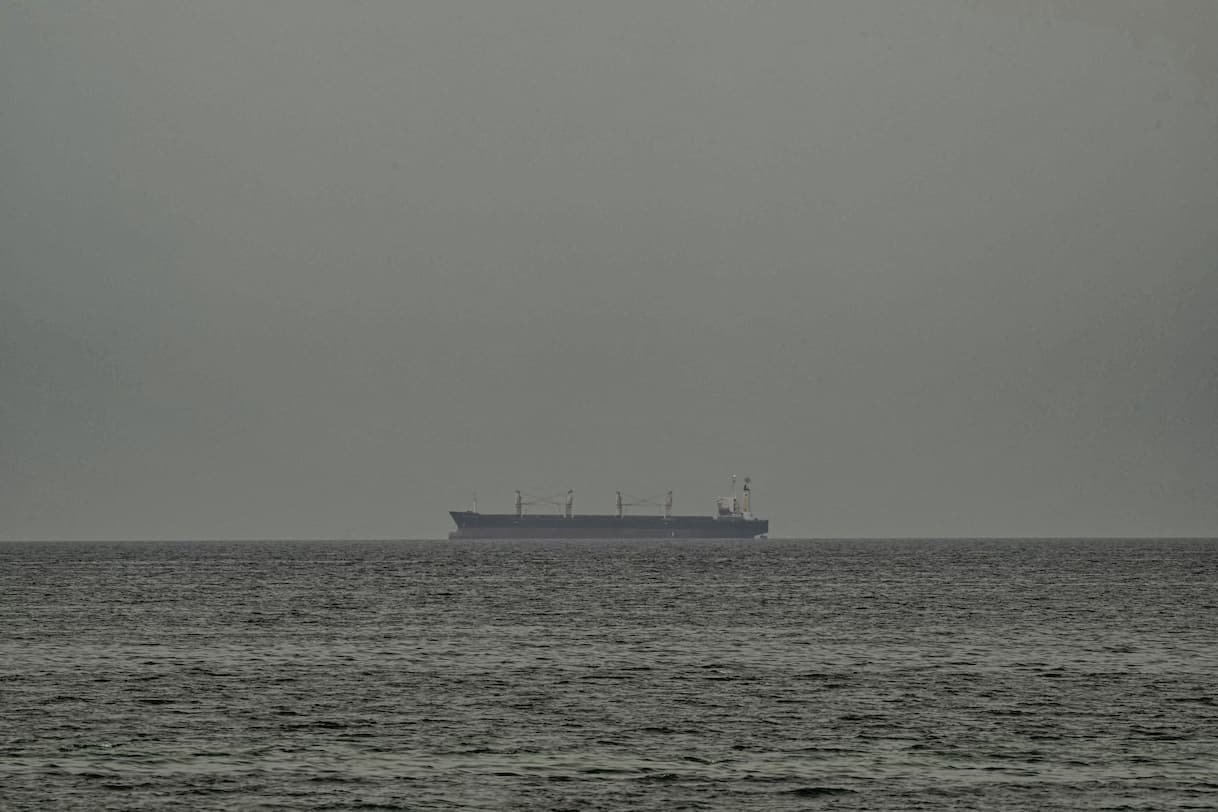
The geopolitical tension in the Middle East has reached a critical flashpoint as China openly challenges a U.S.-led blockade of the Strait of Hormuz. Beijing has characterized the American maneuvers as “irresponsible,” signaling a dangerous escalation in a region already destabilized by conflict. The defiance comes as a Chinese vessel reportedly braved the blockade, a move that underscores the growing friction between the world’s two largest economies over the control of vital maritime arteries.
The Strait of Hormuz remains the world’s most sensitive energy chokepoint and any disruption to its navigation poses an immediate threat to global energy security according to reporting on the current crisis. With U.S. President Donald Trump overseeing a strategy to tighten the blockade, China’s refusal to adhere to these restrictions is not merely a commercial necessity but a calculated political statement. The conflict is further complicated by allegations of secret weapons shipments to Iran, which have prompted Beijing to issue stern warnings to Washington.
For China, the stakes are paradoxically high and low. While it is the largest importer of oil passing through the Strait, the Chinese government is projecting an image of stability and independence. In a domestic effort to calm markets, the ruling Communist Party’s flagship newspaper has informed the public that the country possesses its own “energy rice bowl,” suggesting that Beijing is better equipped to weather a prolonged closure than its regional neighbors in Asia.
The Strategy of the ‘Energy Rice Bowl’
China’s confidence in the face of a Strait of Hormuz blockade stems from a decades-long strategy to reduce its vulnerability to seaborne fossil fuel shocks. This “energy rice bowl” approach relies on a combination of diversified oil supplies, massive strategic stockpiles, and a rapid transition toward domestic energy sources. While other Asian nations have urged citizens to reduce energy consumption through measures like shorter showers or working from home, China has focused on its structural insulation as detailed in a Reuters analysis.
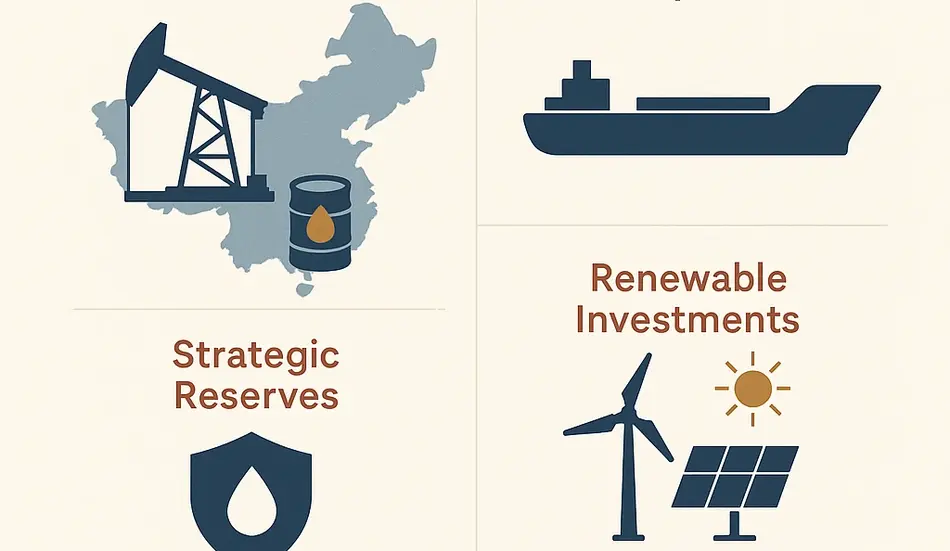
A primary pillar of this resilience is the unexpected acceleration of the electric vehicle (EV) boom. In late 2020, Beijing set a target for EV purchases to reach 20% of new sales by 2025. However, the actual adoption rate far exceeded these expectations, with EV sales hitting 50% of all new vehicles by last year according to data from 2025. This shift has effectively capped China’s fuel consumption growth, meaning the country now imports less oil than was projected just a few years ago.
The impact of this transition is significant. Estimates from the Centre for Research on Energy and Clean Air indicate that the amount of oil displaced by EVs last year was roughly equal to the volume of oil China previously imported from Saudi Arabia per recent energy estimates. By substituting foreign crude with electricity generated from domestic coal and renewables, Beijing has created a grid that is almost entirely insulated from maritime import disruptions.
Geopolitical Friction and Maritime Defiance
The current crisis is not solely about energy; it is a theater for broader U.S.-China competition. The U.S. Move to blockade the Strait is seen by Beijing as an overreach that threatens the freedom of navigation. The situation has been exacerbated by reports of weapons shipments and the ongoing war in Iran, which have served as the root cause for the disruption of navigation in the strait.
In response to the blockade, Beijing has reportedly implemented an unofficial ban on fuel exports to conserve internal supplies. This internal pivot, combined with the defiance of the blockade by Chinese shipping, suggests that China is willing to absorb short-term economic costs to challenge U.S. Hegemony in the Middle East. The Chinese government has explicitly warned that if the U.S. Continues its “irresponsible” trajectory—including the potential for new tariffs—Beijing will react accordingly.
Key Factors in China’s Energy Resilience
| Strategy Component | Impact/Detail | Verification Status |
|---|---|---|
| EV Market Penetration | Sales reached 50% of new vehicles in 2025 | Verified |
| Energy Diversification | Reduced reliance on seaborne fossil fuels via coal/renewables | Verified |
| Strategic Stockpiles | Vast and growing oil reserves to buffer shocks | Verified |
| Export Controls | Unofficial ban on fuel exports to conserve supply | Verified |
Global Implications of the Blockade
The international community remains on edge as the blockade threatens to spike global oil prices and disrupt trade routes. While China may be insulated, other economies in the Asia-Pacific region lack the same level of energy diversification. The risk of a miscalculation between U.S. Naval forces and Chinese vessels in the Strait of Hormuz increases the likelihood of a direct military confrontation.
the “formula” used by the U.S. To isolate the Iranian regime is facing scrutiny. Analysts suggest that the attempt to encircle Tehran—similar to strategies previously employed in Venezuela—may not be as effective given Iran’s different geopolitical weight and its strategic partnership with China. The defiance of the blockade by a Chinese ship serves as a physical manifestation of this partnership, proving that U.S. Sanctions and maritime restrictions have limits when faced with a superpower determined to maintain its energy flow.
As the situation evolves, the focus remains on whether all parties will exercise the restraint called for by international observers. The disruption to navigation is a symptom of a deeper conflict, and the Strait of Hormuz has develop into the primary stage where the limits of American influence and Chinese resilience are being tested in real-time.
The next critical checkpoint will be the upcoming diplomatic communications between Washington and Beijing regarding maritime navigation rights and the status of the blockade. Official updates from the U.S. Department of State and the Chinese Ministry of Foreign Affairs are expected as the standoff continues.
Do you believe China’s shift toward EVs has fundamentally changed the geopolitics of the Middle East? Share your thoughts in the comments below or share this report with your network.
Keep reading
- US Navy Continues Maritime Blockade of Iran, Diverting Dozens of Commercial Ships
- Space Waste Heat Problem: Caltech’s Challenge Explained
- Trump Slams Iran’s Duplicity and Warns Blockade Will Remain Amid Stalled Talks (world-today-news.com)
- Sudan Gold Trade Banned Amid Rising Tensions (newsdirectory3.com)