The U.S. military conducted its 13th consecutive night of airstrikes against Iran on Thursday, July 24, 2026, targeting regional infrastructure as a collapsing peace agreement ignited maritime warfare. Houthi rebels struck two oil tankers in the Red Sea, driving international crude prices above $100 a barrel and rattling global shipping lanes.
The military campaign deepened sharply this week as U.S. Central Command confirmed the operation is designed to further degrade Iran’s ability to threaten civilian mariners and commercial vessels transiting regional waters. American forces are pushing to regain control over the strategic Strait of Hormuz and restore the flow of international shipping, which handles a fifth of the world’s oil and gas during peacetime.
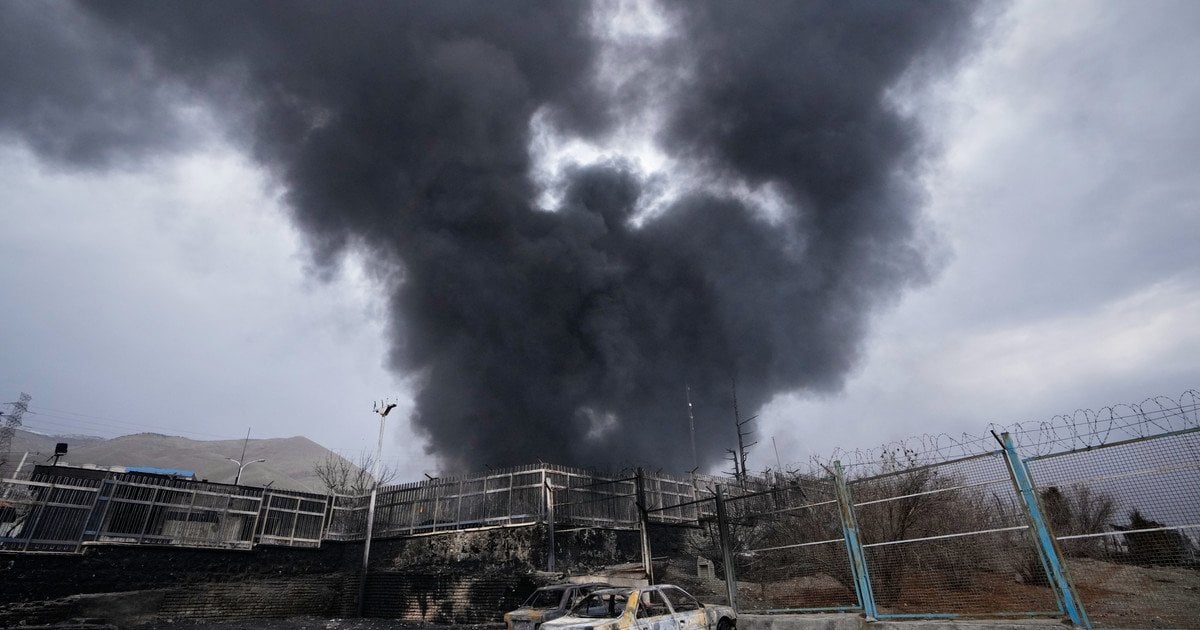
Iranian state media reported explosions along the strait in Bandar Abbas and Qeshm, as well as to the northwest near Andimeshk and Omidiyeh. Additional strikes hit locations across Iran, with explosions reported in Bushehr, Tabriz, Hamadan Province, and the southeastern port cities of Konarak and Chabahar, according to Iranian officials.
Red Sea Tanker Attacks and Spiking Oil Prices
The maritime conflict widened dramatically when Yemen’s Iran-backed Houthi rebels attacked two Saudi oil tankers in the Red Sea. The rebels’ SABA news agency said the rebels had struck two tankers, the Encelia and the Layla, causing fires on both without immediate reports of casualties. The United Kingdom Maritime Trade Operations Center received a report of a tanker being struck by an unknown projectile 130 kilometers southwest of Al Shuqaiq, Saudi Arabia.
The attacks triggered immediate economic shockwaves. The price of Brent crude oil spiked more than 6% Thursday, to about $100 a barrel, marking the highest level since May. That surge followed the collapse of a preliminary peace agreement reached last month.
President Donald Trump wrote on social media that if they do this again, the U.S. will hold Iran responsible, in that the Houthis are a surrogate and/or proxy of Iran, and that major military punishment will be inflicted upon Iran and, of course, the Houthis, themselves.
President Donald Trump, via Associated Press
President Donald Trump also stated on social media that sanctioned Iranian funds in the possession of the U.S. will cover the expense of fixing boats damaged in the war. Earlier, Trump asserted that Iran had violated the prior understanding, saying, We had a deal. It was a settled deal, and then they broke it. We are just going to hit them very hard.
Strait of Hormuz Chokepoint and Regional Fallout
Control over the Strait of Hormuz remains the core battleground. Iran maintains that it has the right to manage traffic and potentially charge fees in the waterway, which was open to all toll-free before the conflict. Iranian forces have targeted ships using a route overseen by U.S. forces.
Maritime analysts warned that the Houthi blockade presents a double whammy on top of the ongoing Persian Gulf shipping disruptions. Saudi Arabia has diverted millions of barrels a day of oil exports via an overland pipeline to Yanbu port on the Red Sea, a route that analysts at Lloyd’s List Intelligence noted raises questions on the viability of this route.

Diplomatic efforts to stem the widening conflict faced steep hurdles. U.N. Secretary-General Antonio Guterres warned the U.N. Security Council that the region is being pulled into an ever-widening circle of confrontation. Diplomacy is the only way forward, Guterres told the U.N. Security Council, calling for Pakistan’s mediation efforts to be strengthened.
Meanwhile, Iraqi Prime Minister Ali al-Zaidi traveled to Tehran to meet with Iranian leadership, promising that Iraqi territory would not be utilized for attacks against Iran. Ali al-Zaidi met with Trump earlier this month in Washington.
In earlier confrontations, the Iranian IRGC stated it struck U.S. military infrastructure in Juffair, Bahrain, and destroyed long-range aerial surveillance and marine radar installations in Oman during a fifth round of retaliatory strikes. Iranian Khatam al-Anbiya Central Headquarters warned that any attacks on nuclear facilities, such as Bushehr or the under-construction facility in Darkhovin, would broaden the war’s scope.
Related reading