The United States government has formally announced its intent to classify Brazil’s two most prominent criminal factions, the Primeiro Comando da Capital (PCC) and the Comando Vermelho (CV), as terrorist organizations. This significant shift in international policy, confirmed by the U.S. Department of State on Thursday, May 28, 2026, marks a deepening of U.S. Involvement in South American security affairs and signals a potential complication for the current Brazilian administration’s diplomatic strategy.
According to the U.S. Government, the factions will be designated as “Specially Designated Global Terrorists” (SDGTs) and “Foreign Terrorist Organizations” (FTOs). While the SDGT designation takes immediate effect, the formal inclusion in the list of FTOs is scheduled for June 5, 2026, following the required notification period to the U.S. Congress, as reported by the U.S. Department of State’s recent announcements regarding these criminal groups.
The Mechanics of the Designation
The classification of foreign groups as terrorist entities by the United States involves rigorous administrative and legislative pathways. The designation as an FTO requires the Secretary of State to provide formal notification to Congress. Under current U.S. Law, Congress has a seven-day window to review the measure. However, as noted in recent policy analysis, the mechanisms for a legislative body to successfully block such a designation are limited, particularly given the current political composition of the U.S. Congress.
The U.S. Government has justified this move by characterizing the PCC and CV as among the most violent criminal organizations operating within Brazil. The official statement highlights that these groups command thousands of members and are responsible for brutal attacks targeting law enforcement officials, government authorities, and the civilian population. This designation serves to restrict the groups’ access to the U.S. Financial system and complicates their ability to move assets internationally.
Diplomatic Context and Political Implications
The timing of this announcement follows a series of high-level meetings between Brazilian political figures, and U.S. Officials. On Tuesday, May 26, 2026, Senator Flávio Bolsonaro met with U.S. President Donald Trump at the White House. This was followed by a meeting between the senator and U.S. Secretary of State Marco Rubio. Reports indicate that these discussions played a role in the lead-up to the State Department’s decision to move forward with the terrorist classification for the Brazilian factions.
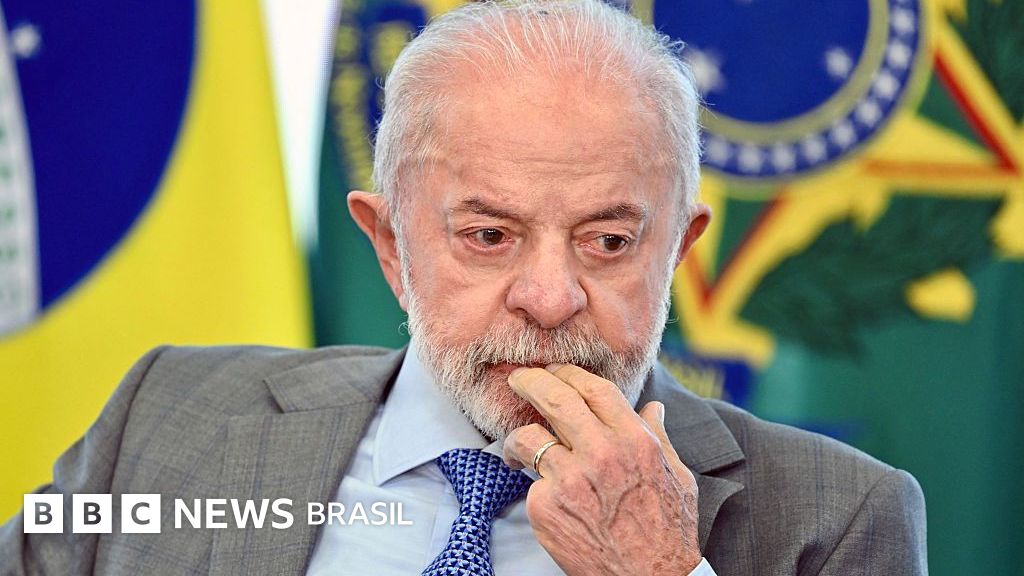
The move has sparked immediate debate regarding the impact on bilateral relations between Brazil and the United States. For the current Brazilian administration, the classification presents a complex challenge. There is a palpable concern within government circles that the decision could be perceived as an external intervention in domestic security matters, while simultaneously forcing the government to calibrate its public response to avoid the appearance of being lenient toward criminal factions that have been officially labeled as terrorists by a major global partner.
What Happens Next?
As the June 5, 2026 deadline for the FTO designation approaches, legal and security experts are monitoring the situation for potential shifts in the operational landscape for these criminal groups. The immediate effect of the SDGT designation restricts the ability of these organizations to utilize the U.S. Financial system, effectively freezing any assets identified within U.S. Jurisdiction.
For observers of international security, the next major checkpoint will be the formalization of the FTO status on June 5. Beyond that date, the focus will likely shift to how the U.S. And Brazilian governments coordinate intelligence sharing and law enforcement cooperation under this new framework. As international pressure mounts, the Brazilian government will face continued scrutiny regarding its domestic strategies for addressing the influence of the PCC and CV, organizations that have long exerted significant power across the country’s prison systems and peripheral urban centers.
We invite our readers to share their perspectives on this development in the comments section below as we continue to track the legal and diplomatic ramifications of this decision.
Worth a look