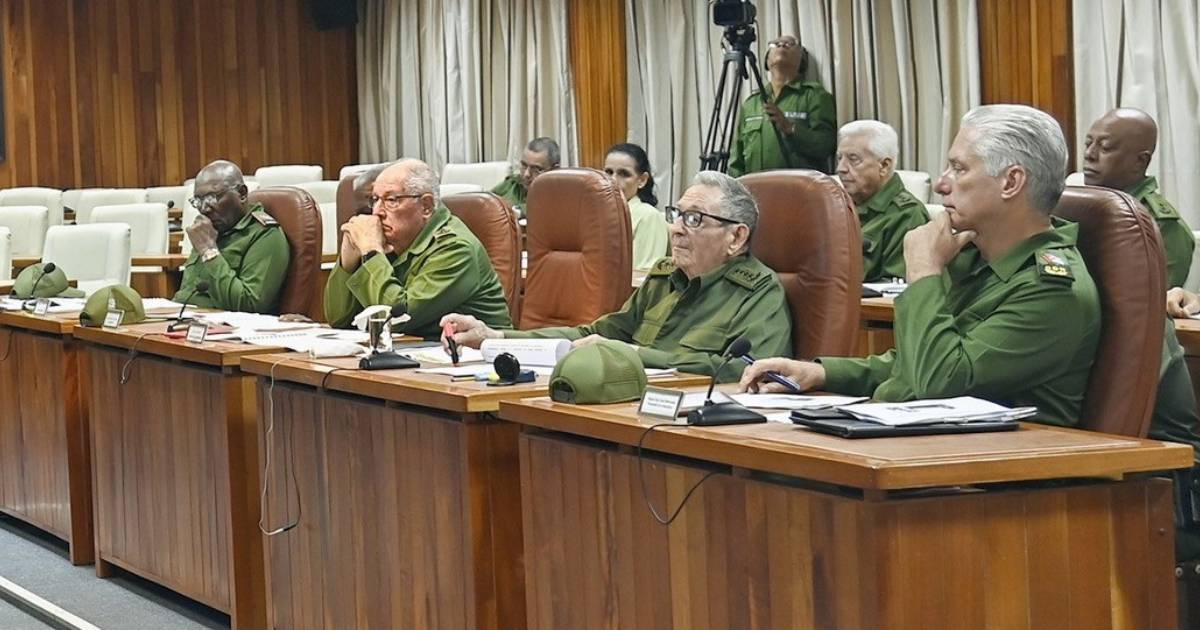
US Justice Department Investigates Potential Federal Charges Against Cuban Officials
Washington D.C. – The United States Department of Justice (DOJ) has formed a dedicated task force to examine potential federal criminal charges against current or former officials associated with the Cuban government. The move, first reported by The Washington Post on March 6, 2026, signals a significant escalation in the US government’s approach to Cuba, particularly under the administration of President Donald Trump. The task force will include representatives from multiple federal agencies, including the Department of the Treasury, suggesting a potential broadening of existing economic sanctions against the island nation. This development comes amidst heightened tensions and increasingly assertive rhetoric from the Trump administration regarding Cuba’s role in the region.
The formation of this group is occurring in parallel with a broader campaign of pressure exerted by the White House against Havana. President Trump has publicly stated his belief that the Cuban government is vulnerable and could be subject to regime change, following the recent capture of Venezuelan President Nicolás Maduro in January 2026 and reported actions against Iran. Trump’s comments, made during a reception for the Inter Miami CF soccer team at the White House, indicated a belief that Cuba is next in line for increased scrutiny and potential intervention. He specifically mentioned consulting with Senator Marco Rubio on the matter, but prioritizing actions against Iran in the immediate term. The DOJ’s initiative reflects a coordinated effort to explore legal avenues for holding Cuban officials accountable for alleged wrongdoing.
Focus on Potential Crimes and the Role of the Southern District of Florida
The task force’s investigation will center on potential federal crimes, encompassing areas such as immigration, economic offenses, and other unspecified violations. The involvement of the Department of the Treasury suggests a particular focus on financial crimes and potential sanctions evasion. According to sources familiar with the initiative, the investigation is still in its early stages and the specific charges being considered remain undisclosed. The DOJ has not yet publicly commented on the formation of the task force.
Oversight of the investigation will be led by the US Attorney’s Office for the Southern District of Florida, a jurisdiction with a significant Cuban-American population and a long history of prosecuting cases related to Cuba. This office has previously handled high-profile cases involving alleged misconduct by individuals linked to the Cuban government. Several former prosecutors from the Southern District of Florida have indicated that it was unsurprising to spot this office take the lead on the investigation, given its established expertise and historical involvement in such matters. The Washington Post reported that the office has a “long track record” in handling cases related to alleged irregularities associated with the Cuban regime.
Precedent: The Maduro Case and Potential Extradition Challenges
The US government’s approach to Cuba appears to be modeled, at least in part, on the strategy employed against Venezuelan President Nicolás Maduro. In 2020, the DOJ formally accused Maduro of drug trafficking and other crimes, although he was not immediately extradited. However, in January 2026, US authorities reportedly took Maduro into custody and transported him to Latest York to face trial. El País reported on this shift in strategy, noting the potential for similar actions against Cuban officials. The success of the Maduro case, in terms of securing custody and initiating legal proceedings, may be influencing the current approach towards Cuba.
However, the extradition of Cuban officials to the United States presents significant challenges. Cuba does not have an extradition treaty with the US, and the Cuban government is highly unlikely to voluntarily hand over any of its officials. Any attempt to secure the extradition of Cuban officials would likely require a complex legal and diplomatic strategy, potentially involving international cooperation and the use of alternative legal mechanisms.
Past Cases and Allegations: The Rocha Espionage Case and the 1996 Shootdown
The Southern District of Florida has a notable history of prosecuting cases involving alleged Cuban government misconduct. In 2024, the office secured the conviction of Víctor Manuel Rocha, a former US diplomat who admitted to acting as an agent of Cuban intelligence for over four decades. Rocha’s case highlighted the long-standing concerns about Cuban espionage activities within the United States. Infobae reported on this case as a precedent for the current investigation.
several Republican members of the Florida congressional delegation recently urged Attorney General Pam Bondi to reopen the investigation into the 1996 shooting down of two unarmed civilian aircraft operated by the Brothers to the Rescue organization. Four people were killed in the incident, which occurred as the aircraft were flying over international waters searching for Cuban refugees attempting to reach the United States. The legislators allege that Raúl Castro, then head of the Cuban military, ordered the attack and that audio recordings exist that could support this claim. They argue that Raúl Castro should be held accountable for the deaths of the four individuals. In a letter dated February 13, 2026, the lawmakers asserted that Castro is “responsible for this atrocious crime” and “it is time for him to be brought to justice.”
The Department of Justice’s Mission and Values
The Department of Justice’s core mission, as outlined on its official website, is to enforce the rule of law, ensure national security, and protect civil rights. Justice.gov en Español details the department’s commitment to independence, impartiality, honesty, integrity, respect, and excellence. These values are intended to guide the DOJ’s actions and ensure public trust. The formation of the task force investigating Cuban officials is presented as a manifestation of this commitment to upholding the rule of law and holding those who violate it accountable, regardless of their position or nationality.
The investigation into potential charges against Cuban officials represents a significant development in US-Cuba relations. While the specific targets and potential charges remain unclear, the formation of the task force signals a willingness by the Trump administration to pursue a more assertive approach towards Havana. The outcome of this investigation could have far-reaching implications for the future of US-Cuba policy and the broader geopolitical landscape in the region. The Southern District of Florida is expected to file initial reports on potential indictments within the next six weeks, according to sources within the DOJ.
Key Takeaways:
- The US Department of Justice has formed a task force to investigate potential federal crimes committed by Cuban officials.
- The task force includes representatives from the Department of the Treasury, suggesting a focus on economic crimes and potential sanctions.
- The investigation is being led by the US Attorney’s Office for the Southern District of Florida, which has a history of prosecuting cases related to Cuba.
- The US government’s approach to Cuba appears to be modeled on the strategy employed against Venezuelan President Nicolás Maduro.
- Extraditing Cuban officials to the US presents significant legal and diplomatic challenges.
As the investigation progresses, further details are expected to emerge regarding the specific allegations and potential charges. The World Today Journal will continue to monitor this developing story and provide updates as they become available. Readers are encouraged to share their thoughts and perspectives in the comments section below.
Related reading
- Why Mao Wasn’t Afraid of Japan: Montgomery’s Historic Question Answered
- Over 300,000 Haitians Face Deportation Across the US After Loss of TPS Protections
- Force-Placed Insurance, Explained: The Coverage You Never Chose (daybreakwire.com)
- Trump Pushes SAVE Act to Mandate Voter ID and Proof of Citizenship (newsdirectory3.com)