
The Mexican peso staged a notable recovery during the trading session on May 28, successfully snapping a streak of losses that had kept investors on edge throughout the week. As global markets reacted to shifting expectations regarding United States monetary policy, the currency found its footing, closing at 17.3185 pesos per dollar. This move represented a gain of approximately 0.22% for the session, according to official data from the Bank of Mexico, which tracks the daily reference rate for the interbank exchange market.
For market participants and analysts, this fluctuation reflects the broader volatility currently defining the Latin American currency landscape. Throughout the day, the peso navigated a trading range between 17.3033 and 17.4395 units, underscoring the sensitivity of emerging market assets to external economic indicators. This shift is not merely a technical correction but a reflection of how international capital flows are recalibrating in response to persistent inflation data and the Federal Reserve’s ongoing interest rate signals, which continue to influence the strength of the U.S. Dollar globally.
Understanding the Mechanics of the Peso’s Recent Rebound
The movement in the value of the Mexican peso relative to the U.S. Dollar is rarely driven by a single factor. Instead, it is the result of a complex interplay between domestic fiscal policy, the appetite for risk in global equity markets, and the relative attractiveness of Mexican sovereign debt. When the peso gains ground, it often signals that investors are feeling more comfortable allocating capital toward emerging markets, a trend that is frequently correlated with stability in commodity prices—particularly oil, which remains a vital component of Mexico’s export revenue.

On May 28, the market sentiment appeared to shift toward a “risk-on” environment, allowing the peso to recover some of the ground lost in previous sessions. Analysts often point to the “carry trade”—where investors borrow in currencies with lower interest rates to invest in those with higher yields—as a significant driver for the peso’s performance. With the Bank of Mexico maintaining a relatively hawkish stance, the yield differential remains attractive to international investors, provided that political and economic stability within the country remains intact.
Global Economic Context and Currency Volatility
To understand why the exchange rate fluctuates so frequently, one must look at the global macroeconomic backdrop. The U.S. Dollar acts as a “safe-haven” asset; when geopolitical uncertainty rises or when global growth forecasts are revised downward, investors typically flock to the dollar, putting downward pressure on currencies like the peso. Conversely, when the U.S. Economy shows signs of cooling or when investors seek higher returns outside of U.S. Treasuries, the dollar often weakens against its counterparts.
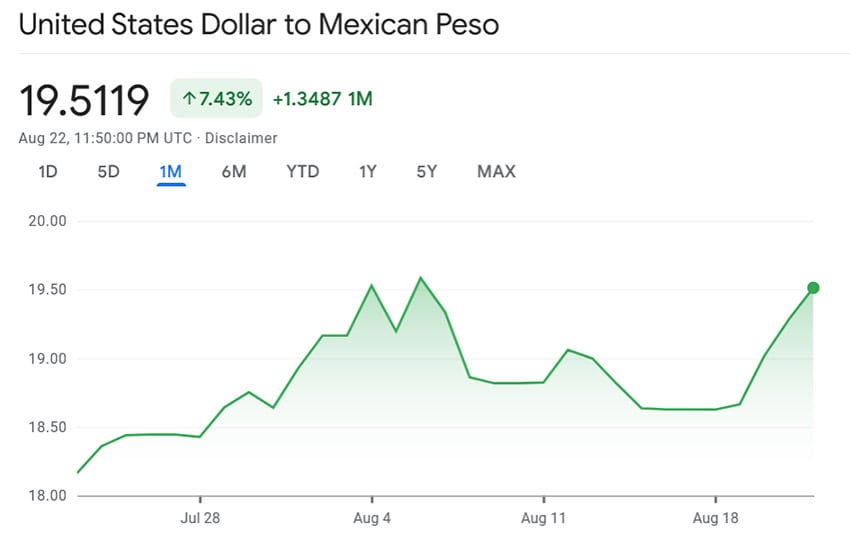
the integration of the North American supply chain means that the peso is uniquely sensitive to U.S. Manufacturing data and trade policy. As we look at the data provided by financial regulators, the exchange rate is a barometer for the health of the United States-Mexico-Canada Agreement (USMCA), which continues to facilitate significant cross-border investment. Any signal regarding trade barriers or shifts in industrial output directly impacts the demand for pesos, which are required for operational costs and payrolls within the Mexican industrial sector.
Key Factors Influencing Exchange Rates
- Interest Rate Differentials: The gap between the Federal Reserve’s federal funds rate and the Bank of Mexico’s target interest rate remains a primary driver of capital movement.
- Inflation Expectations: Persistent inflation in both nations forces central banks to maintain restrictive monetary policies, affecting currency valuation.
- Geopolitical Risk: Global tensions often drive capital toward the U.S. Dollar, impacting the liquidity of emerging market currencies.
- Trade Balances: The volume of imports and exports directly dictates the demand for local currency versus foreign exchange.
What This Means for Investors and Businesses
For multinational corporations and local entrepreneurs alike, a volatile exchange rate presents both challenges and opportunities. A stronger peso reduces the cost of importing machinery and raw materials, which can help mitigate domestic inflationary pressures. However, it also reduces the value of foreign earnings when they are converted back into pesos, potentially impacting the bottom line for export-oriented businesses. As the market moves forward, hedging strategies—such as the use of currency forwards and options—become essential tools for managing this inherent risk.
The resilience of the peso, even in the face of moderate pressure, demonstrates the confidence international markets continue to place in Mexico’s macroeconomic framework. While short-term fluctuations are inevitable, long-term trends are dictated by structural reforms and the ability of the government to maintain fiscal discipline. Investors should continue to monitor upcoming economic indicators released by INEGI, the national statistics agency, which provide the most accurate picture of domestic economic health.
Looking Ahead: Monitoring Market Signals
As we close the books on the May 28 trading session, the focus shifts to the next series of economic data releases. Market participants are particularly attentive to upcoming central bank meetings, where policymakers will provide forward guidance that could dictate the trajectory of the currency for the remainder of the quarter. Understanding the “why” behind these movements is crucial for anyone with exposure to global financial markets.
We will continue to track these developments closely, providing the analytical depth required to navigate today’s complex financial environment. For those interested in the latest updates, the next scheduled policy announcement from the Bank of Mexico will be a critical checkpoint for currency traders. We encourage our readers to share their thoughts on these market trends in the comments section below and to stay engaged with our ongoing coverage of global economic policy.
Worth a look