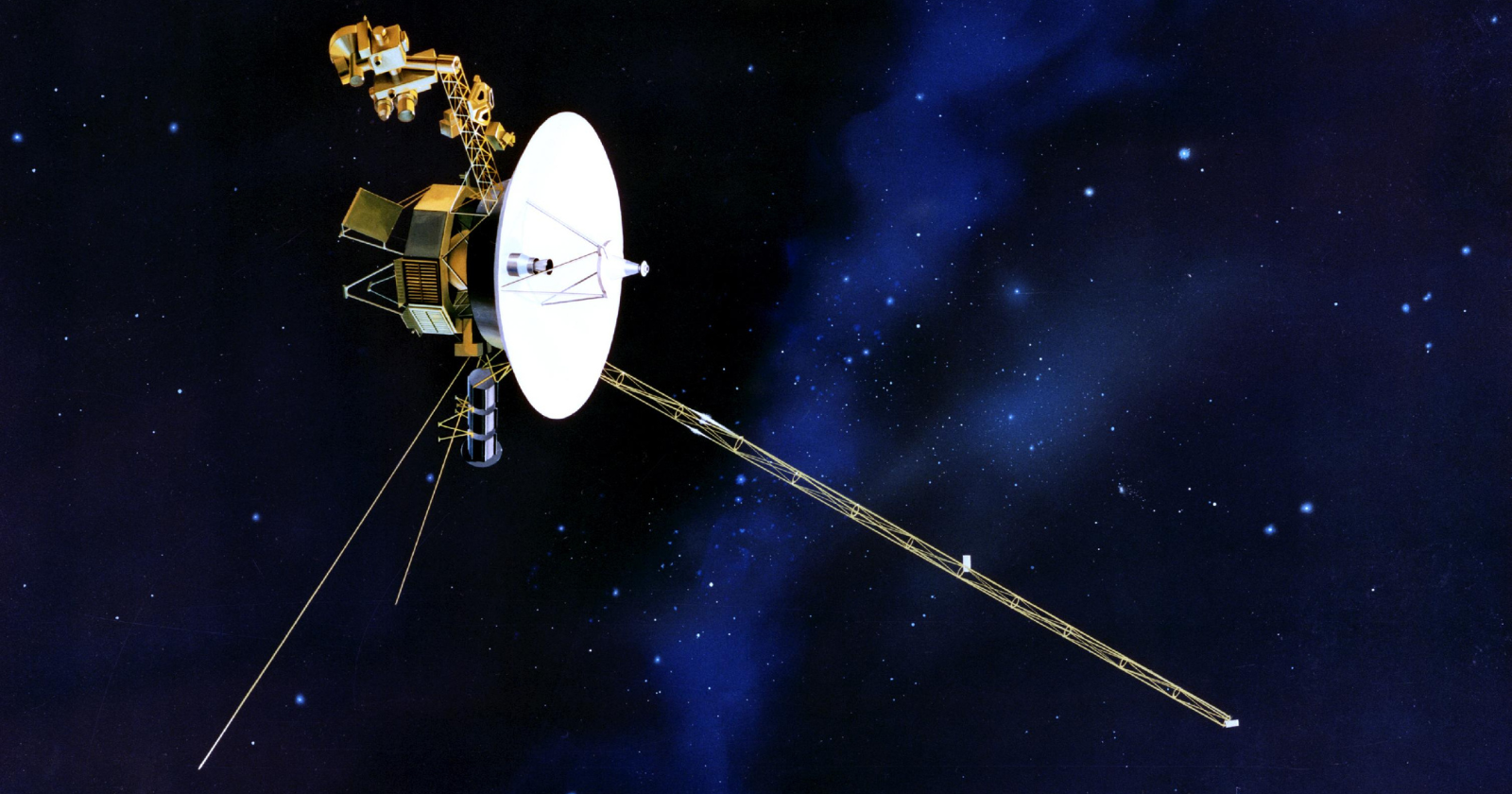
On September 5, 1977, NASA launched Voyager 1, a mission that would eventually redefine our understanding of the outer solar system and our place within the galaxy. Designed to conduct a flyby of Jupiter and Saturn, the spacecraft successfully transmitted unprecedented data back to Earth before venturing into the vast, interstellar medium. More than 46 years later, the probe remains active, continuing its journey as the most distant human-made object in existence. However, tucked aboard this silent ambassador is a controversial artifact: the Golden Record, which includes a pulsar map designed to pinpoint Earth’s location in the Milky Way.
The pulsar map, etched onto the cover of the Golden Record, uses the positions of 14 pulsars relative to our solar system to serve as a cosmic lighthouse. While intended as a gesture of goodwill and a beacon for potential extraterrestrial intelligence, the map has become the subject of intense debate among scientists and philosophers. The primary concern, famously voiced by the late Stephen Hawking, centers on the inherent danger of broadcasting our precise coordinates to the unknown. As we continue to advance our capabilities in deep space exploration, the legacy of Voyager 1 serves as both a triumph of human engineering and a cautionary tale regarding our place in the universe.
The Science of the Pulsar Map
The pulsar map, also known as the “pulsar diagram,” was designed by Frank Drake and Carl Sagan as part of the Voyager Golden Record initiative. Pulsars are highly magnetized, rotating neutron stars that emit beams of electromagnetic radiation at extremely precise intervals. By measuring the pulse periods of 14 different pulsars, a civilization with sufficient astronomical knowledge could triangulate the position of our solar system with remarkable accuracy. At the time of its design, the map was seen as a universal language—a way to communicate our location using the fundamental constants of the galaxy.
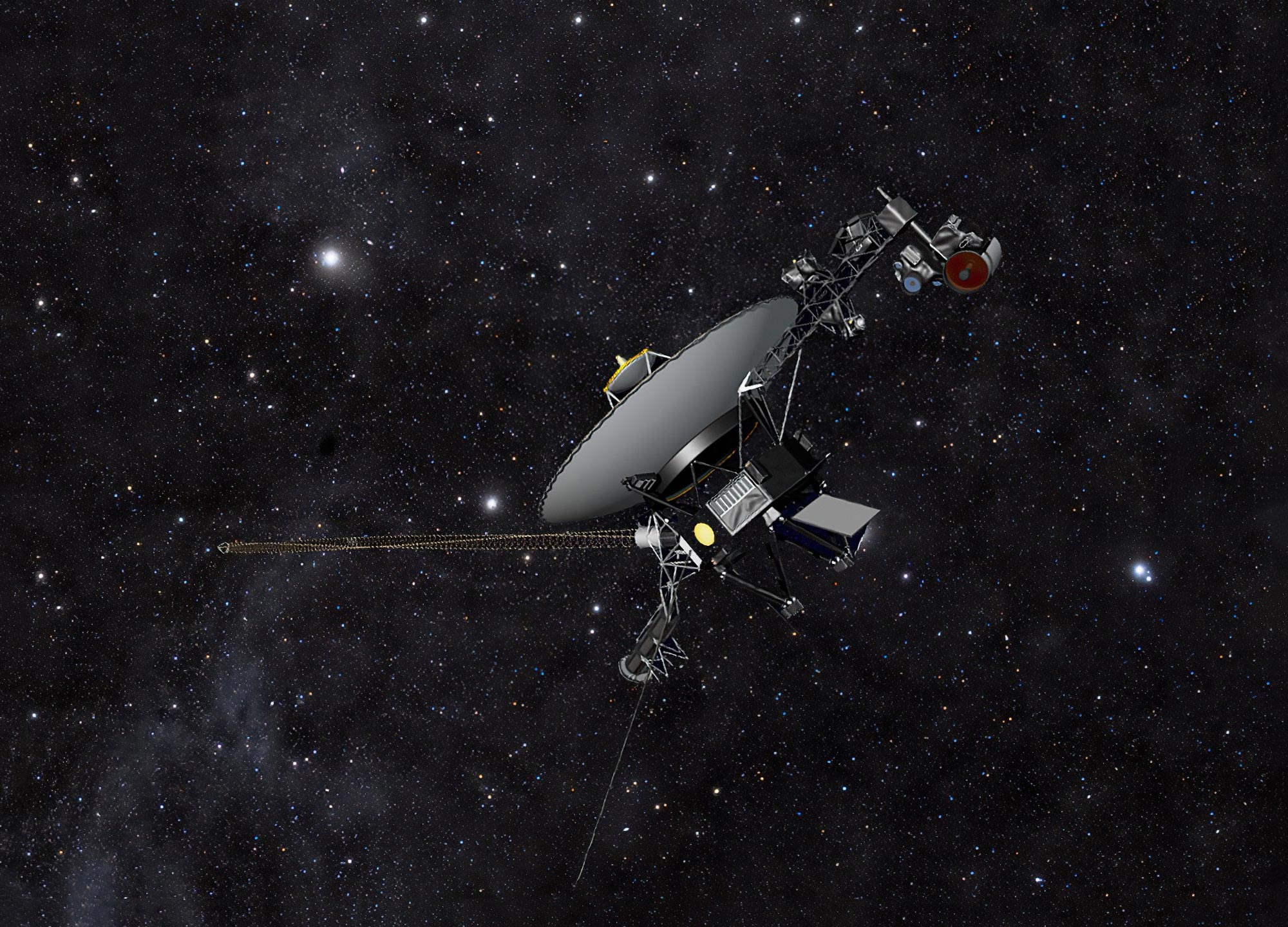
The map identifies the solar system’s location relative to these pulsars by indicating the period of each pulsar in binary code. Because pulsars unhurried down over time, the map also provides a temporal reference, allowing an observer to calculate how much time has passed since the spacecraft was launched. This level of sophistication was intended to demonstrate the scientific maturity of humanity. According to official NASA mission archives, the probe officially entered interstellar space in August 2012, becoming the first human-made object to cross the heliopause.
The Hawking Critique: An Existential Risk?
The debate surrounding the wisdom of sending such a map gained prominence through the warnings of Stephen Hawking. In a 2010 documentary, Hawking expressed his concern that if extraterrestrial life were to discover our location, the consequences could be catastrophic. He likened the potential meeting of humans and advanced aliens to the arrival of Christopher Columbus in the Americas, noting that the outcome for the less technologically advanced civilization was not favorable.

Hawking’s perspective, while speculative, is rooted in the concept of the “Dark Forest” theory, which suggests that for the sake of survival, civilizations might choose to remain hidden rather than risk contact with unknown entities. While NASA officials have consistently maintained that the probability of the probe being intercepted is infinitesimally small, the philosophical question remains: Is it prudent to advertise our existence? The vast distances between stars—Voyager 1 is currently over 15 billion miles away from Earth—make the likelihood of encounter near zero, yet the permanence of the record ensures that our “cosmic address” remains etched in gold for as long as the spacecraft persists.
Beyond the Map: The Legacy of Voyager 1
Despite the controversy, the Voyager mission remains one of the most successful endeavors in the history of space exploration. The data returned by the spacecraft provided the first detailed images of the moons of Jupiter and the complex ring systems of Saturn. Today, the mission continues to provide vital information about the density and temperature of the interstellar medium, a region of space that was previously inaccessible to human observation.
As of 2024, the Voyager 1 spacecraft is operating with a limited suite of instruments as its power supply, comprised of radioisotope thermoelectric generators, continues to decay. Engineers at the Jet Propulsion Laboratory (JPL) have successfully performed complex remote repairs, including a recent shift to a backup transmitter, to keep the probe communicating with the Deep Space Network. The longevity of the mission is a testament to the ingenuity of the 1970s engineering teams who built a craft intended to last only five years, yet it has survived for over four decades.
Key Takeaways
- Voyager 1 was launched on September 5, 1977, to study the outer planets and eventually exit the solar system.
- The Golden Record contains a pulsar map, which uses 14 pulsars to provide a precise coordinate for Earth in the Milky Way.
- Stephen Hawking famously argued that broadcasting our location to the universe could represent an existential risk to humanity.
- NASA maintains that the physical scale of the galaxy makes the interception of the probe effectively impossible.
- Voyager 1 continues to transmit data from interstellar space, currently located more than 15 billion miles from Earth.
What Happens Next?
The next phase for Voyager 1 is a gradual transition into silence. As the power output from its nuclear generators continues to decrease, NASA will be forced to shut down additional scientific instruments one by one. The mission is expected to conclude its ability to transmit data to Earth sometime around 2025, though it will continue its silent journey through the galaxy for billions of years.

While the pulsar map remains a point of contention, it stands as a permanent artifact of a specific moment in human history—a time when we were eager to introduce ourselves to the cosmos. As we look toward future interstellar missions, the Voyager experience will undoubtedly inform the protocols we establish for how, or if, we choose to signal our presence to the stars. Readers interested in following the latest updates from the Voyager mission can monitor the official Voyager Mission Status page for real-time telemetry and project milestones. Please share your thoughts on whether you believe humanity should be more cautious in our attempts to contact extraterrestrial life in the comments below.
Worth a look