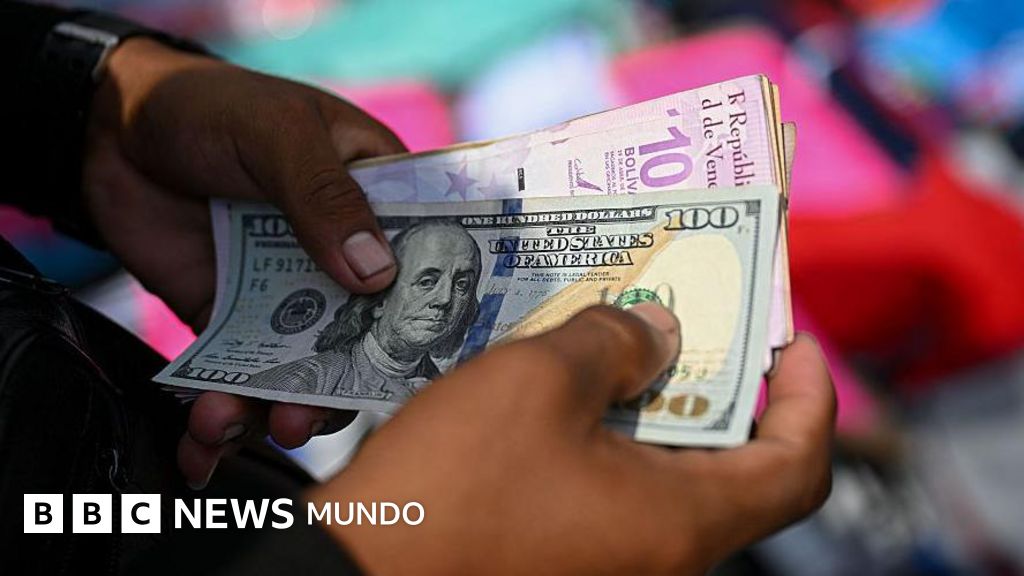
On April 15, 2026, the United States Treasury Department announced the partial lifting of sanctions on Venezuela’s state-owned banking sector, marking a significant shift in Washington’s economic policy toward Caracas. The move allows U.S. Entities to engage in financial transactions with four key Venezuelan banks: the Central Bank of Venezuela (BCV), Banco de Venezuela, Banco Digital de los Trabajadores and Banco del Tesoro. This development follows years of restrictive measures that had isolated Venezuela’s financial system from global markets since 2019.
The decision comes amid renewed diplomatic engagement between the two countries, particularly after the January 2026 arrest of former Venezuelan president Nicolás Maduro on charges related to human rights abuses and corruption. According to the Treasury’s Office of Foreign Assets Control (OFAC), the sanction relief is part of a broader three-phase strategy aimed at economic stabilization, with this initial step focused on restoring access to international correspondent banking networks.
For Venezuela’s beleaguered economy, which has endured hyperinflation, currency collapse, and severe shortages of basic goods for nearly a decade, the easing of banking sanctions represents a potential turning point. Economists note that the immediate impact could be improved access to foreign exchange, as Venezuelan banks regain the ability to maintain correspondent relationships with foreign institutions—a critical function for processing international trade and remittances.
“Al levantar esas sanciones, el mercado cambiario tiene más libertad para que los bancos puedan acceder a las corresponsalías, manejar más efectivo, facilitar las transacciones, con lo cual se espera que haya una menor presión sobre el tipo de cambio en Venezuela,” said José Guerra, former head of economic research at the BCV and a vocal critic of Maduro’s economic policies. His assessment, echoed by several regional analysts, suggests that reduced pressure on the bolívar could help curb inflationary expectations, though structural reforms remain essential for lasting stability.
The timing of the announcement coincides with public statements from Delcy Rodríguez, Venezuela’s acting president, who confirmed on April 9, 2026, that Laura Guerra had resigned as president of the Central Bank of Venezuela after serving in the role since April 2025. Rodríguez stated that Guerra would continue in other government capacities, while Luis Pérez was named her successor—a transition framed as part of broader institutional renewal amid shifting economic priorities.
Rodríguez too highlighted the connection between sanctions relief and Venezuela’s re-engagement with international financial institutions, noting that the government had begun discussions with the International Monetary Fund (IMF) about potential technical cooperation. While no formal program has been announced, officials indicate that any future engagement would be contingent on verifiable economic reforms, including fiscal transparency and monetary discipline.
Despite the optimism expressed by some banking sector representatives, significant challenges persist. Venezuela’s economy remains heavily dollarized in practice, with many transactions conducted in U.S. Dollars due to chronic bolívar instability. The BCV has reported that foreign exchange reserves remain critically low, limiting the state’s ability to intervene in currency markets even with improved banking access.
the sanction relief is partial and conditional. U.S. Secondary sanctions still apply to individuals and entities linked to the Maduro administration, and broader oil sector sanctions—historically the backbone of Venezuela’s export earnings—remain largely intact. Analysts caution that without complementary measures such as debt restructuring, investment incentives, and anti-corruption reforms, the banking sector’s improved access may not translate into broad-based economic recovery.
The move has also drawn attention from cryptocurrency observers, who note a recent decline in the employ of stablecoins like USDT for everyday transactions in Venezuela. Data from local exchanges suggest that as bolívar stability improves—however marginally—demand for dollar-pegged digital assets has decreased, reflecting renewed, if tentative, confidence in the national currency for small-scale commerce.
As of mid-April 2026, Venezuelan banks are reportedly testing new channels for international transfers under the revised OFAC licensing framework. The Central Bank has not published official transaction volumes, but private banking sources indicate early activity in trade finance related to food and medicine imports—sectors that have long suffered from payment bottlenecks.
The next key development to watch is the scheduled review of the sanctions regime by the U.S. State Department, set for July 2026, which will assess whether Venezuela has met benchmarks related to democratic governance and human rights as outlined in the initial relief framework. Until then, economists and policymakers alike will be monitoring exchange rate trends, inflation data, and banking sector reports for tangible signs of change.
For readers seeking ongoing updates, the U.S. Treasury’s sanctions page and the Central Bank of Venezuela’s official bulletins remain the most authoritative sources for policy changes and economic indicators. We encourage you to share your thoughts on this development in the comments below and to spread the story to others interested in Latin American economic affairs.