Joint US-Ecuadorian Operation Targets Drug Trafficking Networks
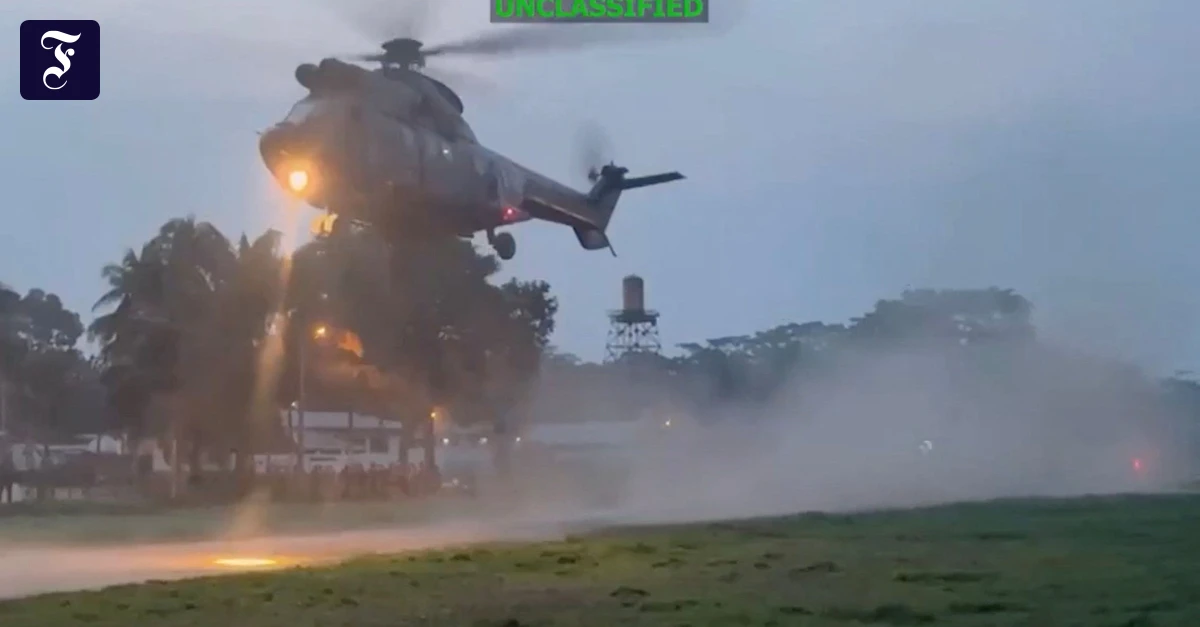
A collaborative military operation between the United States and Ecuador is underway to combat drug trafficking organizations operating within the South American nation. The U.S. Southern Command (SOUTHCOM) announced the joint effort on Tuesday, signaling an escalation in the international response to escalating violence and the growing influence of powerful drug cartels. This operation underscores the increasing concern over Ecuador’s role as a key transit point for illicit drugs destined for the United States and Europe, and the willingness of both nations to take decisive action against criminal elements.
The coordinated effort, as outlined by SOUTHCOM, aims to dismantle the networks responsible for “perpetuating terror, violence, and corruption” across the hemisphere. This commitment to collaborative action highlights the shared interest in disrupting the flow of narcotics and restoring stability to a region increasingly threatened by transnational criminal organizations. The operation builds upon existing security cooperation initiatives and represents a significant step in addressing the complex challenges posed by drug trafficking. The situation in Ecuador has deteriorated rapidly in recent months, prompting a strong response from both its own government and international partners.
This increased cooperation comes after the U.S. Government designated two of Ecuador’s most prominent drug cartels, “Los Lobos” and “Los Choneros,” as foreign terrorist organizations in September 2023. This designation, according to officials, provides a legal basis for more aggressive intervention, including potential military action. The move followed a visit to Quito by General Francis Donovan, commander of SOUTHCOM, signaling a deepening commitment to supporting Ecuador’s efforts to regain control of its territory and protect its citizens. The United States has also pledged financial assistance, with a commitment of $20 million, including $6 million earmarked for drones to bolster Ecuador’s military capabilities, as announced by U.S. Secretary of State Antony Blinken during a visit last September.
Escalating Violence and Ecuador’s Declared “Internal Armed Conflict”
Ecuador has recently experienced an unprecedented surge in crime and violence, largely attributed to drug-financed criminal gangs vying for control of trafficking routes. In January 2024, newly elected President Daniel Noboa declared a nationwide state of emergency and characterized the situation as an “internal armed conflict,” authorizing military intervention against organized criminal groups throughout the country. This drastic measure reflects the severity of the crisis and the government’s determination to confront the escalating threat. Noboa has repeatedly called for international assistance, emphasizing Ecuador’s need for equipment, weapons, and intelligence to effectively combat the cartels.
The crisis stems from Ecuador’s increasing importance as a transit hub for cocaine originating in Colombia and Peru, destined for markets in the United States and Europe. As traditional trafficking routes through the Caribbean have been disrupted, criminal organizations have increasingly turned to Ecuador’s ports and land routes to smuggle drugs. This shift has led to a dramatic increase in violence as cartels compete for control of these lucrative pathways. According to President Noboa, up to 70% of the world’s cocaine supply now transits through Ecuador, highlighting the country’s critical role in the global drug trade.
The recent dismantling of the “Hernán Ruilova Barzola” drug gang, linked to the “Los Lobos” cartel, exemplifies the collaborative efforts underway. A joint operation involving Ecuadorian authorities, Europol, and the U.S. Led to the arrest of 16 suspects, including a high-ranking target, the seizure of significant quantities of cocaine and cash, and the disruption of a complex money laundering and corruption network. European countries, including Belgium, Italy, the Netherlands, and Spain, participated in the operation, demonstrating the international scope of the fight against drug trafficking. Europol reported that investigations into the network began in January 2025, involving over 100 police officers and 40 judicial authorities.
The Capture of Fito Macias and the US Response
The arrest of former “Los Lobos” leader, Fito Macias, in June 2023, and his subsequent extradition to New York, marked a significant victory in the ongoing effort to dismantle these criminal organizations. Macias faces charges of cocaine trafficking and weapons smuggling, with prosecutors alleging he smuggled a “potentially lethal amount of cocaine” causing substantial harm to both Ecuador and the United States. He has pleaded not guilty to these charges. His capture and extradition underscore the U.S. Commitment to pursuing transnational criminals and holding them accountable for their actions.
The U.S. Response to the escalating crisis in Ecuador extends beyond law enforcement cooperation. The USS Leyte Gulf, a Ticonderoga-class guided-missile cruiser, deployed to the 4th Fleet area of operations in January 2026, with a mission focused on intercepting illegal drugs. This deployment demonstrates the U.S. Navy’s commitment to supporting counter-narcotics efforts in the Caribbean and South America. The increased military presence signals a willingness to actively disrupt drug trafficking routes and provide support to partner nations like Ecuador.
Expanding “Operation Southern Spear”
The current operations in Ecuador represent an expansion of “Operation Southern Spear,” a broader U.S. Initiative aimed at combating drug trafficking and transnational criminal organizations in the region. This operation involves a range of activities, including intelligence sharing, law enforcement training, and the deployment of naval assets. The decision to extend these operations to include direct action within partner countries reflects a growing recognition of the need for a more proactive approach to addressing the root causes of instability and violence. The U.S. Southern Command plays a central role in coordinating these efforts, working closely with partner nations to develop and implement effective counter-narcotics strategies.
The situation in Ecuador remains volatile, and the long-term success of these efforts will depend on sustained cooperation between the United States, Ecuador, and other international partners. Addressing the underlying socio-economic factors that contribute to crime and violence, such as poverty and lack of opportunity, will also be crucial. The ongoing operations represent a critical step in stabilizing the region and protecting both Ecuador and the United States from the devastating consequences of drug trafficking. The next key development to watch for will be the progress of Fito Macias’s trial in New York, which is expected to provide further insights into the operations of the “Los Lobos” cartel and its international connections.
As the situation evolves, continued vigilance and collaboration will be essential to effectively counter the threat posed by drug trafficking organizations. The U.S. And Ecuador’s commitment to working together provides a foundation for building a more secure and prosperous future for the region. We encourage readers to share their thoughts and perspectives on this critical issue in the comments below.
Related reading