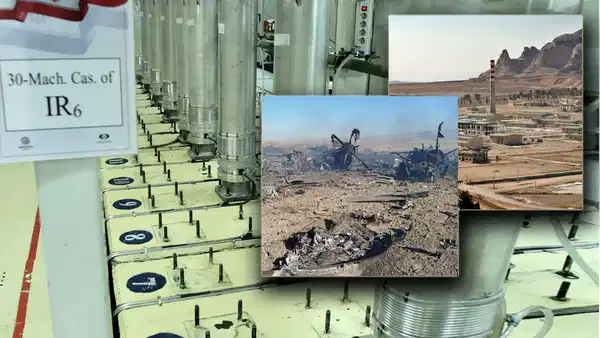
The United States military has successfully completed a high-stakes combat search and rescue (CSAR) operation in Iran, recovering two crew members from an F-15E Strike Eagle that was shot down during the ongoing 2026 Iran war. The operation, which took place between April 3 and April 5, 2026, involved a coordinated effort by the U.S. Air Force, U.S. Navy DEVGRU, and the Central Intelligence Agency Wikipedia.
The rescue follows the downing of the aircraft on April 3, 2026, which belonged to the 494th Fighter Squadron. The incident occurred amidst a broader conflict characterized by escalating tensions between the U.S. And Iranian forces. Even as the U.S. Has confirmed that both crew members were rescued, the operation came at a significant cost in terms of equipment and personnel Wikipedia.
The mission took place across the Kohgiluyeh and Boyer-Ahmad and Isfahan provinces of Iran. According to verified reports, the operation resulted in the deaths of three IRGC members and four Iranian Army officers. On the U.S. Side, one airman was injured, and several crew members aboard UH-60 helicopters sustained injuries Wikipedia.
The Cost of the F-15E Rescue Operation
The recovery of the two airmen required an intensive deployment of special operations assets, leading to substantial losses of U.S. Aircraft. The U.S. Military claimed that two C-130 Hercules and four MH-6 or AH-6 special operations helicopters were self-destroyed during the mission to prevent them from falling into enemy hands Wikipedia.
Further losses were attributed to Iranian fire. Iran claimed to have destroyed one A-10 Thunderbolt II and one MQ-9 Reaper. Two HH-60W Jolly Green II helicopters were damaged during the engagement Wikipedia. This loss of an A-10 aligns with reports from early April that at least two American military jets—an F-15E and an A-10—were downed by Iranian fire ABC News.
The F-15E Strike Eagle involved in the incident is a dual-role fighter designed for all-weather air-to-air and air-to-ground missions. Known for its high engine thrust-to-weight ratio and maneuverability, the aircraft is a mainstay of the U.S. Air Force, capable of reaching speeds of 1,875 mph and altitudes of 60,000 feet ABC News.
Strategic Context of the 2026 Iran War
The rescue operation is a localized event within the larger 2026 Iran war. The conflict has been preceded by a period of extreme instability, including the 2025–2026 Iranian internal crisis, mass protests, and a breakdown in negotiations between the United States and Iran Wikipedia.
The broader regional conflict includes tensions involving Israel, Hezbollah, and various strikes on military facilities across the Middle East, including locations in Bahrain, Jordan, Kuwait, Oman, Qatar, Saudi Arabia, Syria, Turkey, and the United Arab Emirates Wikipedia.
The downing of the F-15E and the subsequent rescue mission highlight the volatility of the airspace over Iran and the risks associated with combat search and rescue in contested environments. While the recovery of the personnel is viewed as a success by the U.S., the loss of multiple special operations helicopters and transport aircraft underscores the intensity of the Iranian defense Wikipedia.
Summary of Operation Casualties and Losses
| Entity | Personnel Casualties | Aircraft/Equipment Losses |
|---|---|---|
| United States | 1 airman injured. several UH-60 crew injured | 2 C-130 (self-destroyed), 4 MH-6/AH-6 (self-destroyed), 1 A-10 (destroyed), 1 MQ-9 (destroyed), 2 HH-60W (damaged) |
| Iran | 3 IRGC members killed; 4 Army officers killed | Not specified in provided records |
The rescue operation concludes a critical window of the conflict, with the U.S. Focusing on the recovery of its personnel. Further updates regarding the 2026 Iran war and official statements from the Department of Defense are expected as the situation evolves.
World Today Journal encourages readers to share this report and depart their comments below on the implications of this operation for regional stability.