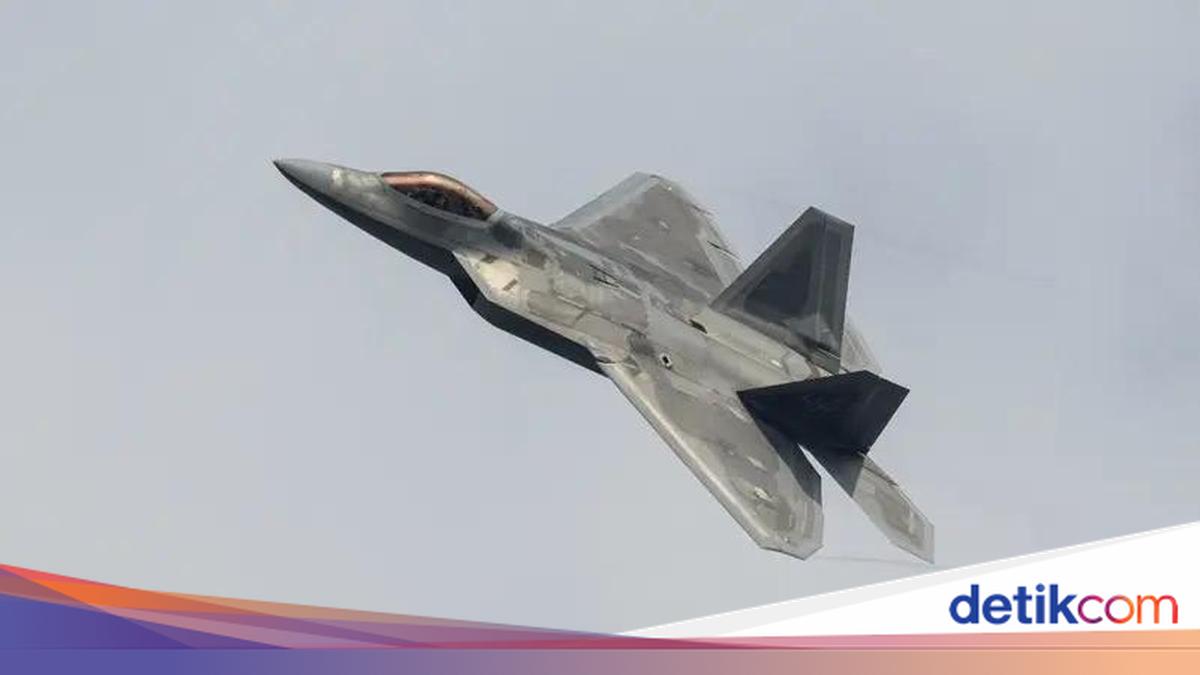
Tel Aviv – The arrival of twelve U.S. F-22 Raptor stealth fighter jets in Israel on Tuesday, February 24th, has significantly heightened tensions in the region amid escalating concerns over potential conflict with Iran. The deployment, reported by Israeli television network KAN, is being interpreted as a strong signal of support for Israel and a demonstration of U.S. Resolve as diplomatic efforts to restrain Iran’s nuclear program reach a critical juncture. This move comes as U.S. President Donald Trump has repeatedly threatened military action should ongoing negotiations fail to yield a satisfactory outcome.
The F-22 Raptors, considered among the most advanced fighter aircraft in the world, arrived at an Israeli air force base in the southern part of the country, according to KAN’s reporting. This deployment is part of a broader U.S. Military build-up in the Middle East, intended to deter Iranian aggression and provide a credible military option should diplomacy falter. The timing of the arrival is particularly noteworthy, coinciding with increased rhetoric from Washington regarding potential consequences for Tehran if it does not adhere to demands regarding its nuclear program, ballistic missile development, and support for regional proxy groups.
Escalating Tensions and Nuclear Negotiations
The deployment of the F-22s underscores the seriousness with which the United States views the current situation. Whereas the U.S. Maintains it prefers a diplomatic resolution, the visible demonstration of military power is intended to reinforce the credibility of its threats. Negotiations between U.S. And Iranian representatives, mediated by Oman, are scheduled to resume in Geneva, Switzerland, on Thursday, February 26th. These indirect talks represent a crucial opportunity to de-escalate tensions and potentially revive the 2015 nuclear deal, formally known as the Joint Comprehensive Plan of Action (JCPOA). The U.S. State Department provides ongoing updates on the Iran nuclear negotiations.
However, the prospects for a breakthrough remain uncertain. President Trump has issued an ultimatum to Iran, demanding limitations on its nuclear program, restrictions on its ballistic missile capabilities, and a cessation of support for regional proxies. He has warned of “very bad things” should Tehran fail to comply. Last week, Trump even indicated he was considering a limited strike against Iran if no agreement is reached during the current round of negotiations. This hardline stance has raised concerns among allies and observers about the potential for miscalculation and unintended escalation.
U.S. Military Posture in the Region
Beyond the arrival of the F-22s, the United States has been steadily increasing its military presence in the Middle East in recent weeks. Two aircraft carrier strike groups are currently operating in the region. The USS Abraham Lincoln has been stationed in the area for some time, while the USS Gerald R. Ford, the newest and largest aircraft carrier in the world, reportedly arrived at a U.S. Naval base in Souda Bay, Greece, according to reports from February 24th. The U.S. Naval Institute News provides detailed coverage of U.S. Naval deployments.
The deployment of these significant naval assets, coupled with the arrival of the F-22s in Israel, signals a clear message of deterrence to Iran. The F-22 Raptor is specifically designed for air superiority, possessing advanced stealth capabilities and the ability to penetrate enemy airspace and neutralize air defenses. KAN reported that the aircraft are intended to “penetrate enemy territory and paralyze air defense systems and radar installations.” This capability is particularly relevant given Iran’s investment in sophisticated air defense systems, acquired from Russia and other sources.
The JCPOA and Iran’s Nuclear Program
The current crisis stems from the unraveling of the JCPOA, which was initially agreed upon in 2015 between Iran and a group of world powers – the United States, the United Kingdom, France, Germany, Russia, and China. Under the JCPOA, Iran agreed to limit its nuclear program in exchange for the lifting of economic sanctions. However, in 2018, President Trump unilaterally withdrew the United States from the agreement, reimposing sanctions on Iran.
In response, Iran gradually rolled back its commitments under the JCPOA, enriching uranium to higher levels and increasing its stockpile. While Iran maintains its nuclear program is for peaceful purposes, the international community fears that it could be used to develop nuclear weapons. The current negotiations aim to revive the JCPOA, but significant obstacles remain, including disagreements over the scope of sanctions relief and guarantees that Iran will not pursue nuclear weapons in the future. The Arms Control Association provides a comprehensive overview of the JCPOA and the current state of negotiations.
Regional Implications and Potential Scenarios
The heightened tensions between the U.S. And Iran have far-reaching implications for the Middle East. A military confrontation could destabilize the region, potentially drawing in other actors and leading to a wider conflict. Iran has a network of proxy groups throughout the region, including Hezbollah in Lebanon, Hamas in Gaza, and Houthi rebels in Yemen, which could be activated in the event of a conflict.
Israel, a key U.S. Ally in the region, has long viewed Iran as an existential threat. Israeli officials have repeatedly warned that they will not hesitate to take action to prevent Iran from acquiring nuclear weapons. The arrival of the F-22s provides Israel with an additional layer of security and demonstrates U.S. Commitment to its defense. However, it also raises the risk of miscalculation and escalation, particularly if Iran perceives the deployment as a prelude to military action.
Possible Outcomes and Next Steps
Several scenarios are possible in the coming weeks. The most optimistic outcome would be a resumption of negotiations and a return to the JCPOA. However, this appears increasingly unlikely given the current political climate and the deep distrust between the U.S. And Iran. A more likely scenario is a continuation of the current stalemate, with tensions remaining high and the risk of escalation persisting. The least desirable outcome would be a military confrontation, which could have devastating consequences for the region and the world.
The next few days will be critical. The outcome of the negotiations in Geneva will likely determine whether the situation escalates or de-escalates. The international community is urging both sides to exercise restraint and to prioritize diplomacy. The U.S. And Iran both face significant risks in a military confrontation, and a negotiated solution remains the most prudent course of action.
As of February 25th, 2026, the focus remains on the upcoming negotiations in Geneva. Further developments are expected in the coming days as diplomats attempt to bridge the remaining gaps and avert a potential crisis. World Today Journal will continue to monitor the situation closely and provide updates as they become available. We encourage readers to share their thoughts and perspectives on this critical issue in the comments section below.
Worth a look