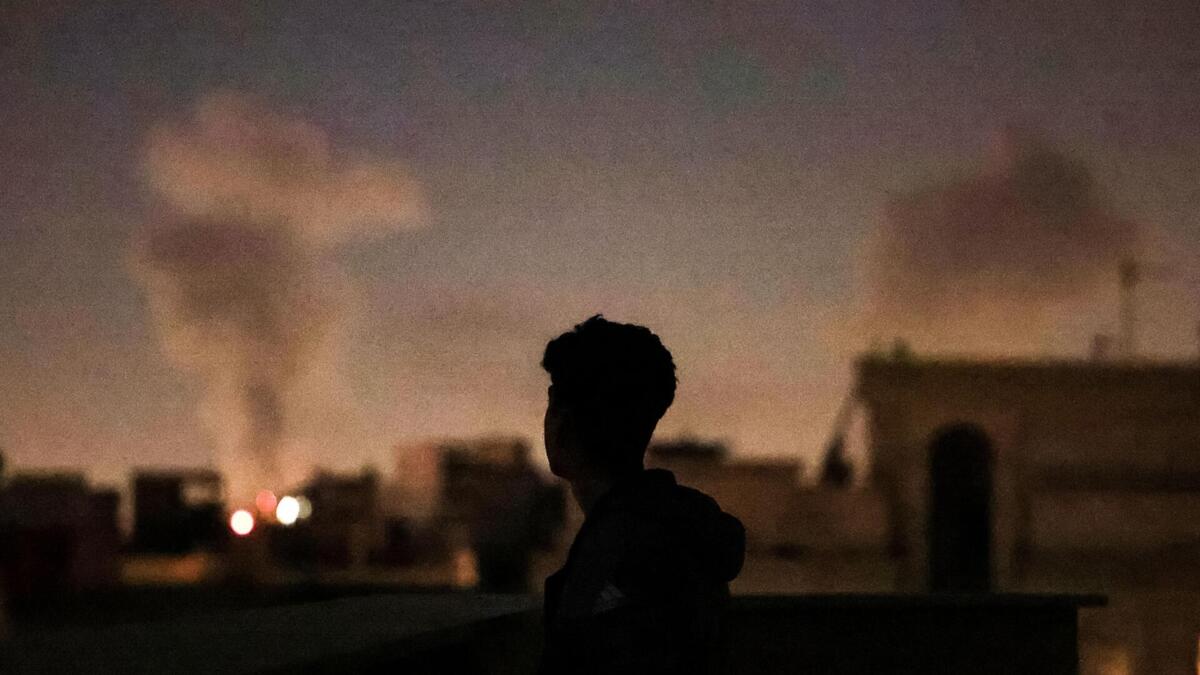
Escalating Tensions in the Middle East: US and Israel Confront Iran
The Middle East is bracing for further conflict following a series of escalating exchanges between the United States and Israel, on one side and Iran, on the other. Recent days have seen direct attacks by both US and Israeli forces on Iranian territory, ostensibly aimed at curbing nuclear ambitions, met with retaliatory missile and drone strikes by Tehran targeting Israel and US bases across the region. The situation is rapidly evolving, raising concerns about a wider regional war and prompting varied international reactions. The current crisis represents a significant intensification of long-standing geopolitical rivalries and security concerns in the region, with potentially grave consequences for global stability.
Reports indicate that the initial attacks by the US and Israel, carried out on Saturday, were justified by claims of needing to eliminate perceived nuclear threats emanating from Iran. However, details surrounding the extent of the damage and casualties remain contested. In response, Iran launched a barrage of missiles and drones against Israel and US military installations in several Middle Eastern countries. This retaliatory action has triggered a wave of condemnation and calls for de-escalation from international actors, but has too been met with a show of support from some quarters, particularly within the United States. The situation is further complicated by internal political dynamics, as evidenced by the recent actions of US senators.
Initial Attacks and Iranian Retaliation
The initial strikes attributed to the US and Israel reportedly targeted facilities within Iran, with the stated goal of hindering the country’s nuclear program. Even as specific details regarding the targets and the extent of the damage are still emerging, initial reports suggest a focus on infrastructure linked to Iran’s nuclear research and development. The attacks prompted immediate and strong condemnation from Iranian officials, who vowed a swift and decisive response.
Tehran’s retaliation came in the form of a large-scale missile and drone assault directed at Israel and US bases in the region. According to reports, dozens of missiles and drones were launched, with some intercepted by Israeli and US defense systems. The extent of the damage caused by the Iranian strikes is still being assessed, but initial reports indicate that some infrastructure was damaged. The attacks have heightened tensions significantly and raised fears of a further escalation of the conflict.
US Political Response and International Reactions
Within the United States, the response to the escalating conflict has been largely divided along political lines. On Wednesday, Republican senators reportedly rejected a proposal aimed at halting the offensive, signaling initial support for a continued military posture. This move underscores the complex political landscape surrounding the issue and the potential for further polarization. The rejection of the proposal suggests a willingness among some US lawmakers to support a more assertive approach towards Iran, despite the risks of a wider conflict.
Globally, the attacks and retaliatory strikes have elicited a range of reactions. Many countries have expressed concern over the escalating tensions and called for restraint from all parties involved. Some nations have emphasized the importance of diplomatic solutions and urged a return to negotiations. Others have expressed solidarity with Israel and condemned Iran’s actions. The international community is grappling with the challenge of preventing a further escalation of the conflict and mitigating its potential consequences.
Disinformation and the Narrative War
Amidst the ongoing conflict, concerns are growing about the spread of disinformation and the manipulation of narratives. France 24 reports that disinformation campaigns are actively exaggerating Iran’s military successes against the US and Israel. This highlights the importance of critical thinking and reliance on credible sources of information during times of conflict. The deliberate dissemination of false or misleading information can exacerbate tensions, fuel mistrust, and undermine efforts to achieve a peaceful resolution.
The Broader Geopolitical Context
The current escalation is not an isolated event but rather a manifestation of deeper, long-standing geopolitical rivalries in the Middle East. The relationship between Iran and Israel has been marked by decades of hostility, fueled by ideological differences, regional power struggles, and concerns over Iran’s nuclear program. The United States has historically played a key role in the region, maintaining close ties with Israel and imposing sanctions on Iran.
The conflict also intersects with broader regional dynamics, including the ongoing civil war in Yemen, the political instability in Lebanon, and the rise of extremist groups. These factors contribute to a complex and volatile security environment, making it difficult to predict the future trajectory of the conflict. The potential for miscalculation and unintended consequences is high, underscoring the need for careful diplomacy and de-escalation efforts.
Potential Scenarios and Future Outlook
Several potential scenarios could unfold in the coming days and weeks. One possibility is a further escalation of the conflict, with additional attacks and counterattacks between Iran, Israel, and the United States. This could lead to a wider regional war, drawing in other countries and causing significant humanitarian consequences. Another possibility is a negotiated ceasefire, brokered by international mediators. However, achieving a ceasefire will require a willingness from all parties to compromise and address the underlying issues driving the conflict.
The future outlook remains uncertain. The current escalation has significantly raised the stakes and increased the risk of a major conflict in the Middle East. The international community faces a critical challenge in preventing a further deterioration of the situation and promoting a peaceful resolution. Continued diplomatic efforts, coupled with a commitment to de-escalation and dialogue, are essential to avert a catastrophic outcome.
The situation is fluid and developments are occurring rapidly. The world watches closely as the US, Israel, and Iran navigate this dangerous moment, with the potential for far-reaching consequences for regional and global security. Further updates will be provided as they become available.
Next Steps: The United Nations Security Council is scheduled to convene an emergency session on Friday to discuss the escalating crisis. The outcome of this meeting could provide further insight into the international community’s response and potential pathways towards de-escalation. We will continue to monitor the situation closely and provide updates as they emerge.
What are your thoughts on the escalating tensions in the Middle East? Share your comments below and let us know what you suppose. Please also share this article with your network to help spread awareness of this critical situation.
Worth a look