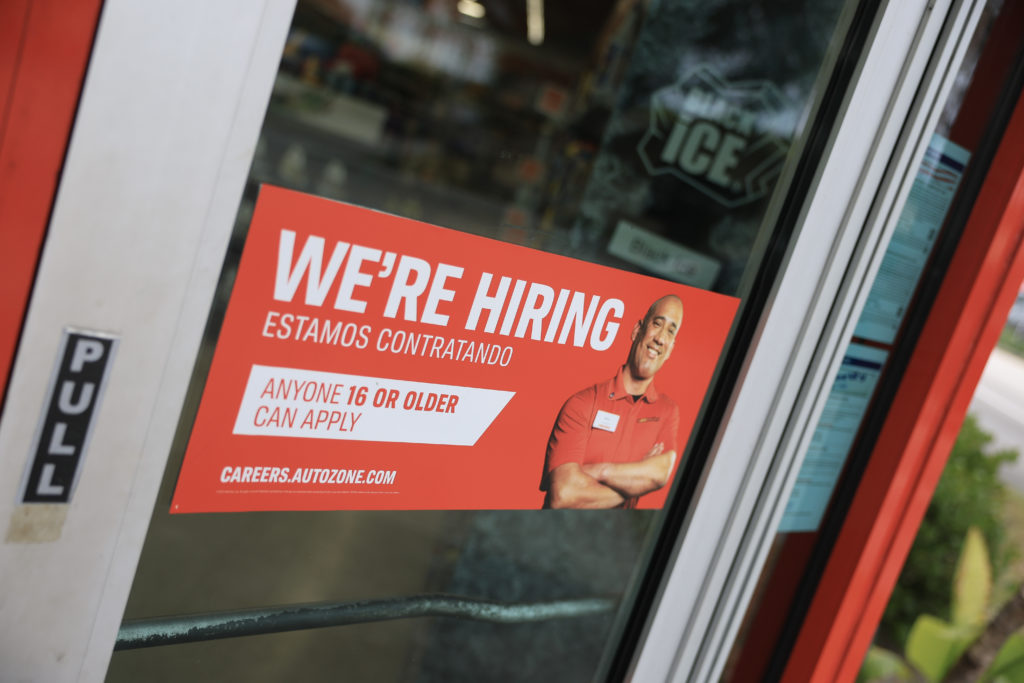
U.S. applications for unemployment benefits fell to 187,000 last week, marking the lowest level recorded since September 1969. According to seasonally adjusted figures published by the U.S. Department of Labor, initial jobless claims dropped by 15,000 from the previous week's upwardly revised level of 202,000, signaling continued resilience in the American labor market despite broader economic headwinds and persistent global uncertainty.
Economists surveyed by major financial news outlets had generally anticipated a higher tally, making the sharp decline a notable signal of employers holding onto workers. The four-week moving average, which smooths out weekly volatility, also decreased by 4,500 to 203,250—another multi-decade low point that underscores a persistent reluctance among businesses to initiate broad layoffs.
Dr. Olivia Bennett, Chief Editor of Business at World Today Journal, notes that while high-frequency economic indicators can fluctuate, the sustained low volume of initial filings points to structural tightness in domestic hiring channels. “Employers spent considerable effort and capital building their workforces post-pandemic, and they are choosing to hoard labor rather than risk shortages,” Bennett explains, drawing on years of economic analysis of labor market dynamics.
Understanding the 1969 Benchmark
To put the 187,000 figure in perspective, the last time initial jobless claims dipped to this territory, the U.S. labor force was significantly smaller. In September 1969, the American population and total employment pool were roughly half their current size, making a sub-200,000 weekly filing number extraordinarily rare relative to the modern scale of the economy.
According to the Department of Labor's weekly unemployment insurance claims report, continuing claims—which measure people who have already received unemployment benefits for a week or more—also trended downward, dropping to roughly 1.83 million. Analysts look to continuing claims as a proxy for how easily laid-off workers find new employment; lower continuing claims suggest that re-employment remains relatively swift.
Federal Reserve officials monitor these employment releases closely as they calibrate monetary policy. A labor market that refuses to loosen significantly complicates efforts to cool demand-driven price pressures, though recent inflation readings have shown moderation alongside this steady hiring climate.
Broader Economic Implications and Sector Pressures
While the headline figure reflects widespread stability, the aggregate data masks distinct sectoral divergences. Technology and media companies that announced workforce reductions through late 2022 and 2023 have largely completed those adjustments, while manufacturing, healthcare, and hospitality continue to report steady hiring demands.
Small businesses and large corporations alike face elevated borrowing costs following successive interest rate adjustments by the central bank. Yet, consumer spending has held up, providing businesses with the top-line revenue necessary to maintain payrolls. Financial analysts emphasize that as long as initial claims remain safely below the historical danger threshold of 300,000, the risk of a sharp, imminent recession driven by widespread job losses remains low.
Workers navigating the current job market can access official state-by-state filing statistics and localized employment assistance through the U.S. Department of Labor portal, which provides updated weekly filings and historical datasets.
Next Steps and Official Reporting Schedule
The Department of Labor releases initial and continuing jobless claims data every Thursday at 8:30 a.m. Eastern Time. The next scheduled report covering initial unemployment insurance claims will be published next Thursday by the Employment and Training Administration.
Readers are encouraged to share their perspectives or ask questions regarding macroeconomic indicators in the comments section below.