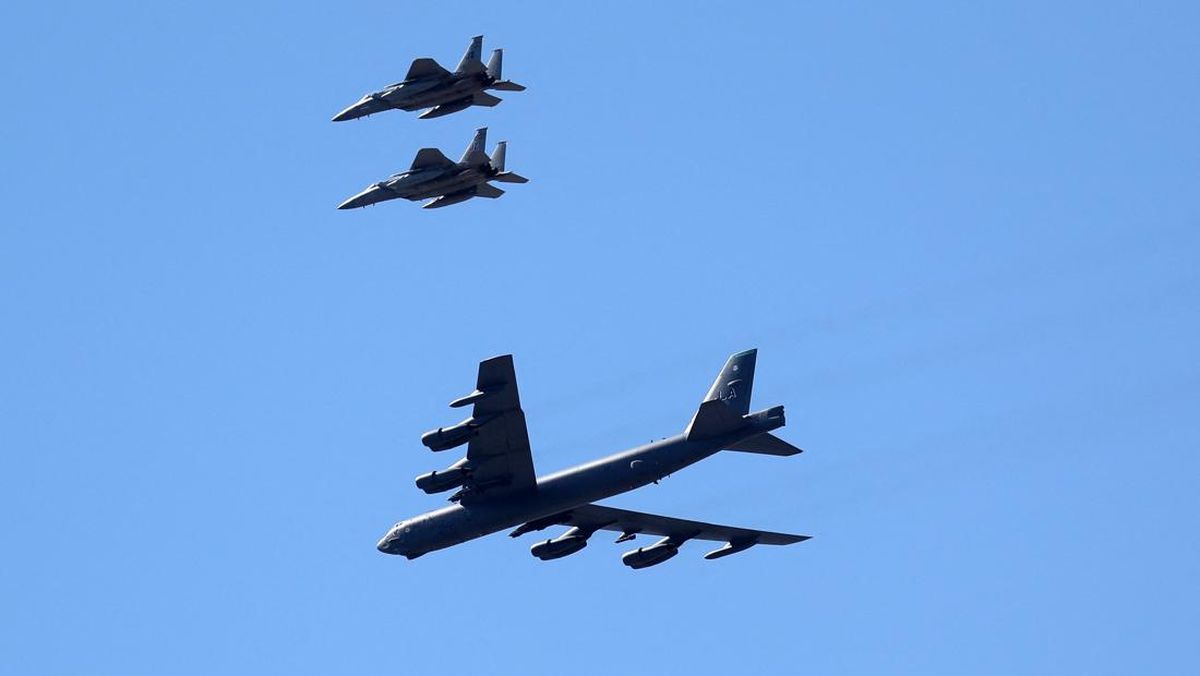
Indonesia has found itself at the center of a growing diplomatic debate after reports emerged that United States military aircraft had allegedly entered Indonesian airspace without proper authorization. The claims, which surfaced through multiple Indonesian media outlets, suggest that US flights may have violated sovereign airspace on numerous occasions, prompting concern among officials and analysts about the implications for national sovereignty and regional security. As the archipelago nation navigates its non-aligned foreign policy stance, the incident has drawn attention from global powers, particularly China, which has urged Jakarta to remain vigilant against any erosion of its territorial integrity.
The controversy centers on allegations that US military planes conducted flights over Indonesian territory without securing the necessary diplomatic clearances under existing bilateral agreements. While the Indonesian government has not officially confirmed the number of incidents, local reports cited figures as high as 18 alleged violations within a specific timeframe. These claims have triggered a domestic discussion about the balance between defense cooperation with traditional partners like the United States and the demand to uphold constitutional principles regarding foreign military presence. Indonesian law requires explicit permission for any foreign military aircraft to operate in its airspace, a stipulation rooted in the country’s commitment to sovereignty and independence in foreign affairs.
In response to the growing scrutiny, Indonesia’s Ministry of Defense issued a statement emphasizing that all foreign military activities must comply with established protocols and bilateral agreements. Officials clarified that while defense cooperation with the United States continues under frameworks such as the Joint Statement on Defense Cooperation, any operational activity must undergo prior notification and approval through diplomatic channels. The ministry denied that any blanket permission had been granted for unrestricted access, countering speculation that recent agreements had opened the door to unchecked military movements.
The situation has been further complicated by commentary from Chinese state-affiliated analysts, who warned that perceived leniency toward foreign military operations could undermine Indonesia’s long-standing principle of “free and active” foreign policy. Beijing has consistently advocated for regional stability through non-alignment and has expressed concern that increased US military presence in Southeast Asia — particularly through access arrangements with countries like the Philippines and Singapore — could shift the strategic balance. Chinese commentators have urged Jakarta to carefully assess any defense agreements to ensure they do not compromise national autonomy or provoke unnecessary tensions in the South China Sea and surrounding regions.
Independent verification of the alleged flight incidents remains limited, as neither the US Indo-Pacific Command nor Indonesia’s Air Force has released detailed flight logs or official confirmation of specific sorties. Aviation tracking data from open-source platforms shows routine military traffic in the region, but attributing specific flights to unauthorized entries requires corroboration from radar systems or official statements, which have not been made publicly available. Experts note that while accidental incursions can occur due to navigational errors or weather-related deviations, repeated patterns would suggest procedural lapses requiring investigation.
The broader context involves evolving defense ties between Indonesia and the United States, which have expanded in recent years amid shared concerns over maritime security and regional stability. High-level dialogues, including annual talks under the Indonesia-US Defense Cooperation framework, have focused on interoperability, capacity building, and joint exercises. Though, these engagements remain subject to Indonesian legislative oversight, with the People’s Consultative Assembly (MPR) and House of Representatives (DPR) retaining authority over treaties and international agreements involving foreign military presence.
Legal experts emphasize that Indonesia’s 1945 Constitution, particularly Article 11, renounces aggression as a tool for settling disputes and upholds the nation’s commitment to a free and active foreign policy. Any agreement permitting foreign military operations must align with these principles and cannot undermine the country’s non-aligned stance. Past controversies, such as the debate over allowing foreign troops for humanitarian missions, have demonstrated the sensitivity of such issues within Indonesian civil society and political circles.
As of now, no formal investigation has been announced by the Indonesian National Armed Forces (TNI) into the alleged airspace violations. Calls for transparency have grown among lawmakers and civil society groups, who argue that the public has a right to know whether sovereign boundaries were breached and what measures are in place to prevent recurrence. Analysts suggest that the government may face increasing pressure to clarify the terms of existing defense pacts and to reinforce procedural safeguards around foreign military access.
The incident underscores the delicate balancing act Indonesia performs in maintaining defense partnerships while safeguarding its sovereignty. With great power competition intensifying in the Indo-Pacific, Jakarta’s decisions on military cooperation will continue to be scrutinized not only by domestic audiences but also by regional actors assessing Indonesia’s strategic posture. For now, the focus remains on verifying the facts behind the allegations and ensuring that any future cooperation adheres strictly to constitutional and legal norms.
For updates on official statements regarding defense agreements or airspace protocols, readers are encouraged to monitor releases from Indonesia’s Ministry of Defense and the National Armed Forces (TNI).
If you have insights or perspectives on this developing story, we invite you to share them in the comments below. Help foster informed discussion by sharing this article with others interested in Southeast Asian security and diplomacy.
Keep reading