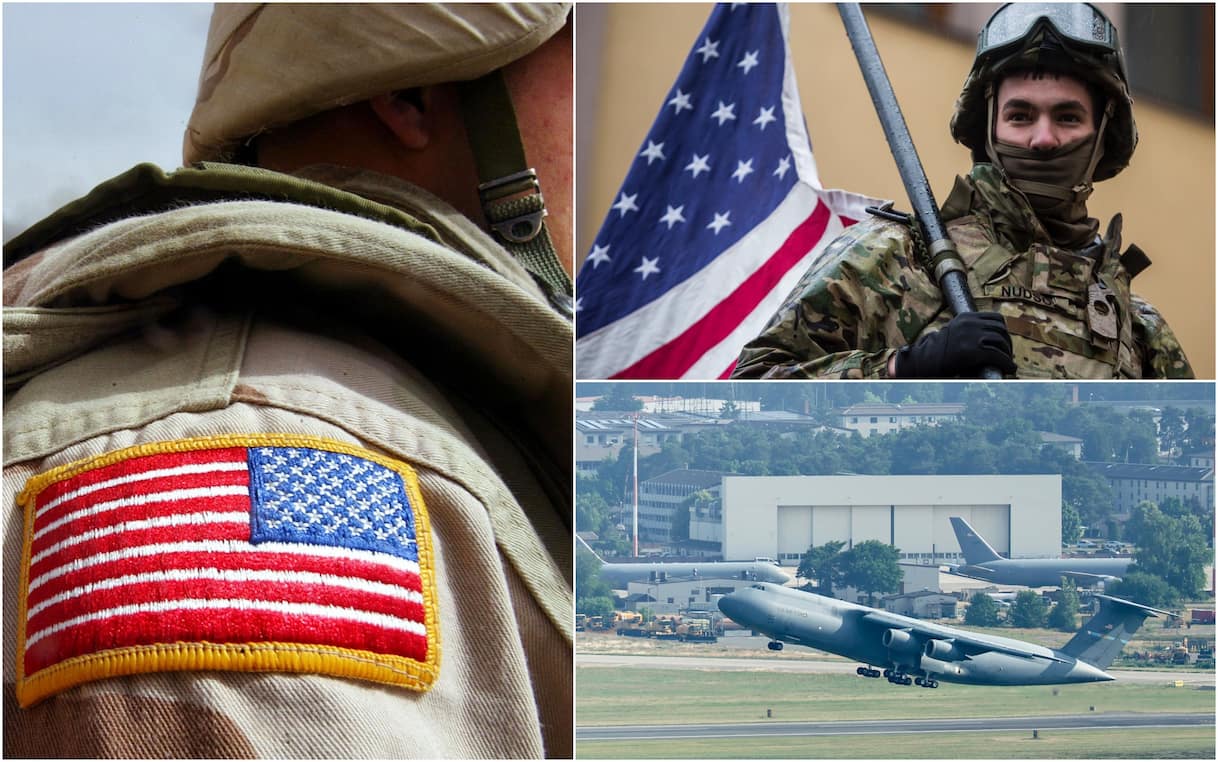
The architecture of the United States military presence in Europe is currently undergoing a period of strategic recalibration. Since the conclusion of World War II, the U.S. Has maintained a permanent security umbrella over the continent, evolving from the massive troop concentrations of the Cold War to a more flexible, rotational posture designed for rapid response and collective defense within the NATO alliance.
This presence is not a monolithic force but a complex network of command structures, permanent installations, and rotating units. At the apex is the U.S. European Command (USEUCOM), which provides the overarching command and control for all U.S. Military forces in the European theater. The current structure emphasizes “interoperability”—the ability of U.S. Forces to operate seamlessly with the armies and air forces of 31 other NATO allies.
The scale of this commitment is vast. As of late 2024, the U.S. Army Europe and Africa (USAREUR-AF) reported approximately 38,500 U.S. Army Soldiers stationed throughout Europe and Africa, a figure that includes 14,000 rotational forces according to official Army fact sheets. This footprint is supported by 33,500 Department of the Army civilians and nearly 9,000 local nationals employed by the U.S. Army in Europe.
The Ground Component: USAREUR-AF and the German Hub
Germany remains the central nervous system of U.S. Ground operations in Europe. The U.S. Army Europe and Africa headquarters is based at Lucius D. Clay Kaserne in Wiesbaden, Hesse. From this hub, the U.S. Manages a series of strategic garrisons and training areas that allow for the rapid deployment of combat power toward the “Eastern Flank” of NATO.
Key installations include the Harold D. Smith Barracks in Baumholder and the Rose Barracks in Vilseck, Bavaria. These sites are not merely housing for troops but critical logistical nodes. The training facilities in Hohenfels, for instance, continue to host large-scale maneuvers, such as the Combined Resolve exercise conducted in April 2026, which tests the ability of U.S. And allied forces to operate in contested environments.
The U.S. Ground presence has shifted toward a “rotational” model. Rather than keeping all brigades permanently stationed in Europe, the U.S. Frequently rotates units from the continental United States (CONUS) to Europe for several months. This ensures that troops are current on European terrain and tactics even as maintaining a flexible force that can be shifted globally as threats evolve.
Air Power and Strategic Reach
The U.S. Air Forces in Europe (USAFE) provide the primary deterrent through air superiority and rapid airlift capabilities. The most critical node in this network is Ramstein Air Base in Germany, which serves as the primary logistics and personnel hub for U.S. Operations across Europe, Africa, and the Middle East.

Beyond Ramstein, the U.S. Maintains a network of air bases that allow for the projection of power. These installations are designed to support a variety of aircraft, from F-35 stealth fighters to heavy C-17 transport planes. The strategic goal is “agile combat employment”—the ability to disperse aircraft across multiple smaller bases to make them less vulnerable to attack and more capable of covering vast distances quickly.
The air presence is integrated into the NATO Integrated Air and Missile Defense (IAMD) system, ensuring that U.S. Radar and interceptor capabilities are synchronized with those of European allies to protect the continent from aerial threats.
Maritime Dominance: The 6th Fleet
Naval operations in Europe are managed by the U.S. 6th Fleet, headquartered in Naples, Italy. The 6th Fleet’s area of responsibility covers the Atlantic Ocean and the Mediterranean Sea, focusing on maintaining open sea lanes and countering adversarial naval presence in the region.
The U.S. Navy does not maintain a permanent “base” in the traditional sense for its ships, but relies on port access and rotational deployments. For example, in January 2026, the Arleigh Burke-class guided missile destroyer USS Delbert D. Black began patrolling European waters after departing from Las Palmas, Spain as reported by Stars and Stripes. This “persistent presence” allows the U.S. To respond to crises in the Mediterranean or the North Atlantic within hours.
The U.S. Marine Corps also maintains a presence in the region, often deploying via amphibious assault ships. Still, recent reports from April 2026 indicate that the Marine Corps and Navy are collaborating to address what the Marine Corps Commandant described as an “insufficient amphibious fleet size” to meet global demands.
Strategic Shifts and the NATO Burden
The structure of U.S. Forces in Europe is currently being influenced by a broader political push for “burden sharing.” For decades, the U.S. Has provided the lion’s share of funding and manpower for NATO’s defense. In recent years, there has been a concerted effort to shift more leadership and operational responsibility to European allies.
This shift is manifesting in the leadership of specific commands. In early 2026, it was reported that leadership of two NATO commands—including a command in Naples, Italy—would shift from U.S. To European hands as part of a broader effort to have allies shoulder more responsibility according to reporting by Stars and Stripes.
the U.S. Continues to invest in the NATO Security Investment Program (NSIP). The Fiscal Year 2026 budget justifications indicate that the U.S. Remains a primary contributor to this burden-sharing program, which funds the construction and upgrading of military infrastructure across the alliance.
Summary of U.S. Military Presence Structure
| Component | Primary Command | Key Hubs/Locations | Primary Role |
|---|---|---|---|
| Army | USAREUR-AF | Germany (Wiesbaden, Baumholder, Vilseck) | Ground deterrence, rotational combat power |
| Air Force | USAFE | Germany (Ramstein, Spangdahlem) | Air superiority, strategic airlift, logistics |
| Navy | U.S. 6th Fleet | Italy (Naples), Rotational Port Access | Maritime security, Mediterranean patrol |
| Joint Command | USEUCOM | Stuttgart, Germany | Theater-wide command and control |
The U.S. Presence in Europe is not static. It is a living network that expands or contracts based on the geopolitical climate. While the permanent “footprint” of bases remains a cornerstone of stability, the increasing use of rotational forces allows the U.S. To maintain a high state of readiness without the political and logistical friction of permanent mass deployments.
The next major checkpoint for the U.S. Military posture in Europe will be the continued implementation of the FY2026 budget requirements and the transition of leadership roles within NATO commands to European allies. These shifts will determine whether the U.S. Continues to act as the primary “security provider” or transitions into a “security partner” role.
We invite our readers to share their perspectives on the evolution of the NATO alliance in the comments below.
Related reading