
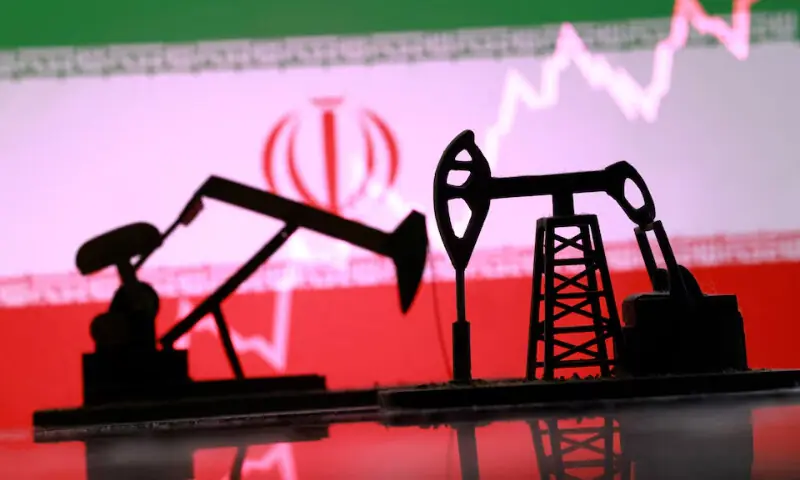
Iran’s economy appears resilient in the face of a US naval blockade targeting its oil exports, according to multiple economic analysts and energy experts monitoring the situation in the Strait of Hormuz. Despite claims from US officials that the blockade is causing financial collapse in Tehran, independent assessments suggest Iran has sufficient adaptive capacity to withstand short-to-medium term disruptions to its oil revenue streams.
The standoff centers on the Strait of Hormuz, a critical maritime chokepoint through which approximately 20% of global oil and liquefied natural gas shipments normally pass. Following escalations in the broader Middle East conflict, Iran began restricting traffic through the waterway, prompting the United States to impose a counter-blockade on Iranian ports in mid-April 2026. The US Navy action specifically targets Iran’s ability to export crude oil via its primary terminal at Kharg Island in the Persian Gulf.
While Trump administration officials have characterized the blockade as pushing Iran toward economic collapse, analysts cited in regional economic surveys argue such predictions overlook Tehran’s historical experience with sanctions and its current operational flexibility. Jamie Ingram, managing editor of the Middle East Economic Survey (MEES), told AFP that Iran’s oil storage constraints would likely manifest in “weeks rather than days,” but emphasized that the country could divert crude to alternative facilities before reaching critical bottlenecks at Kharg Island.
“Kharg Island shouldn’t be a particular bottleneck for Iran,” Ingram stated. “This represents the final storage facility used before oil is exported and Iran can divert crude oil to other facilities rather than straight to Kharg.” This logistical adaptability reduces the immediate impact of port-focused naval actions, even as export volumes face pressure.
Oil production data shared by energy intelligence firm Kpler and analyzed by expert Homayoun Falakshahi shows Iranian crude output declining gradually since the conflict began. Production fell by approximately 200,000 barrels per day in March 2026 to 3.68 million barrels per day, with a further expected drop of 420,000 barrels per day in April bringing output to around 3.43 million barrels per day. These adjustments reflect broader export disruptions and refining constraints rather than a sudden shutdown of wells.
Beyond immediate oil metrics, experts note Iran’s broader economic resilience stems from prior experience managing severe revenue contractions. “Iran has similarly proven its ability to withstand huge oil-revenue declines during previous rounds of sanctions,” Ingram added. “I would not underestimate the regime’s resilience in this regard.” This historical context suggests leadership in Tehran calculates it can endure prolonged pressure before conceding to diplomatic demands.
The concept of “mutually assured disruption” has emerged as a key framework for understanding Tehran’s strategy. Ali Vaez, Iran project director at the International Crisis Group, explained that Iran’s leadership likely views its own efforts to limit traffic through Hormuz as creating reciprocal economic pain: “It also likely calculates that its own efforts to subdue traffic through Hormuz act as a sort of mutually assured disruption.” This dynamic implies both sides absorb costs, potentially prolonging the standoff until external actors intervene.
Regional economic ripple effects are significant. Saeed Laylaz, professor at Shahid Beheshti University in Tehran, told AFP that while Iran may absorb damage from a prolonged blockade, “the damage to the countries in the southern Persian Gulf will definitely be greater.” This assessment highlights how the blockade affects not only Iran but also neighboring states dependent on unimpeded Gulf trade flows.
Diplomatic efforts continue amid the impasse. As an initial two-week truce between Washington and Tehran neared expiration in mid-April 2026, Trump announced he would maintain the ceasefire to allow more time for peace talks. Iran welcomed mediation efforts by Pakistan but reiterated its position that it would not reopen the Strait of Hormuz as long as the US blockade remains in place, according to reports from the Dawn newspaper citing Iranian officials.
Looking ahead, Ingram suggested economic disruption is more likely to shift pressure onto China than to force immediate Iranian concessions: “It will take a long time before such economic pain forces Iran to compromise… More likely economic disruption … pushes China into exerting more pressure on Iran to negotiate.” This perspective positions Beijing as a potential indirect influencer in any eventual diplomatic resolution.
The situation remains fluid, with no definitive timeline for resolution. Key developments to monitor include official updates from the US Department of Defense regarding naval operations in the Gulf, statements from Iran’s Ministry of Petroleum on export volumes, and any announcements from OPEC+ concerning production adjustments that could indirectly affect Iranian oil market positioning.
For ongoing coverage of global energy markets and geopolitical developments affecting oil supplies, readers can follow updates from the International Energy Agency and major financial news services. Your insights on how this standoff might evolve are welcome in the comments below—please share this article if you found it informative.