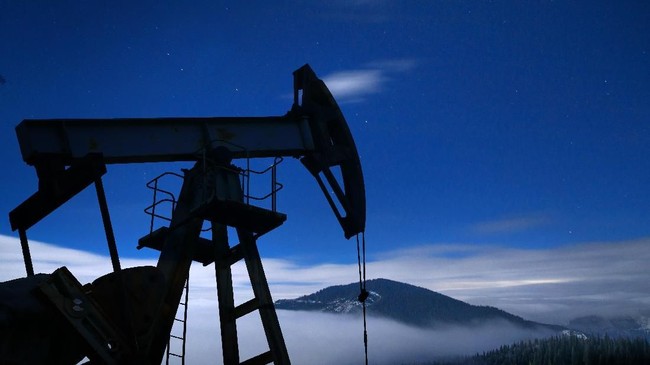
Global Oil Prices Remain Elevated Despite Historic Reserve Release
Jakarta – Despite a coordinated release of the largest emergency oil reserves in history, global oil prices have remained stubbornly high, defying expectations of significant relief for consumers, and businesses. Over 30 countries across Europe, North America, and Northeast Asia agreed to release approximately 400 million barrels of oil into the global market in an effort to curb soaring energy costs. The United States is leading this initiative, releasing 172 million barrels from its Strategic Petroleum Reserve, representing 43% of the total coordinated release by the International Energy Agency (IEA).
This collective action represents the largest release of oil reserves in the IEA’s 50-year history, a testament to the organization’s commitment to safeguarding energy security for its member nations during times of global crisis. However, the market response has been muted, with crude oil prices actually increasing since the announcement on Wednesday. Brent crude, the international benchmark, closed above $100 per barrel on Friday for the second consecutive session, according to data from Reuters.
Geopolitical Tensions Fuel Price Concerns
Analysts attribute the continued price pressure to ongoing geopolitical instability, particularly in the Middle East. Tamas Varga, an analyst at PVM Oil Associates in London, highlighted the impact of attacks on tankers in the Persian Gulf and the potential closure of the Strait of Hormuz. Recent statements from Iran’s supreme leader, vowing to preserve this crucial trade route closed, have further exacerbated concerns. The Strait of Hormuz is a vital chokepoint for global oil supply, and any disruption could have significant consequences for the world economy.
Tom Liles, Senior Vice President of Upstream Research at Rystad Energy, emphasized the limitations of the reserve release in the face of these geopolitical challenges. “Until transit is re-enabled, such policy announcements will have limited impact,” Liles stated, as reported by CNBC. He explained that Saudi Arabia, Iraq, Kuwait, and the United Arab Emirates collectively exported around 14 million barrels per day (bpd) before the current disruptions. Approximately 5 to 6 million bpd of this supply travels via pipelines through Saudi Arabia and the UAE, terminating in the Red Sea and Gulf of Oman.
This leaves roughly 9 million bpd, or approximately 10% of global supply, reliant on passage through the Strait of Hormuz. Liles estimates that the 400 million barrel release could cover around 40 days of this disrupted supply. However, he cautioned that the release is not a simple, immediate influx of oil into the market. “It’s not like 400 million barrels just appear on the market,” he explained.
Limited Impact of Strategic Reserves
Analysts at Bernstein argue that the scale of supply disruptions caused by the current geopolitical situation far outweighs the volume of oil available in strategic reserves. The impact of the release on oil prices will be limited. The United States is releasing 172 million barrels over a 120-day period, equating to 1.4 million barrels per day. This represents only 15% of the supply lost due to the disruptions in the Strait of Hormuz. It takes approximately 13 days for the released barrels to enter the market following authorization from President Donald Trump.
The IEA has not provided a detailed timeline or volume breakdown for the releases from its other 32 member countries, leaving the specifics to individual nations based on their own circumstances. The IEA last tapped its emergency reserves in response to the Russian invasion of Ukraine, achieving a combined release of 1.3 million barrels per day in September 2022, according to data from Rapidan Energy. The IEA may be able to increase the release rate to nearly 2 million barrels per day, but this still falls short of addressing the full extent of the supply shortfall.
“This buys time, but doesn’t solve the crisis,” analysts at Bernstein concluded.
The Role of the Strait of Hormuz and Global Supply Chains
The Strait of Hormuz, a narrow waterway connecting the Persian Gulf to the Gulf of Oman and the Arabian Sea, is one of the world’s most strategically important oil chokepoints. According to the U.S. Energy Information Administration (EIA), approximately 21% of global oil consumption passed through the Strait in 2018. The EIA details the potential consequences of disruptions to this vital shipping lane, including significant price spikes and economic instability.
The current tensions in the region, coupled with the potential for escalation, are creating a risk premium in oil prices. Even if a full closure of the Strait is avoided, the threat of disruption is enough to keep prices elevated. The limited capacity to quickly increase oil production from other sources further exacerbates the situation. While the United States has increased its oil production in recent months, This proves still below pre-pandemic levels. OPEC+ (the Organization of the Petroleum Exporting Countries and its allies) has been reluctant to significantly increase production, citing concerns about global economic growth.
Looking Ahead: What to Expect in the Oil Market
The effectiveness of the strategic reserve release will depend heavily on the evolution of the geopolitical situation in the Middle East. If tensions de-escalate and transit through the Strait of Hormuz is restored, the release could provide some temporary relief to the market. However, if the situation worsens, prices are likely to remain elevated. The IEA is continuously monitoring the situation and may consider further releases from strategic reserves if necessary.
The long-term outlook for oil prices will also be influenced by factors such as global economic growth, the transition to renewable energy sources, and the development of new oil fields. The current crisis underscores the importance of diversifying energy sources and reducing reliance on vulnerable chokepoints. Investing in renewable energy technologies and improving energy efficiency are crucial steps towards a more secure and sustainable energy future.
The next key development to watch will be the outcome of ongoing diplomatic efforts to de-escalate tensions in the Persian Gulf. Any progress towards a resolution could ease concerns about supply disruptions and lead to a decline in oil prices. However, until a lasting solution is found, the market is likely to remain volatile and sensitive to geopolitical developments.
What are your thoughts on the current oil market situation? Share your comments below and let us know how you sense these events will impact the global economy.
Worth a look
- Growing Number of Australian Students Failing NAPLAN Literacy and Numeracy Benchmarks
- $54 Million Private Investment to Build New FBO at Luis Muñoz Marín Airport
- Why Bitcoin Underperforming Traditional Markets Is Fact, Not FUD (archyde.com)
- Marcus Rashford to Return to Manchester United After Barcelona Deal Fails (archyworldys.com)