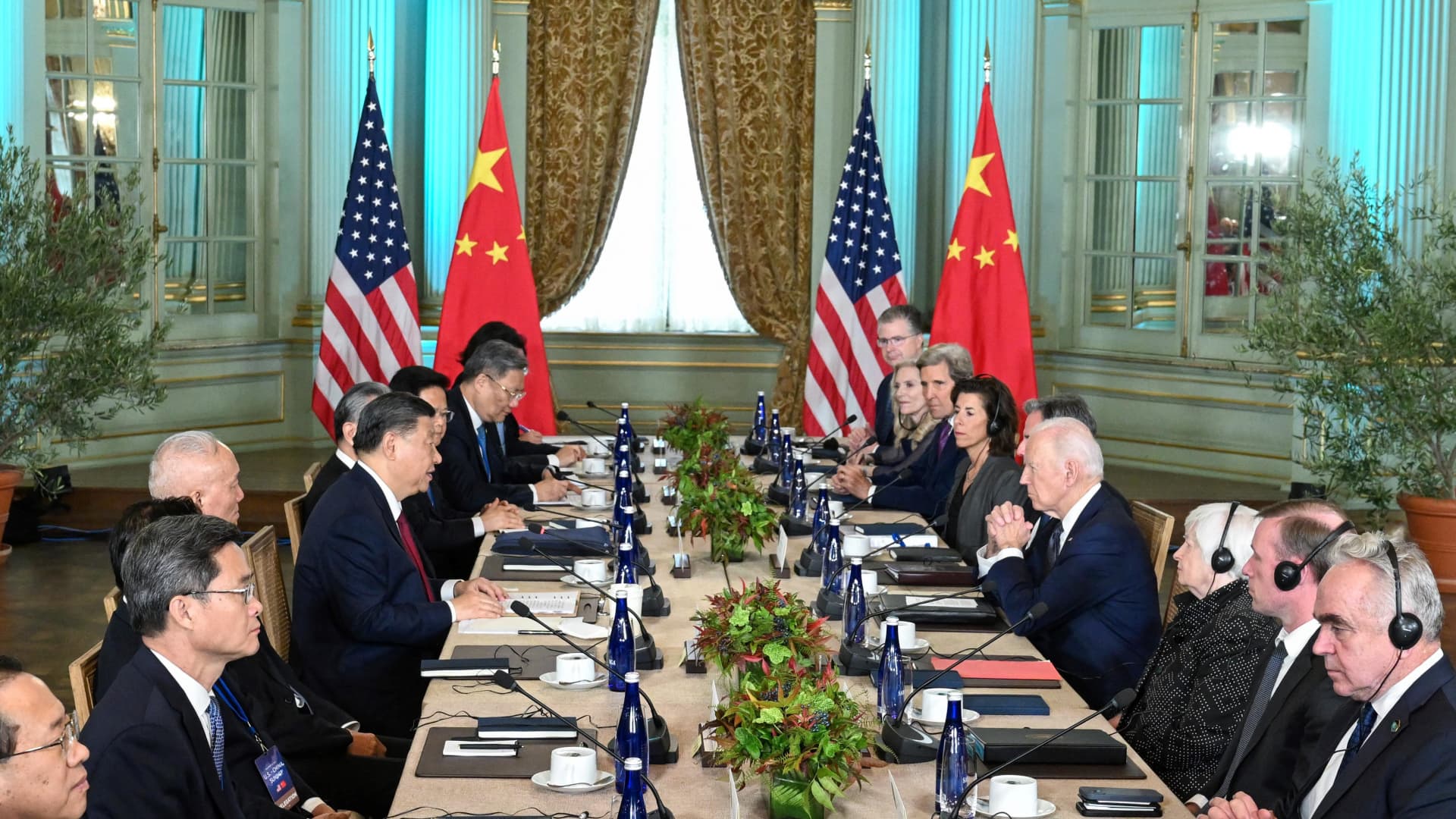
As the world watches the countdown to a pivotal diplomatic encounter in Beijing, a surprising shift is emerging from within the United States. Recent data suggests a softening of the hardline stance long held by the American public toward the world’s second-largest economy, creating a complex backdrop for the upcoming meeting between the leaders of the two superpowers.
The US public perception of China is showing signs of improvement, according to a new survey, just as geopolitical tensions are spiking over maritime security in the Middle East. This duality—a more favorable domestic mood in the U.S. Contrasted with aggressive strategic maneuvering—sets a volatile stage for the scheduled summit between President Donald Trump and President Xi Jinping.
For years, the narrative of “strategic competition” has dominated the Washington-Beijing axis, often reflected in plummeting favorability ratings among the American electorate. However, current trends indicate that the nadir of this relationship may have passed, with a growing segment of the population moving away from viewing China exclusively as an adversary.
Shifting Sentiments: The Pew Research Findings
According to a March 2026 survey conducted by the Pew Research Center among 12,000 U.S. Adults, 27% of Americans now hold a positive view of China. This figure represents a notable climb from 21% in 2025 and is nearly double the 14% favorability recorded in 2023, a period marked by the fallout of the pandemic and the “spy balloon” incident.

The data reveals a significant generational and political divide in how the U.S. Views its global rival. The trend toward a more positive outlook is most pronounced among younger adults and Democratic supporters. Specifically, 34% of voters under the age of 50 view China favorably, compared to only 19% of those aged 50 and older . Among partisans, the percentage of Democrats with a positive view of China rose by 8 percentage points over the previous year, while views among Republicans remained largely stagnant.
Interestingly, while the public’s view of China is warming, confidence in the executive branch’s handling of the relationship is dipping. Trust in President Donald Trump’s decision-making regarding China has fallen to 39%, down from 45% in August 2023 . This suggests a disconnect between the American public’s evolving sentiment and their trust in the current administration’s strategic approach.
The Beijing Summit: A High-Stakes Encounter
This shift in public mood comes at a critical juncture. White House Press Secretary Karoline Leavitt has confirmed that President Trump and President Xi Jinping are scheduled to meet in Beijing from May 14 to 15, 2026. This summit follows a previous meeting held on October 30, 2025, at the Gimhae Air Base in Busan, South Korea, where the two leaders sought to manage their fraught relationship.
The May summit is expected to address a wide array of bilateral issues, but the atmosphere is being clouded by recent escalations in the Middle East. While the diplomatic machinery is working toward a meeting in the Chinese capital, the operational reality on the ground—and at sea—is far more confrontational.
The Hormuz Variable: Energy and Blockades
A significant wildcard threatening the success of the Beijing summit is the U.S. Government’s recent action in the Strait of Hormuz. On April 13, the United States implemented a “counter-blockade” of the strategic waterway . This move has sent ripples through global energy markets and sparked a sharp reaction from Beijing.
China’s Ministry of Foreign Affairs has been vocal in its opposition. Spokesperson Guo Zikun stated that the U.S. Blockade, enacted during a period of agreed-upon temporary ceasefire, serves only to “intensify conflict and heighten tension” . Beijing has called for a swift normalization of transit through the strait and urged all nations to prioritize dialogue.
Analysts suggest the U.S. Move may be a calculated attempt to pressure China. Despite the conflict in Iran, reports from Western media indicate that China has continued to import sufficient quantities of Iranian crude oil via the Strait of Hormuz . By restricting the strait, the U.S. May be targeting China’s energy security as a lever of influence ahead of the May negotiations.
Xi Jinping’s “Jungle” Warning
President Xi Jinping has already begun framing the current international climate as one of regression. During recent meetings with the Prime Minister of Spain and the Crown Prince of the UAE in Abu Dhabi, Xi emphasized that “the world must not return to a jungle where the law of the strongest prevails” . This rhetoric is widely interpreted as a direct critique of the U.S. Counter-blockade and a plea for a rules-based international order that protects the interests of all nations, regardless of military might.
Analysis: What This Means for Global Stability
The intersection of improving US public perception of China and intensifying military friction creates a paradoxical environment. On one hand, the U.S. Administration may find more domestic breathing room to seek a diplomatic detente if the public is less inclined to view China as an existential enemy. The use of “blockade diplomacy” in the Middle East demonstrates that the U.S. Is still willing to use aggressive tactical measures to achieve its goals.
The stakes for the May 14-15 summit are therefore higher than usual. If the leaders can navigate the Hormuz crisis, the Beijing meeting could signal a genuine pivot toward stability. If the blockade continues to choke energy supplies or escalates into further conflict, the summit may become a mere formality in a relationship that is continuing to deteriorate despite the shifting views of the American public.
| Year | Favorable View (%) | Key Context/Drivers |
|---|---|---|
| 2023 | 14% | COVID-19 fallout, “Spy Balloon” incident |
| 2025 | 21% | Gradual stabilization of diplomatic channels |
| 2026 (March) | 27% | Shift among youth and Democratic voters |
The international community now looks toward the middle of May. The primary checkpoint will be the official arrival of President Trump in Beijing on May 14, where the initial tone of the meetings will reveal whether the “jungle” of power politics has superseded the possibility of diplomatic cooperation.
We invite our readers to share their perspectives on the shifting dynamics of US-China relations in the comments below. Do you believe domestic public opinion can truly influence high-level geopolitical strategy?
Keep reading