United states Seeks to Counter china’s Dominance in Critical Minerals with new Trade Bloc
The United States has proposed the formation of a new “trade bloc” comprised of allied and partner nations to fortify the supply chains of critical minerals. This initiative forms a key component of the U.S. strategy to diminish China‘s current monopolistic position in this vital sector.
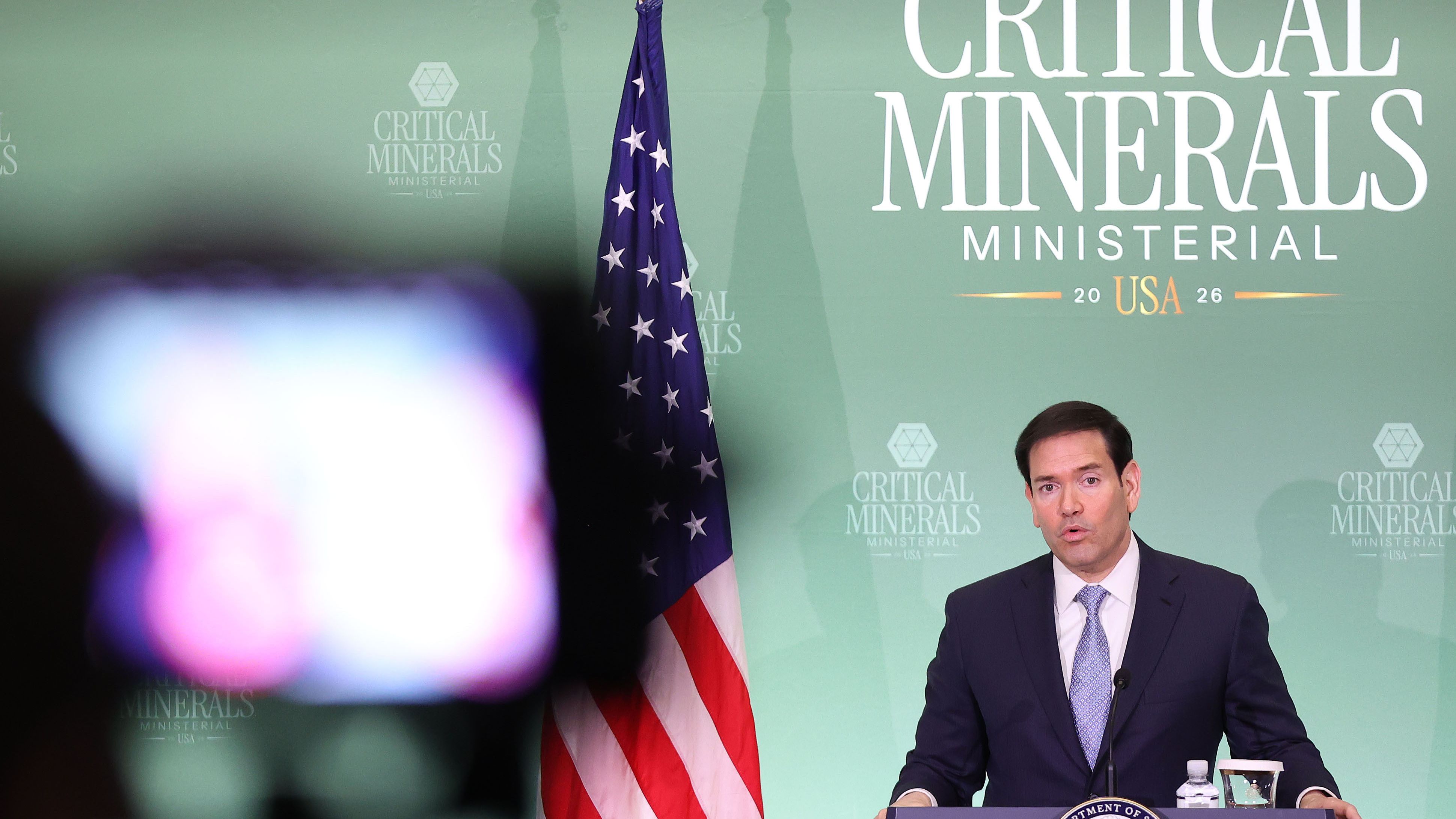
Speaking at the inaugural Ministerial Meeting on Critical Minerals held at the State Department, Vice President JD Vance articulated the goal: “We wont members to form a trade bloc among allies and partners, ensuring U.S.access to the resources necesary for its industrial power, while simultaneously expanding production throughout the region.” The meeting convened ministers and representatives from 55 countries, including Germany, Argentina, Brazil, India, Mexico, and the European Union, among others.
This move towards multilateral cooperation represents a shift in approach for the Trump administration, which has historically favored bilateral negotiations and demonstrated limited engagement with multilateralism.However, the strategic importance of critical minerals – including aluminum, lithium, and zinc – essential for the production of semiconductors, advanced batteries, and other key technological products impacting both the economy and national security, appears to be driving this change.
To support this initiative, President Trump launched “Project Vault,” a strategic reserve for critical minerals, backed by $10 billion in initial funding from the U.S. Export-Import Bank and an additional $2 billion in private investment.
Secretary of State Marco Rubio emphasized the risks associated with the “excessive concentration” of global critical mineral supply and processing within a single nation – a clear reference to China – warning it could become a “tool of pressure” in geopolitical dynamics. He advocated for the creation of reliable and diversified global supply chains through increased investment and announced the forthcoming signing of new agreements on the matter, with an initial action plan already signed with Mexico.
Furthermore, the administration intends to establish reference prices for critical minerals at each stage of production. These prices will reflect true market value, with preferential members benefiting from adjustable tariffs to maintain price integrity, addressing the issue of “cheap” minerals that can undermine domestic manufacturers.
The European Union has also expressed its intent to negotiate a cooperation agreement with Washington on critical raw materials, mirroring existing partnerships, to coordinate efforts in securing these strategically critically important resources.
This growth coincides with a recent call between President Trump and Chinese President Xi Jinping, described as “excellent,” during which they discussed trade, Taiwan, the war in Ukraine, Iran, and President Trump’s planned visit to China in April.
Worth a look