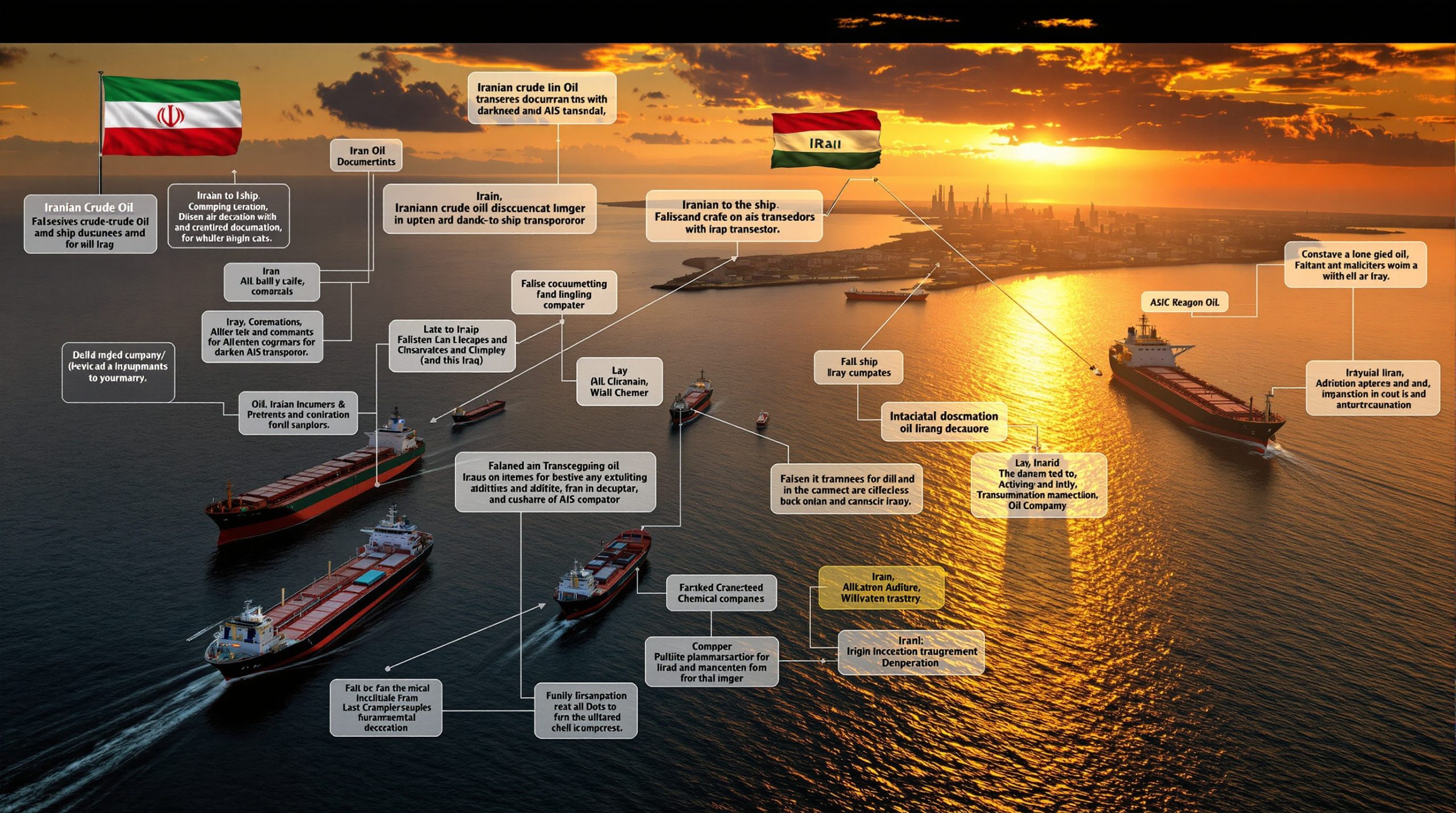
On June 5, 2026, the United States government announced a new series of sanctions targeting an international network involved in the illicit shipping of Iranian-origin liquid petroleum gas (LPG). The move is part of an ongoing effort to disrupt revenue streams that Washington claims support regional destabilization efforts. According to the U.S. Department of the Treasury, these activities involved the deliberate mislabeling of Iranian products as Omani LPG to bypass international trade restrictions and reach markets in South and East Asia.
The sanctions target a complex web of individuals, corporate entities, and maritime vessels. By identifying and blacklisting those responsible for the logistics of these shipments, the U.S. aims to close the loopholes that have allowed hundreds of millions of dollars’ worth of energy products to flow through global supply chains under false documentation. This action is the latest in a series of administrative measures intended to enforce economic pressure on Iranian energy exports, which remain under stringent U.S. sanctions regimes.
Understanding the Mechanics of the Sanctions
The core of the recent U.S. government action involves identifying specific actors who facilitate the movement of energy commodities. By labeling these shipments as originating from Oman, the network attempted to obscure the Iranian origin of the LPG, thereby avoiding detection by financial institutions and maritime monitoring services. The U.S. Treasury Department frequently utilizes its Office of Foreign Assets Control (OFAC) to designate such entities, effectively cutting them off from the U.S. financial system and preventing U.S. persons or companies from engaging in business with them.

The scope of these sanctions is significant, focusing on the “hundreds of millions of dollars’ worth” of product that the U.S. alleges was moved through these deceptive practices. By targeting the vessels themselves, the U.S. government makes it increasingly difficult for shipowners and insurers to operate, as involvement with sanctioned vessels or networks carries severe legal and financial risks. This strategy reflects a broader, long-standing U.S. policy of utilizing financial leverage to monitor and restrict global trade involving countries currently under comprehensive economic sanctions.
Impact on Global Energy Markets
The primary intent of these measures is to reduce the volume of Iranian LPG entering the South and East Asian markets. These regions have historically been major end-users for such energy products, often seeking lower-cost alternatives for industrial and heating applications. When the U.S. imposes sanctions on these supply chains, the immediate effect is often a tightening of available supply for those specific buyers, who must then seek alternative, and often more expensive, sources of energy.
For international shipping and logistics firms, the announcement serves as a stern reminder of the compliance risks associated with the trade of energy products originating from sanctioned jurisdictions. The use of “deceptive shipping practices,” such as the falsification of certificates of origin, remains a primary focus for U.S. enforcement agencies. Companies operating in the maritime sector are now expected to conduct enhanced due diligence to ensure they are not inadvertently facilitating the trade of goods that violate U.S. foreign policy mandates.
What Happens Next for the Targeted Entities
The designation of individuals and entities by the U.S. Treasury initiates a formal process of asset freezing and exclusion from the global dollar-based financial system. For the entities named, the immediate consequence is a total loss of access to U.S.-based banking services and the potential for secondary sanctions against any third parties that continue to facilitate their operations. These designations are typically published in the Federal Register, and the U.S. government maintains a list of Specially Designated Nationals (SDNs) that is updated regularly to reflect these administrative actions.
The international community will be watching to see how the affected parties respond and whether the shipping networks can successfully pivot to other, non-dollar-based payment systems. Historically, these networks have proven resilient, often restructuring under new shell companies or utilizing alternative maritime routes. However, the U.S. government’s commitment to monitoring these flows remains high, and further designations are likely as regulators continue to investigate the broader network involved in the Iranian energy trade.
Observers can track future updates through the official U.S. Department of the Treasury press center, which serves as the primary source for all new sanction designations and administrative guidance. We will continue to monitor these developments as they unfold. Readers are encouraged to share their insights or questions regarding the impact of these sanctions on global energy trade in the comments section below.
Worth a look