US Imposes Sanctions on Rwandan Military Over Support for DRC Rebels
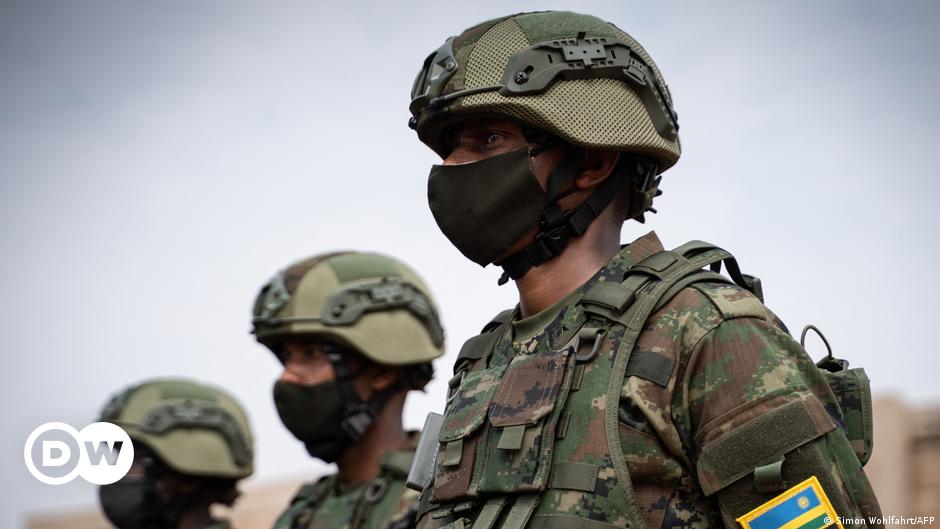
Washington, D.C. – The United States government on Monday imposed sanctions on the Rwandan military and four of its top officials, citing direct operational support for the M23 rebel group operating in the eastern Democratic Republic of Congo (DRC). The move comes amidst escalating conflict in the region and despite a US-brokered peace agreement signed in December, raising questions about the efficacy of diplomatic efforts and the ongoing stability of Central Africa. The DRC government has welcomed the sanctions as a crucial step in upholding its sovereignty, while Rwanda has condemned them as unjust and based on misrepresented facts.
The sanctions, announced by the US Department of the Treasury, target the Rwanda Defence Force (RDF) as a whole, along with four senior officers: Vincent Nyakarundi, the RDF’s army chief of staff; Ruki Karusisi, a major general; Mubarakh Muganga, chief of defense staff; and Stanislas Gashugi, special operations force commander. According to the Treasury Department, the RDF’s support has been instrumental in enabling M23 to seize territory in eastern DRC, including key cities and strategic mining sites. This support includes active participation in fighting alongside M23 forces, providing training and supplying weaponry.
The DRC has long accused Rwanda of backing M23, a claim echoed by the United Nations and Western powers. The M23 rebel group has been responsible for significant displacement and human rights abuses in the region, and its recent gains have exacerbated an already dire humanitarian situation. The US State Department added that M23 continued to capture territory even after the December peace agreement, demonstrating a clear violation of the accord. The sanctions are intended to disrupt the flow of support to M23 and compel Rwanda to cease its destabilizing activities in the DRC.
A Failed Peace Deal?
The imposition of sanctions marks a significant setback for the peace process initiated by US President Donald Trump in December. The “Joint Declaration of the Washington Accords for Peace and Prosperity” was hailed at the time as a potential breakthrough in resolving the long-standing conflict between the DRC and Rwanda. President Trump publicly praised both Congolese President Felix Tshisekedi and Rwandan President Paul Kagame for their commitment to peace, suggesting a “great miracle” was at hand. However, just days after the signing, M23 captured the strategically important city of Uvira, casting doubt on the sincerity of Rwanda’s commitment to the agreement.
The Washington Accords were, in part, motivated by US interest in securing access to the DRC’s vast mineral resources, including cobalt, lithium, and other materials crucial for the production of electric vehicle batteries and other technologies. The instability in eastern DRC has hindered the responsible sourcing of these minerals, prompting the US to seek a resolution that would ensure a stable supply. However, the continued support for M23 undermines these efforts and raises concerns about the long-term viability of US economic interests in the region.
According to the US State Department, M23’s offensives “would not have been possible without the active support and complicity of the RDF and key senior officials.” This assessment underscores the extent of Rwanda’s involvement and the challenges facing efforts to achieve a lasting peace. The sanctions are a direct response to this perceived betrayal of trust and a signal that the US is willing to take concrete action to hold Rwanda accountable.
Rwanda’s Response and Allegations of DRC Violations
Rwanda has vehemently denied the allegations of supporting M23, dismissing the US sanctions as “unjust” and based on a “misrepresentation of the reality” of the conflict. A Rwandan spokesperson stated that the sanctions “distort the facts” and ignore the DRC’s own actions, alleging that Congolese forces have violated the Washington Accords through “indiscriminate” drone attacks and ground offensives. These claims, however, have not been independently verified by US authorities.
Rwanda has consistently maintained that its concerns stem from the presence of the Democratic Forces for the Liberation of Rwanda (FDLR), a Hutu rebel group composed of individuals who participated in the 1994 Rwandan genocide, operating in eastern DRC. Rwanda argues that it has a legitimate security interest in addressing the threat posed by the FDLR, but denies providing support to M23. The US government has not directly addressed these concerns in its public statements regarding the sanctions.
Humanitarian Impact and Regional Implications
The ongoing conflict in eastern DRC has had a devastating impact on the civilian population. M23’s offensives have resulted in widespread displacement, with hundreds of thousands of people forced to flee their homes. The rebel group has been accused of committing numerous human rights abuses, including summary executions, sexual violence, and the recruitment of child soldiers. The United Nations has warned of a growing humanitarian crisis in the region, with limited access for aid organizations and a severe shortage of essential supplies.
The conflict also has broader regional implications, threatening to destabilize the Great Lakes region of Africa. The involvement of multiple armed groups and the interference of neighboring countries have created a complex and volatile security environment. The sanctions imposed on Rwanda are likely to further strain relations between the DRC and Rwanda, potentially escalating the conflict and drawing in other actors. The International Contact Group for the Great Lakes has denounced the military operations of both M23 and the RDF, calling for the immediate withdrawal of Rwandan forces from eastern DRC.
Key Takeaways
- The US has sanctioned the Rwandan military and four senior officials for supporting the M23 rebel group in the DRC.
- The sanctions are a response to the continued violations of the Washington Accords, signed in December 2025.
- Rwanda has denied the allegations and accused the DRC of violating the peace agreement.
- The conflict in eastern DRC has resulted in a severe humanitarian crisis and threatens regional stability.
- The US is seeking to ensure a stable supply of critical minerals from the DRC, but the ongoing conflict hinders these efforts.
The situation remains fluid, and further developments are expected in the coming weeks. The Congolese government and M23 are currently engaged in negotiations, mediated by Qatar and the US, to reach a final peace agreement. The US government has indicated that it will continue to monitor the situation closely and is prepared to take additional action if necessary. The next key development will be the response from Rwanda and whether they will comply with the US demands for the withdrawal of its forces from eastern DRC.
Jonathan Reed is Editor, News at World Today Journal.
Related reading