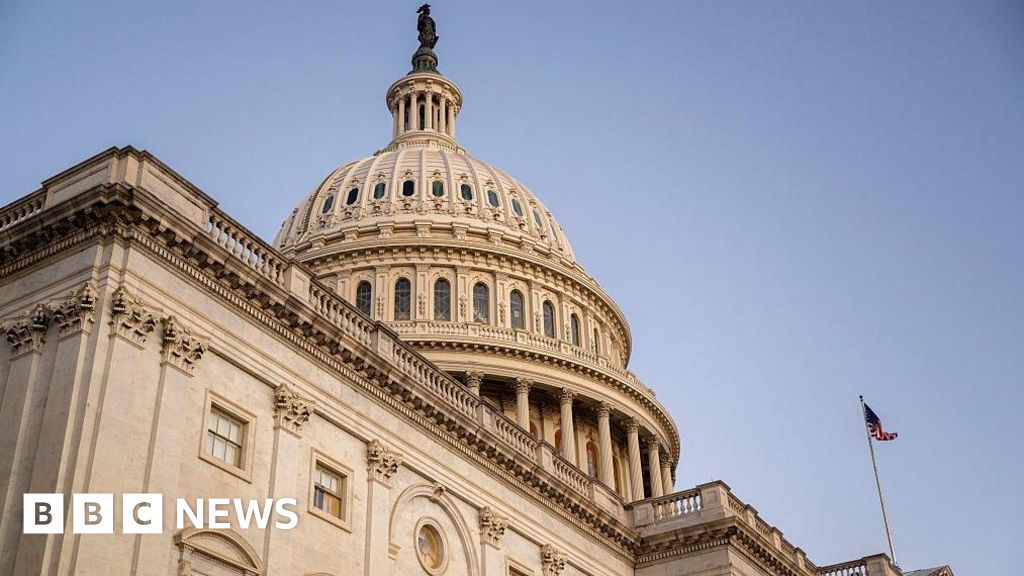
Washington D.C. – A bipartisan effort to limit President Donald Trump’s authority to engage in military action against Iran failed in the US Senate on Wednesday, as the conflict continues to escalate. The vote, 53-47, largely fell along party lines, effectively allowing the Trump administration to continue its military campaign alongside Israel without explicit congressional approval. The outcome raises significant questions about the balance of power between the executive and legislative branches, particularly concerning war powers, and underscores a growing debate over the scope of presidential authority in foreign policy.
The resolution, which would have halted unauthorized military action in Iran, faced staunch opposition from many Republicans who argued against what they characterized as an attempt to tie the President’s hands during a critical national security moment. Democrats, however, maintained that the administration had bypassed Congress and offered shifting justifications for the military strikes, necessitating a clear check on executive power. The vote comes after the US and Israel began striking targets within Iran on Saturday, prompting retaliatory attacks from the Islamic republic against Israel and US-allied states in the Gulf region. The situation remains volatile, with no immediate de-escalation in sight.
Senate Fails to Curb Presidential War Powers
The failed vote represents a significant setback for proponents of congressional oversight in matters of war and peace. Senator Tim Kaine, a leading advocate for the resolution, argued on the Senate floor that the Trump administration had not presented sufficient evidence of an imminent threat justifying military action. “Even in a classified setting,” Kaine stated, “the Trump administration could produce no evidence, none that the US was under an imminent threat of attack from Iran.” Al Jazeera reported that Kaine further emphasized the need for congressional authorization before engaging in prolonged military conflict.
The War Powers Resolution of 1973, passed in the wake of the Vietnam War, was intended to constrain the President’s ability to commit US forces to armed conflict without congressional consent. However, as former Senator Marco Rubio pointed out, no presidential administration has ever fully accepted the constitutionality of the Act. The BBC noted Rubio’s assertion that previous administrations, both Republican and Democratic, have operated under the belief that the President possesses inherent authority to act in the nation’s defense, even without explicit congressional authorization. Trump has previously ordered military operations without congressional approval, including strikes against Iranian nuclear facilities last year and actions related to Venezuela’s President Nicolás Maduro in January.
Escalating Conflict and Duration Concerns
The current conflict began with strikes authorized by both the US and Israel against Iranian targets. Iran has responded with attacks on Israel and US allies in the Gulf, raising fears of a wider regional war. Defense Secretary Pete Hegseth recently suggested the conflict could last up to eight weeks – almost double the initial estimate provided by President Trump over the weekend. BBC News highlighted this revised timeline, indicating a potentially prolonged and complex military engagement.
The debate over war powers extends beyond the immediate conflict with Iran. Critics argue that successive administrations have eroded congressional authority in foreign policy, leading to a dangerous concentration of power in the executive branch. The failed Senate vote underscores the difficulty of reasserting congressional control, even in the face of escalating military action. The question of whether Congress can effectively fulfill its constitutional role as a check on presidential power remains a central challenge in American foreign policy.
House Vote Looms, Prospects Dim
Although the Senate resolution failed, a similar measure is scheduled for a vote in the US House of Representatives on Thursday. However, its prospects for passage appear equally bleak. The House is expected to face similar partisan divisions, with Republicans largely supporting the President’s actions and Democrats advocating for greater congressional oversight. According to Al Jazeera, the outcome in the House is anticipated to mirror the Senate’s result, further solidifying the President’s ability to pursue his foreign policy agenda with limited congressional constraints.
The lack of congressional restraint has sparked concerns about the potential for unintended consequences and the risk of escalating the conflict beyond its current scope. Critics warn that without clear congressional authorization, the administration could be emboldened to take further military action, potentially drawing the US into a protracted and costly war. The debate over war powers is not merely a legal or constitutional issue; it is a fundamental question about the role of Congress in shaping American foreign policy and ensuring accountability for military actions.
Constitutional Concerns and Historical Context
The core of the debate revolves around Article II of the US Constitution, which grants the President the power to act as Commander-in-Chief. However, the Constitution also vests Congress with the sole power to declare war. The War Powers Resolution of 1973 attempted to reconcile these competing provisions by requiring the President to consult with Congress before deploying troops and to terminate military action after 60 days without congressional authorization. USA Today reported that legal scholars are divided on the constitutionality of the War Powers Resolution, with some arguing that it infringes on the President’s executive authority.
The historical context of the War Powers Resolution is rooted in the Vietnam War, where President Richard Nixon conducted a prolonged military campaign without a formal declaration of war. Congress, seeking to reassert its authority, passed the Resolution in an attempt to prevent similar situations in the future. However, as Rubio pointed out, no President has ever fully accepted the Resolution’s constraints, leading to a decades-long struggle between the executive and legislative branches over war powers. This ongoing tension is now playing out in the context of the escalating conflict with Iran.
BREAKING: The Senate just voted against limiting President Trump’s war powers regarding Iran. 53-47. https://t.co/qX9wJq9w9q
— CBS News (@CBSNews) March 6, 2026
The implications of this vote extend beyond the immediate conflict with Iran. Some observers suggest that it could mark a turning point in the relationship between Congress and the President, potentially leading to a further erosion of congressional authority in foreign policy. USA Today posited that the current situation could represent “the end of Congress’ war powers,” as presidents increasingly assert their authority to act unilaterally in matters of national security.
What Happens Next?
With the Senate vote failing to restrain the President’s actions, the focus now shifts to the House of Representatives. However, given the anticipated outcome, it is unlikely that Congress will be able to effectively limit the administration’s military options. The situation remains fluid, and the potential for escalation remains high. The coming days and weeks will be critical in determining the future course of the conflict and the broader implications for US foreign policy. The administration is expected to continue to monitor the situation closely and to respond to any further provocations from Iran or its proxies.
The next key development will be the vote in the House of Representatives, scheduled for Thursday. Following that, attention will turn to any potential diplomatic efforts to de-escalate the conflict and to the administration’s long-term strategy for dealing with Iran. The international community will also be closely watching the situation, with many countries urging restraint and calling for a peaceful resolution. The outcome of this crisis will have far-reaching consequences for the region and for the United States’ role in the world.
Do you have thoughts on the Senate vote and the future of US-Iran relations? Share your comments below.
Related reading