
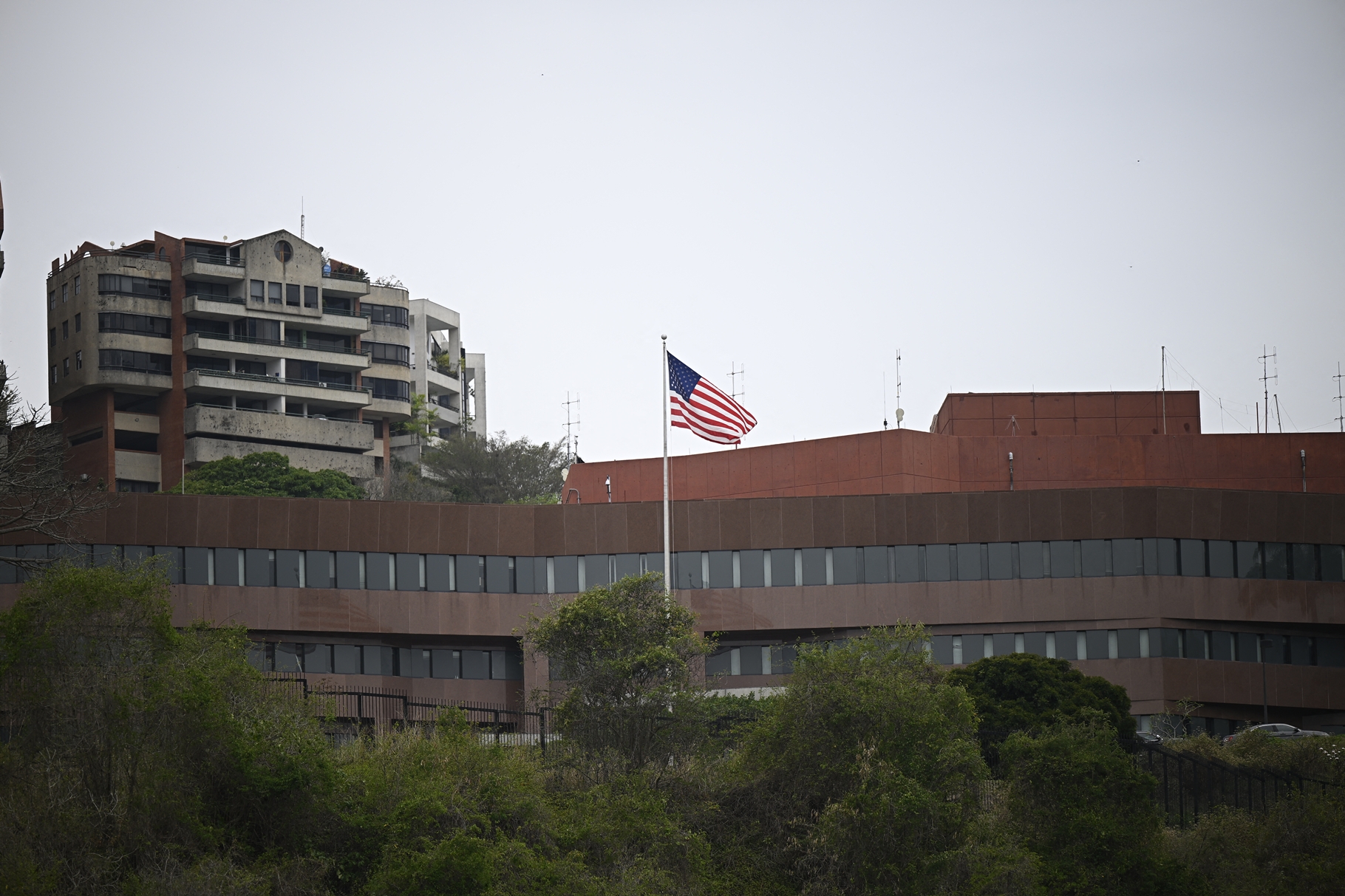
The United States Department of State has requested $14.3 million from the U.S. Congress to support and strengthen the operations of its diplomatic mission in Venezuela. This budgetary request signals a continued strategic commitment to maintaining a diplomatic foothold in Caracas despite years of strained relations and the functional closure of the embassy’s full operations.
The funding request, detailed in the Department of State’s budget documentation, is aimed at ensuring the embassy can operate effectively and potentially expand its capacity to engage with Venezuelan stakeholders. This financial move comes at a critical juncture in U.S.-Venezuela relations, where the administration continues to balance economic sanctions with the need for diplomatic channels to address regional stability and the protection of U.S. Citizens.
For years, the U.S. Embassy in Caracas has operated with a skeleton crew, following the suspension of full diplomatic ties in 2019. The request for US embassy Venezuela funding represents a tangible effort to “shield” or solidify the infrastructure necessary for a more robust diplomatic presence, should political conditions allow for a full reopening of the mission.
Analyzing the $14.3 Million Budget Request
The specific request for Department of State budget allocations of $14.3 million is designed to cover the essential costs of maintaining a diplomatic presence in a high-risk environment. While the U.S. Government has not provided an itemized public ledger for every cent, these funds typically cover security enhancements, staffing costs for essential personnel, and the maintenance of secure communication lines.

This allocation is part of the broader Congressional Budget Justification process, where the executive branch outlines the necessary resources to execute foreign policy goals. By requesting these specific funds, the State Department is formally notifying Congress that the current operational level in Caracas is insufficient for its long-term strategic objectives in the region.
Industry analysts and diplomatic observers note that such a specific funding request often precedes a shift in diplomatic posture. Rather than a mere maintenance fee, the $14.3 million is viewed as a preparatory investment. If the U.S. Intends to eventually restore full ambassadorial relations, the physical and operational infrastructure of the embassy must be modernized and secured first.
The Current State of U.S. Diplomacy in Caracas
Since 2019, the U.S. Embassy in Caracas has not functioned as a full-service diplomatic mission. Most consular services, including the issuance of visas and routine passport renewals for U.S. Citizens, have been shifted to other regional hubs or handled through limited emergency channels. This has left thousands of U.S. Citizens residing in Venezuela with limited access to direct government assistance.

Currently, the mission is led by a Chargé d’Affaires, who manages the limited staff remaining on the ground. This “caretaker” status allows the U.S. To maintain a legal presence in the country without granting full diplomatic recognition to the current administration in Caracas, which the U.S. Has historically challenged on democratic grounds.
The proposed funding is expected to address several critical gaps in current operations:
- Security Infrastructure: Upgrading the physical security of the embassy compound to protect personnel in a volatile political climate.
- Consular Support: Expanding the ability to provide emergency services to U.S. Nationals.
- Diplomatic Monitoring: Increasing the capacity to monitor political developments and human rights conditions within Venezuela.
Strategic Implications for U.S.-Venezuela Relations
The decision to seek increased funding for the Caracas mission is not merely an administrative task; it is a piece of geopolitical signaling. By investing in the embassy, the U.S. Maintains a “bridge” that can be crossed quickly if a negotiated political settlement is reached in Venezuela.
The funding request suggests that the U.S. Is preparing for multiple scenarios. While sanctions remain a primary tool of pressure, the State Department recognizes that sanctions alone cannot resolve the political crisis. A functional embassy provides the necessary “eyes and ears” on the ground to verify compliance with international agreements and to coordinate with allied nations in the region.
this move aligns with a broader U.S. Strategy to counter the influence of other global powers in South America. By strengthening its diplomatic presence, the U.S. Aims to ensure that it remains the primary partner for democratic forces and civil society organizations within Venezuela.
Who is Affected by the Funding Request?
The primary beneficiaries of increased embassy funding would be U.S. Citizens living in Venezuela. For years, these individuals have had to travel to third countries—often Colombia or Curaçao—to access basic consular services. A strengthened embassy could eventually bring these services back to Caracas, reducing the hardship for American expatriates and dual nationals.
the Venezuelan diplomatic corps and international organizations operating in Caracas will be monitoring how this funding is utilized. An increase in U.S. Diplomatic capacity often leads to increased engagement with local NGOs and political actors, potentially shifting the internal dynamics of Venezuelan political discourse.
The Path to Congressional Approval
the State Department’s request is not a guarantee of funding. The $14.3 million must be approved by the U.S. Congress as part of the annual appropriations process. This process often involves hearings where lawmakers question the efficacy of the spending and the current strategy toward the Maduro administration.
Given the polarized nature of U.S. Foreign policy, the request may face scrutiny. Some members of Congress may argue for a total freeze on funds until specific democratic benchmarks are met in Venezuela, while others may advocate for even more aggressive funding to support a transition of power.
| Detail | Information |
|---|---|
| Requested Amount | $14.3 Million |
| Requesting Body | U.S. Department of State |
| Primary Objective | Operate and strengthen the Caracas embassy |
| Current Status | Awaiting Congressional Approval |
| Key Goal | Maintain diplomatic presence and prepare for potential expansion |
What Happens Next?
The next critical checkpoint will be the Congressional budget hearings and the subsequent voting on the foreign operations appropriation bill. Once the budget is passed, the State Department will be able to allocate these funds toward the specific security and staffing upgrades planned for the Caracas mission.
Observers will also be watching for any response from the Venezuelan government. Traditionally, the Venezuelan administration has reacted with suspicion to U.S. Diplomatic movements, often accusing the U.S. Of “interference.” Yet, a move toward functional diplomatic relations could also be seen as an opening for the Venezuelan government to seek sanctions relief.
For those seeking official updates on U.S. Diplomatic status and travel advisories for Venezuela, the U.S. Department of State Travel website remains the authoritative source for current safety guidelines and consular availability.
World Today Journal will continue to monitor the Congressional approval process and any subsequent changes to the U.S. Diplomatic presence in Caracas. We invite our readers to share their thoughts on this development in the comments section below.