
The waters of the Persian Gulf have once again become the primary stage for a high-stakes geopolitical confrontation, as escalating rhetoric and maritime skirmishes between Washington and Tehran threaten to destabilize global energy markets. The latest wave of tensions centers on the Strait of Hormuz, a narrow maritime choke point where the strategic interests of the United States and the Islamic Republic of Iran collide with volatile frequency.
Recent developments indicate a sharpening of the conflict, characterized by the seizure of commercial vessels and aggressive declarations from the highest levels of the Iranian leadership. While diplomatic channels remain nominally open, the operational reality on the water suggests a dangerous cycle of provocation and retaliation that has left international shipping companies and global oil regulators on high alert.
At the heart of the current crisis is the fundamental disagreement over the legitimacy of the U.S. Military presence in the region. Tehran has long maintained that the presence of the U.S. Navy is a destabilizing force, while Washington asserts that its Fifth Fleet is essential for ensuring the “freedom of navigation” and protecting the flow of oil to the global economy.
As a senior journalist who has spent over a decade analyzing the intersection of international competition and strategic management, I view this not merely as a political dispute, but as a calculated game of brinkmanship. The players are well-known, the stakes are the global economy, and the field of play—the Strait of Hormuz—is one of the most sensitive geographic locations on Earth.
The Rhetoric of Expulsion: Tehran’s Hardline Stance
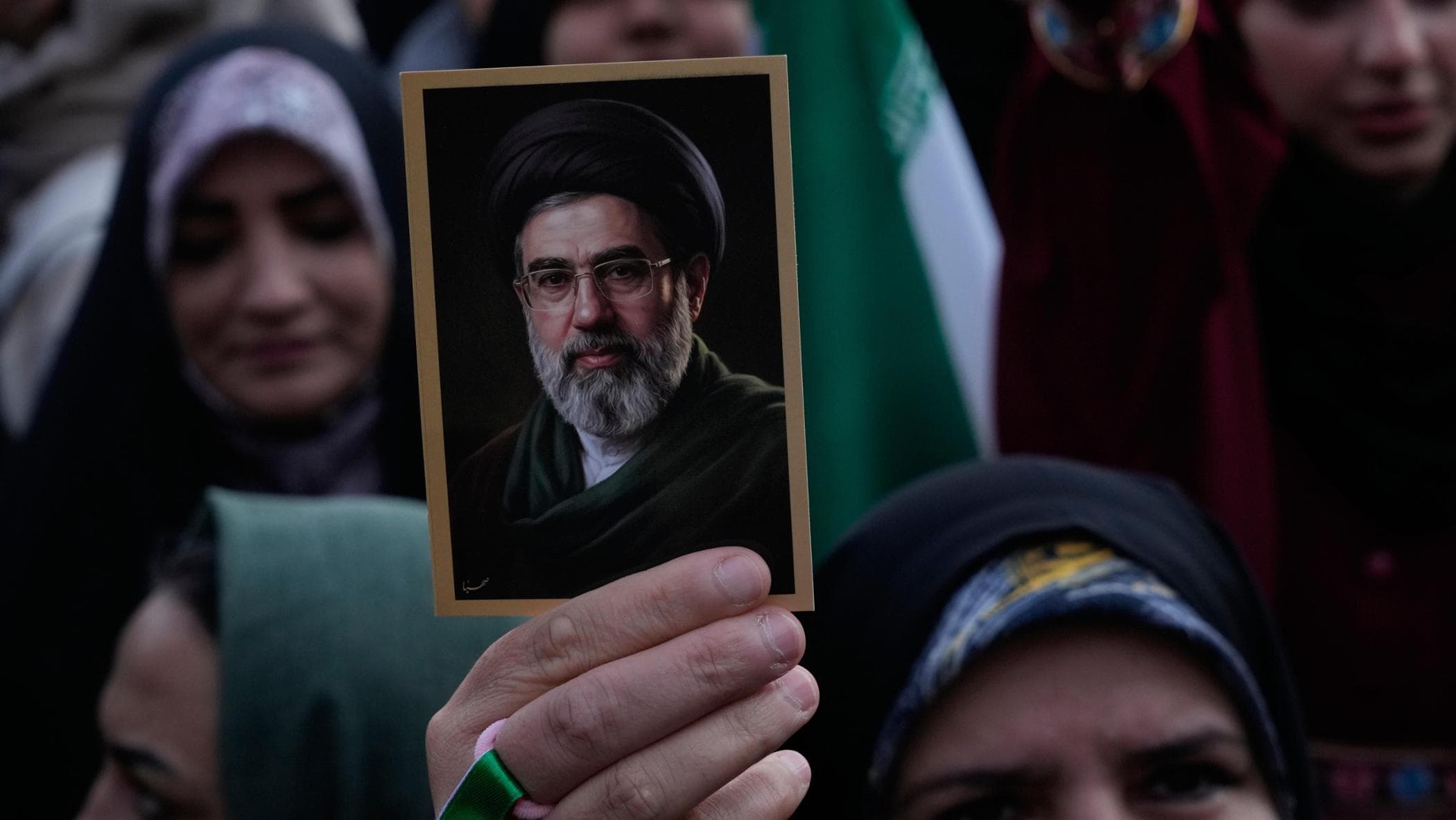
The current atmosphere has been further inflamed by pointed rhetoric from Iran’s Supreme Leader, Ayatollah Ali Khamenei. The Iranian leadership has consistently signaled that the only acceptable outcome for the region is the complete withdrawal of American forces from the Persian Gulf. This stance is not new, but the intensity of the language used in recent months suggests a shift toward a more confrontational posture.
Tehran views the U.S. Presence as an imperialist intrusion and has frequently warned that any attempt to interfere with Iranian oil exports or maritime sovereignty will be met with a “crushing” response. This rhetoric serves two purposes: it consolidates domestic support among hardline factions and signals to the international community that Iran is willing to risk an energy crisis to achieve its strategic goal of regional hegemony.
The ideological divide is stark. For the Iranian leadership, the Persian Gulf is an “Islamic lake” where foreign powers have no rightful place. For the United States, the region is a critical artery of global trade that must remain open to all, regardless of the political tensions between the two nations.
Maritime Confrontations and the War of Attrition
Beyond the rhetoric, the conflict has manifested in a series of tactical maneuvers in the Gulf. Reports of ship seizures and “strikes” on tankers have become increasingly common. These incidents often follow a predictable pattern: a vessel is intercepted, detained, or harassed, followed by a flurry of accusations from both sides regarding the violation of international maritime law.

The U.S. Government has pointed to Iranian efforts to bypass international sanctions on oil exports as a primary driver of these confrontations. By utilizing “ghost fleets” and complex ship-to-ship transfers, Iran has attempted to maintain its revenue streams despite heavy U.S. Economic pressure. In response, the U.S. Navy has increased its surveillance and interception operations to disrupt these illicit trades.
These maritime clashes are rarely isolated events. They are often timed to coincide with diplomatic negotiations or internal political shifts. When tensions rise in the diplomatic sphere, they almost invariably spill over into the waters of the Gulf, where the Iranian Revolutionary Guard Corps (IRGC) and the U.S. Navy engage in a perilous game of cat-and-mouse.
The Strategic Criticality of the Strait of Hormuz
To understand why a few ship seizures can trigger global anxiety, one must understand the geography of the Strait of Hormuz. This narrow waterway, separating Oman from Iran, is the only sea passage from the Persian Gulf to the open ocean. We see arguably the most important oil transit point in the world.
According to data from the U.S. Energy Information Administration (EIA), a significant portion of the world’s total oil consumption passes through this strait daily. As We find very few viable pipelines that can bypass the Strait, any closure or significant disruption would lead to an immediate and massive spike in global crude prices.
The threat of closing the Strait is Iran’s most potent “asymmetric” weapon. While Iran cannot match the U.S. Navy in a conventional fleet-on-fleet engagement, it can leverage the geography of the Strait to hold the global economy hostage. By deploying mines, fast-attack boats, and shore-based missiles, Tehran can create enough risk to drive up insurance premiums for tankers, effectively creating a “de facto” blockade without having to fully close the waterway.
Impact on Global Energy Markets
The economic ripple effects of these tensions are felt far beyond the shores of the Gulf. Oil markets are notoriously sensitive to geopolitical instability. Even the suggestion of a disruption in Hormuz can lead to “risk premiums” being added to the price of a barrel of Brent or WTI crude.
- Increased Shipping Costs: As the risk of seizure or attack increases, maritime insurance companies raise premiums for vessels entering the Gulf, which ultimately increases the cost of the fuel delivered to consumers.
- Market Volatility: Speculators often drive prices higher during periods of escalation, leading to inflation in energy costs across Europe, Asia, and North America.
- Strategic Reserve Releases: In response to such volatility, consuming nations often coordinate the release of Strategic Petroleum Reserves (SPR) to stabilize prices and signal to the market that supply remains sufficient.
The Role of the U.S. Fifth Fleet and Regional Alliances
Based in Bahrain, the U.S. Navy’s Fifth Fleet serves as the primary deterrent against Iranian aggression in the region. Its mission is twofold: to protect the flow of commerce and to reassure regional allies, such as Saudi Arabia and the United Arab Emirates, that the U.S. Remains committed to their security.
The Fifth Fleet operates a complex network of surveillance, utilizing everything from satellite imagery to unmanned aerial vehicles (UAVs) to monitor Iranian naval movements. However, the challenge for Washington is maintaining a “calibrated” response. If the U.S. Reacts too aggressively to a minor provocation, it risks escalating a skirmish into a full-scale war. If it reacts too weakly, it risks appearing incapable of protecting its interests and those of its allies.
This balancing act is further complicated by the shifting alliances in the Middle East. As some Gulf states seek to normalize relations with Tehran to ensure their own stability, the U.S. Must navigate a landscape where its allies are not always in total agreement on the best way to handle the Iranian threat.
Comparing Strategic Approaches: Washington vs. Tehran
The conflict can be viewed as a clash between two fundamentally different strategic philosophies. The U.S. Employs a strategy of “Maximum Pressure,” combining economic sanctions with a visible military presence to force Iran back to the negotiating table.

Iran, conversely, employs a strategy of “Strategic Patience” and “Active Resistance.” By avoiding a direct, large-scale war with the U.S. While simultaneously engaging in low-level attrition and proxy conflicts, Tehran aims to wear down American resolve and eventually force a U.S. Exit from the region.
| Feature | United States Strategy | Iran Strategy |
|---|---|---|
| Primary Goal | Freedom of Navigation & Stability | Removal of U.S. Forces from Region |
| Primary Tool | Naval Deterrence & Sanctions | Asymmetric Warfare & Proxy Influence |
| Economic Lever | Global Financial Isolation | Threat of Closing Strait of Hormuz |
| Regional Approach | Coalition Building (e.g., GCC) | “Axis of Resistance” Network |
What Happens Next?
The trajectory of this conflict depends on several key variables. First is the status of diplomatic efforts to revive or replace nuclear agreements, which often serve as the primary “off-ramp” for tensions in the Gulf. Second is the internal political stability of both nations; shifts in leadership or domestic pressure can lead to sudden changes in foreign policy posture.
In the short term, the world should expect continued volatility. The pattern of “provocation-response-de-escalation” is likely to persist, with both sides testing the boundaries of the other’s tolerance. The risk of a miscalculation—a ship fired upon by mistake or a misunderstood signal—remains the greatest threat to regional peace.
For those monitoring the situation, the key indicators to watch are not the headlines of rhetoric, but the movement of naval assets. An increase in the deployment of Iranian fast-attack craft or a surge in U.S. Carrier strike group activity in the North Arabian Sea usually precedes a significant event.
The international community continues to look toward the United Nations Security Council for a coordinated response, though the divide between permanent members often renders these bodies more reactive than preventative.
The next critical checkpoint for this story will be the upcoming quarterly review of maritime security protocols by the International Maritime Organization (IMO), where shipping lanes and safety zones in the Gulf will be reassessed in light of recent seizures.
We want to hear from you. Do you believe a diplomatic solution is possible in the Persian Gulf, or is the current cycle of escalation inevitable? Share your thoughts in the comments below and share this analysis with your network.