
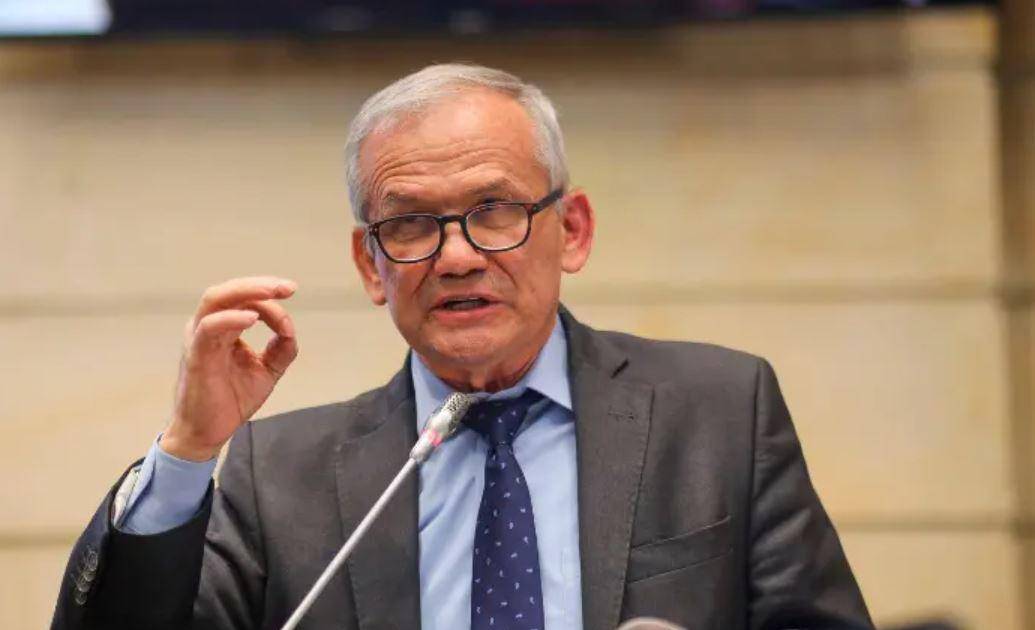
Interpol has declined to reactivate a red notice for Carlos Ramón González Merchán, the former director of Colombia’s Department Administrative of the Presidency (Dapre), effectively complicating efforts to bring the official back to Colombia to face corruption charges. The decision, confirmed on Wednesday, April 29, 2026, follows a series of legal maneuvers by the Colombian Prosecutor’s Office to secure the arrest of the former official, who is currently residing in Nicaragua.
The refusal to issue a new Interpol red notice for Carlos Ramón González means that while a domestic capture order remains active in Colombia, there is no longer an international request for his provisional arrest and extradition via the Interpol network. This development marks a significant setback for investigators probing a massive corruption network involving the National Unit for Disaster Risk Management (UNGRD), where González is alleged to have played a pivotal role.
González Merchán has remained outside Colombian territory for several months, claiming political asylum in Nicaragua. Despite the Colombian government’s persistence, the international policing agency’s decision suggests that the current requirements for a red notice—which typically demand a high threshold of legal specificity and the absence of political motivation—have not been met to Interpol’s satisfaction in this specific request for reactivation.
The Legal Timeline and the Interpol Conflict
The legal pursuit of Carlos Ramón González intensified on July 3, 2025, when the Criminal Chamber of the Superior Tribunal of Bogotá approved a request from the Prosecutor’s Office (Fiscalía) for his immediate capture. The court order was tied to his alleged involvement in the UNGRD scandal, focusing on the misuse of funds and the bribery of members of Congress according to judicial records.
Though, the capture order could not be executed as González had already left the country and sought refuge in Nicaragua. For a period, an Interpol red notice was active, alerting member nations to his status as a wanted fugitive. This changed on April 7, 2026, when Interpol informed Colombian authorities that the red notice had been lifted. This action effectively granted González the ability to move within Nicaragua and potentially other jurisdictions without the immediate risk of being detained by international police forces.
In response to the lifting of the notice, the Colombian Prosecutor’s Office submitted a new formal request to reactivate the order. After reviewing the updated filings, Interpol confirmed on April 29, 2026, that it would not reissue the circular as reported in recent legal updates. This decision leaves the Colombian government with few options other than direct diplomatic negotiations with the Nicaraguan government for extradition.
Understanding the UNGRD Corruption Scandal
At the heart of the case is the National Unit for Disaster Risk Management (UNGRD), an agency tasked with managing resources for emergency response and risk mitigation. The investigation reveals a sophisticated scheme where contracts intended for disaster relief were allegedly diverted to bribe lawmakers to ensure political support and facilitate the misappropriation of public funds.
The Prosecutor’s Office alleges that Carlos Ramón González acted as a key intermediary, converting UNGRD contracts into cash payments to bribe members of Congress. This “cash-for-contracts” pipeline is central to the prosecution’s theory, framing González not just as a witness, but as a primary architect of the bribery network. González has publicly denied these accusations, describing the Fiscalía’s claims as being “full of absurdities and lies.”
“Está llena de absurdos y mentiras”: Carlos Ramón González, exdirector del Dapre, rompe su silencio y cuestiona acusación de la Fiscalía. pic.twitter.com/jsNPu2aOd1
&mdash. Revista Semana (@RevistaSemana) January 29, 2026
The Role of Political Asylum in Nicaragua
The current deadlock is exacerbated by the geopolitical relationship between Colombia and Nicaragua. By claiming political asylum, González Merchán has placed himself under the protection of the Nicaraguan state, which frequently grants refuge to political figures facing legal challenges in other Latin American nations.
Under international law, political asylum can protect an individual from extradition if the granting state believes the prosecution is politically motivated rather than based on common criminal charges. While Colombia views the UNGRD case as a matter of financial corruption and bribery, the defense has framed the pursuit as a political vendetta. Interpol’s refusal to reactivate the red notice may stem from these conflicting narratives, as the organization avoids becoming a tool for political disputes between member states.
What is an Interpol Red Notice?
To understand why this decision is a blow to Colombian authorities, it is necessary to define the function of a Red Notice. Contrary to common belief, a Red Notice is not an international arrest warrant. Instead, it is a request to law enforcement worldwide to locate and provisionally arrest a person pending extradition, surrender, or similar legal action.
When a Red Notice is active, it appears in the databases of border agents and police officers in 196 member countries. Without this notice, the Interpol red notice for Carlos Ramón González is no longer a trigger for automatic detention at international borders. While the Colombian capture order remains legally valid, it is essentially a domestic document that lacks the “global alarm” effect of an Interpol notice.
Impact on the Broader Investigation
The inability to secure González’s return creates a vacuum in the UNGRD investigation. As a former high-ranking official in the Dapre, González possessed significant influence over the administrative machinery of the presidency. Prosecutors believe his testimony and the evidence linked to his communications are vital to identifying other beneficiaries of the bribery scheme.

The case has sparked widespread public indignation in Colombia, as the funds diverted from the UNGRD were intended for the most vulnerable populations affected by natural disasters. The perception that a high-ranking official can evade justice by fleeing to a friendly neighboring regime undermines public confidence in the judicial process and the state’s ability to combat systemic corruption.
| Date | Event | Legal Status |
|---|---|---|
| July 3, 2025 | Superior Tribunal of Bogotá issues capture order | Wanted for UNGRD corruption |
| January 29, 2026 | González publicly denies all charges | Claims political persecution |
| April 7, 2026 | Interpol lifts existing Red Notice | International alert removed |
| April 29, 2026 | Interpol refuses to reactivate Red Notice | Request by Fiscalía denied |
Next Steps for Colombian Authorities
With the Interpol route currently closed, the Colombian Prosecutor’s Office must now pivot toward alternative strategies. The most likely path is a formal extradition request directed to the government of Nicaragua. However, given the current political climate and the granting of asylum, the likelihood of success through diplomatic channels is viewed by many analysts as low.
Legal experts suggest that the Fiscalía may attempt to refine the charges or provide new, irrefutable evidence of common-law crimes (non-political) to appeal Interpol’s decision once more. Until such a change occurs, Carlos Ramón González remains a fugitive from Colombian justice, residing in a safe haven where the reach of Bogotá’s courts is limited.
The next critical checkpoint will be the Colombian government’s formal response to Interpol’s denial and whether the Ministry of Foreign Affairs will initiate a higher-level diplomatic dialogue with Managua to resolve the status of the former Dapre director.
World Today Journal will continue to monitor this story as it develops. We invite our readers to share their thoughts on the intersection of political asylum and corruption probes in the comments below.