
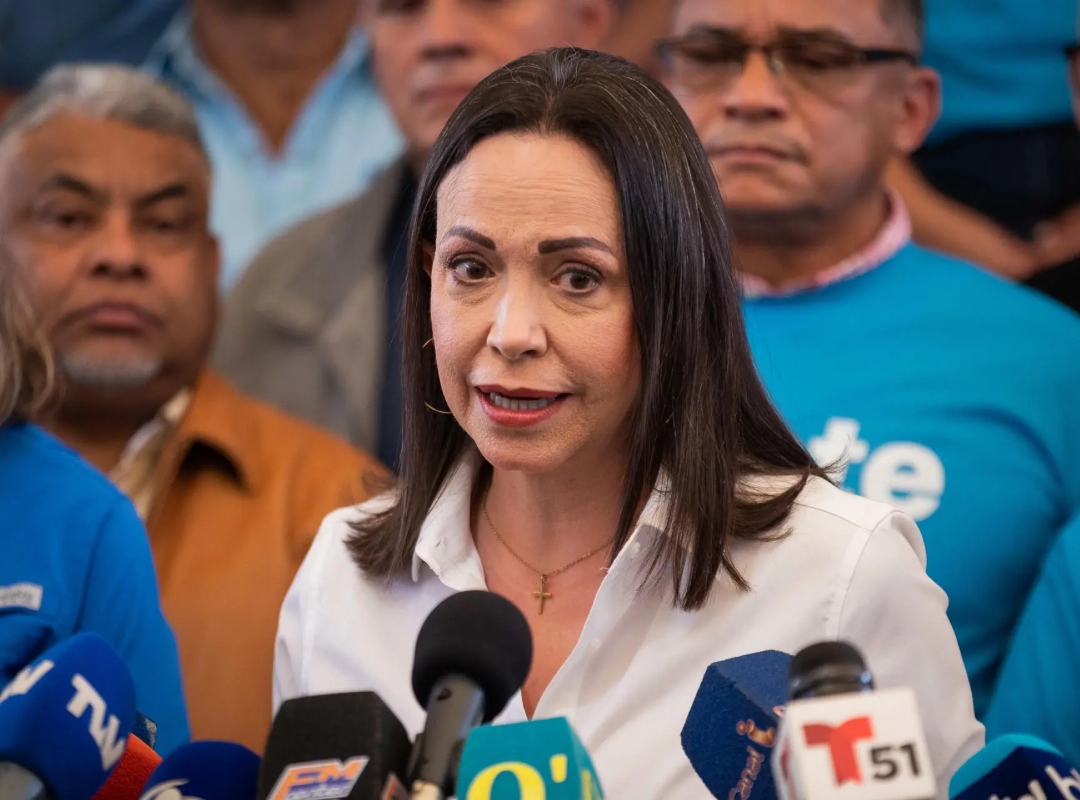
On April 16, 2026, the U.S. Department of State confirmed progress in the initial phase of its stabilization strategy for Venezuela and reiterated its expectation that opposition leader María Corina Machado would be able to return to the country and participate freely in future elections. The announcement came during a legislative session in Washington, where Michael Kozak, the U.S. Deputy Secretary of State for Western Hemisphere Affairs, addressed lawmakers on the status of U.S. Policy toward Venezuela.
Kozak stated that the first phase of the U.S.-led strategy had successfully prevented further deterioration in citizen security and curbed mass migration from the country. He emphasized that the next phase would focus on economic recovery and national reconciliation, including the reactivation of oil revenues alongside institutional political agreements. The U.S. Continues to control funds derived from hydrocarbon sales to ensure benefits reach Venezuelan citizens directly, using financial leverage to encourage electoral reforms and support a democratic transition.
The U.S. Official also confirmed that the Venezuelan government had released an additional 50 political prisoners in recent hours, though he noted that the benefits of the current amnesty law remain insufficient if opposition figures in exile lack guarantees to run for public office. Kozak stressed that all individuals, including Machado, should be able to return and participate freely in elections, a position he said aligns with U.S. Efforts to promote democratic conditions in Venezuela.
These remarks follow Machado’s recognition as the recipient of the 2025 Nobel Peace Prize, awarded for her nonviolent struggle for democratic rights in Venezuela. According to her official biography, Machado is a Venezuelan politician and activist born on October 7, 1967, in Caracas. She served as a member of Venezuela’s National Assembly from 2011 to 2014 and has been a prominent opposition figure against both Hugo Chávez and Nicolás Maduro administrations. She is the founder and National Coordinator of the political party Vente Venezuela, which she established in 2012.
Machado’s political career began with her work in Súmate, a vote-monitoring organization she co-founded in 2001 to promote electoral transparency. She holds a bachelor’s degree from Andrés Bello Catholic University and a master’s in finance from the Institute of Advanced Studies of Administration. Over the years, she has received multiple international honors, including the Václav Havel Human Rights Prize and the Sakharov Prize in 2024, before being awarded the Nobel Peace Prize in 2025.
Despite her international accolades, Machado’s domestic political standing remains contested. In early January 2026, following the capture of Nicolás Maduro by U.S. Forces, President Donald Trump publicly questioned her capacity to lead a national transition, stating she lacked sufficient respect and popular support within Venezuela. These comments were reported by BBC Mundo and highlighted divisions within the opposition regarding leadership and strategy moving forward.
The U.S. Has maintained a three-phase approach to its Venezuela policy: stabilization, recovery and reconciliation, and long-term democratic consolidation. Kozak confirmed that the initial phase had achieved its immediate security and migration objectives, paving the way for Phase Two, which centers on revitalizing the oil sector and negotiating political agreements with institutional stakeholders. The U.S. Continues to oversee oil revenue streams to prevent diversion and ensure accountability in the use of national resources.
Regarding electoral timelines, Kozak did not specify a date for upcoming elections but emphasized that the U.S. Expects conditions to allow for credible and inclusive voting processes. He reiterated that the return of opposition leaders like Machado must be accompanied by real guarantees for political participation, including access to the ballot and protection from persecution.
The release of 50 additional political prisoners was noted as a positive step, though Kozak cautioned that isolated releases do not constitute systemic reform. He called for broader measures to ensure judicial independence, finish arbitrary detentions, and create a safe environment for civic and political engagement across the country.
As of April 2026, the situation in Venezuela remains fluid, with parallel claims to leadership and ongoing international scrutiny over the legitimacy of governmental institutions. The U.S. Position continues to emphasize dialogue, pressure for reform, and support for a peaceful, electoral path out of the crisis—conditioned on verifiable improvements in human rights and democratic norms.
No further updates on Machado’s potential return or a specific election timeline were provided in Kozak’s remarks. The U.S. Department of State has not announced any immediate changes to sanctions policy or diplomatic engagement levels, maintaining that progress will be measured by concrete actions on the ground.
For ongoing developments, readers are encouraged to consult official statements from the U.S. Department of State and verified reports from international news agencies covering Venezuela’s political transition.
Share your thoughts on this story in the comments below, and help spread awareness by sharing this article with your network.